






What planning the light means in a Cambridge room
Planning the light means deciding, before the roof is opened, where the daylight will fall, at what hours, in which months, and what it will do to the room when it gets there. It turns skylight installation in Cambridge from fitting a product into designing a room.
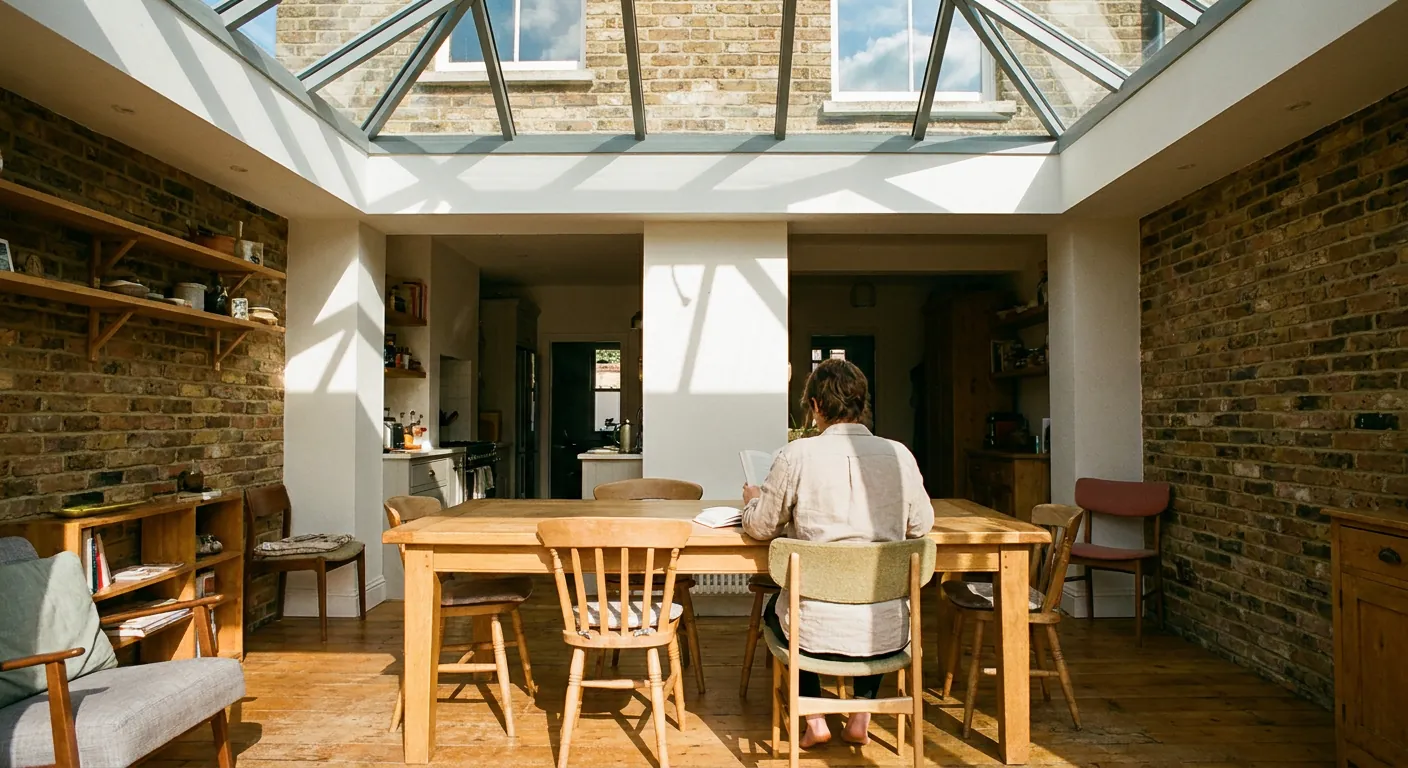
Book a light surveyStand in a long kitchen extension on a terrace off Mill Road at nine in the morning in January. The sun is low in the south east, only a few degrees above the horizon (it barely reaches sixteen degrees even at midday), and the neighbouring wall throws the whole garden into shade. A rooflight over the far end of that room is the only source of real daylight the space will ever get. Now stand in the same room at three on a clear afternoon in late June. The sun is high and to the south west, around forty-five degrees up, and whatever glass you put in the roof will throw a bright, hot rectangle onto the floor that moves across the room as the afternoon goes on. Both of those rooms are the same room. The rooflight has to serve both of them.
That is the problem we solve before we quote. For every skylight or rooflight we install, we work out four things in order:
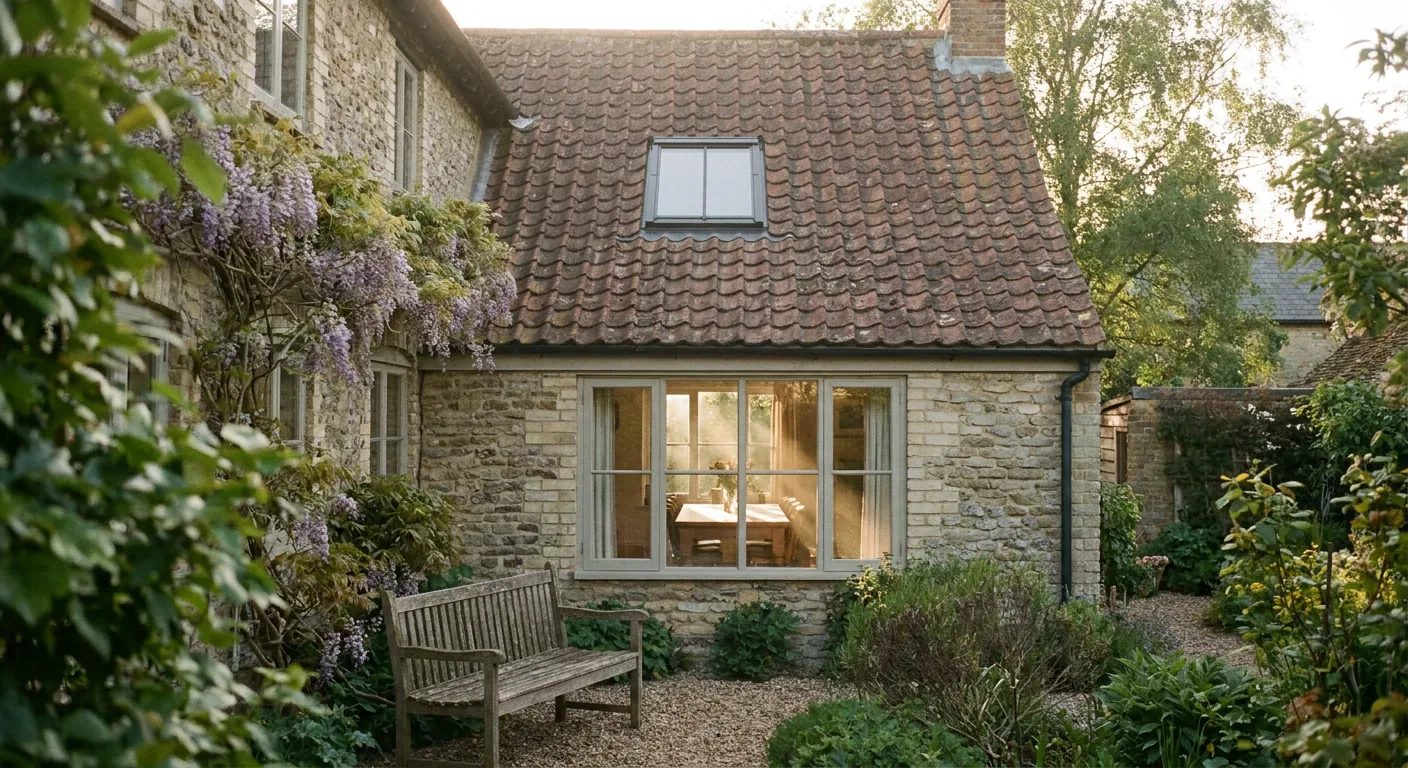
- Which way the slope or the flat roof faces, and what shades it: a gable, a chimney stack, a neighbour's extension, a tree that loses its leaves in October.
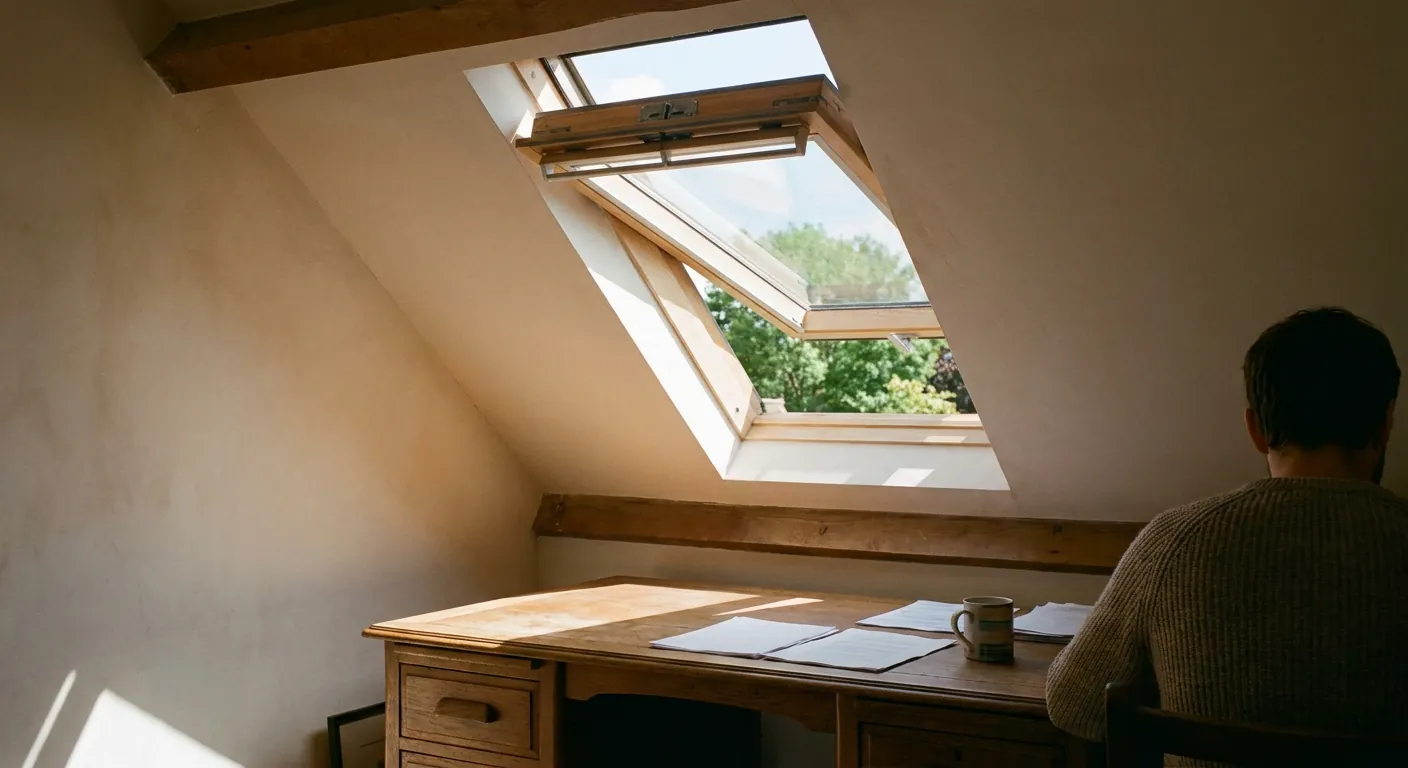
- Where the light patch will land through the day and across the seasons, so it falls on the worktop, the table or the desk you actually use, and not across the television or into your eyes when you sit on the sofa.
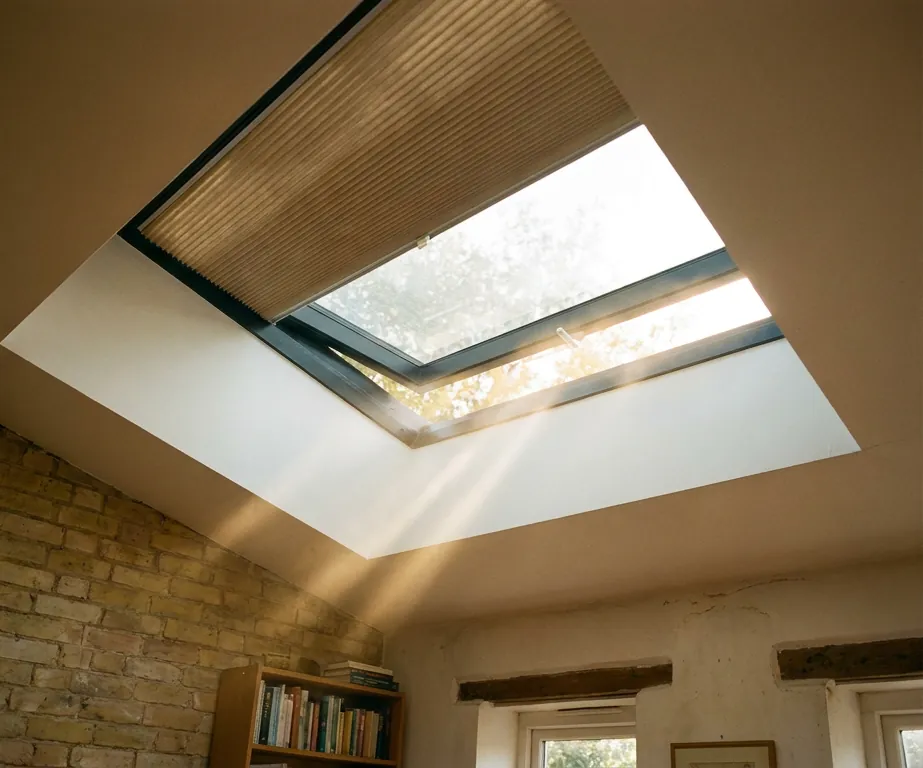
- What the glass must do on that orientation: how much heat it lets in, how well it keeps heat in, and whether it needs a coating, a tint, or a blind.
- How big the opening should be, which comes last, not first. A smaller rooflight in the right place usually makes a better room than a large one in the wrong place.
Cambridge makes this more important than it is in a hilly town. The city sits on flat land in the Cam valley at the edge of the Fens, with very little high ground to shade a roof. A rooflight here sees almost the whole sky and the whole arc of the sun, from a low winter path to a high summer one. That is good news for light and a real design question for heat, and it is why we look at the orientation of your roof before we look at a catalogue. Our light planning page shows the method in more detail, and the guide to which way a skylight should face covers each compass direction in turn.
None of this means a long or academic process. Most of the thinking happens in one visit, with a compass, a tape and a few questions about how you use the room. It means the choices are made on purpose and written down, rather than decided by whatever unit happened to be in stock.