Three names for glass in a roof
Rooflight, skylight and roof window all describe glazing set into a roof, but they are not perfect synonyms: each word leans towards a different kind of product, and the lean matters once you start reading quotes.
Ask a roofer, an architect and a neighbour what to call the glass in a kitchen extension roof and you may get three answers. The architect writes "rooflight" on the drawing, because that is the term in British building guidance and trade catalogues. Your neighbour calls it a skylight, which is the everyday word and the one people type into a search box. The roofer, looking at a loft conversion next door, may say "roof window" or simply use a brand name, the way people say Hoover for any vacuum cleaner.
None of them is wrong. The trouble is that the words are used loosely in conversation and precisely in specifications, and the two habits collide on a quote. One firm prices "two skylights" and another prices "two flat rooflights, 1000 by 1500mm, on 150mm upstands". They may be describing the same thing or two quite different products at quite different levels of performance. This guide sets out what each name normally points to in the UK, where the edges blur, and how to turn a loose word on a quote into something you can compare.
It also explains why the difference shows up in the room itself. A rooflight on a flat roof and a roof window in a pitched slope sit at different angles to the sky, and on a flat, open landscape like Cambridge's that angle changes how much sun reaches the room in December and how much heat arrives in July. Understanding the names is the first step to understanding the light.
What the trade means by a rooflight
In UK trade use, a rooflight is usually a glazed unit that sits on a flat or low-pitched roof, mounted on a raised kerb or upstand rather than set down between rafters.
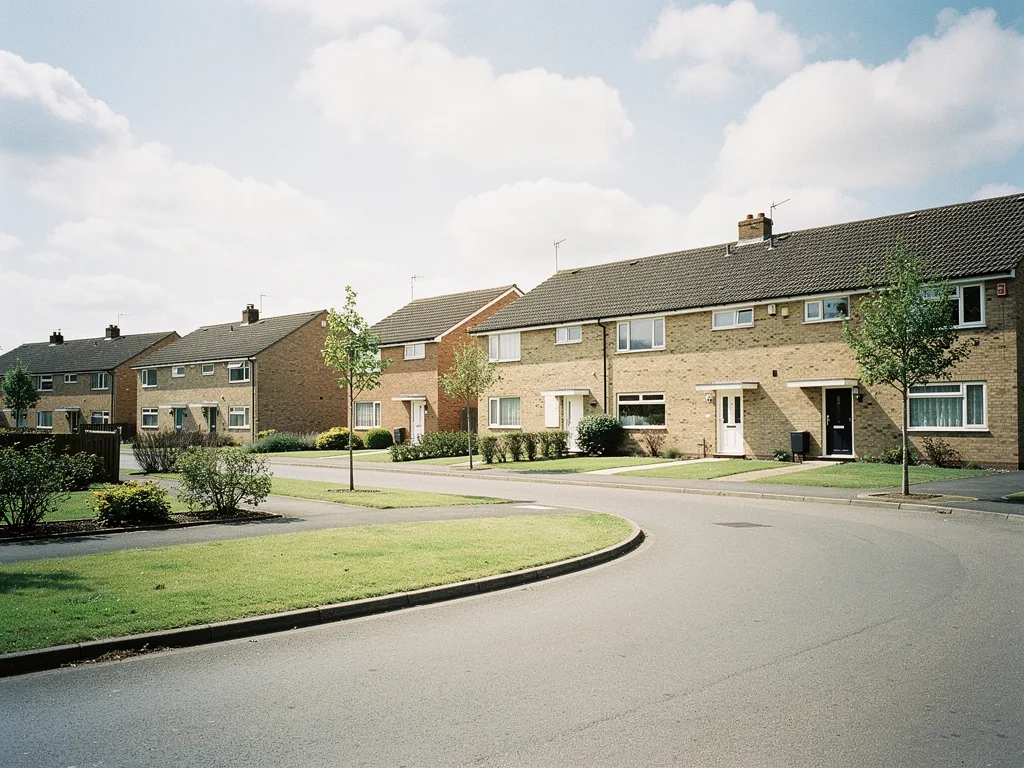
Picture the flat roof of a single-storey rear extension on a 1930s semi in Cherry Hinton, or the side-return infill behind a gault brick terrace off Mill Road. The roof is nearly level, covered in felt, single-ply membrane or GRP, and the opening for the glass is framed with a timber kerb that lifts the unit clear of standing water. The rooflight then sits on that kerb. Industry guidance commonly asks for an upstand of around 150mm above the finished roof surface, and the glass itself is usually set to a slight fall, often around five degrees or more depending on the product, so that rain runs off rather than pooling on the pane.
Within that broad family there is a lot of variety:
- Flat glass rooflights, framed or frameless, which look like a single sheet of glass from inside the room. These are what a modern extension usually gets.
- Domed or pyramid units in polycarbonate or acrylic, older and cheaper in style, still found on garages and 1970s and 1980s extensions.
- Opening rooflights, hinged or sliding, often electrically driven with a rain sensor, used where the room needs ventilation from the ceiling.
- Walk-on rooflights, structural glass designed to carry foot traffic on a roof terrace or over a basement light well.
- Roof lanterns, raised pitched structures of glass and glazing bars on a flat roof, which the trade treats as a special kind of rooflight.
The word also has a second, older use. A conservation rooflight is a slim, flush-fitting unit made for the pitched slate or tile roofs of historic houses, designed to echo the cast iron rooflights of the Victorian era. So "rooflight" is not strictly a flat-roof word. It is the trade's general word, and the phrase around it tells you which kind is meant. Our types of rooflight guide walks through each family and the job it does best.
What makes a roof window a roof window
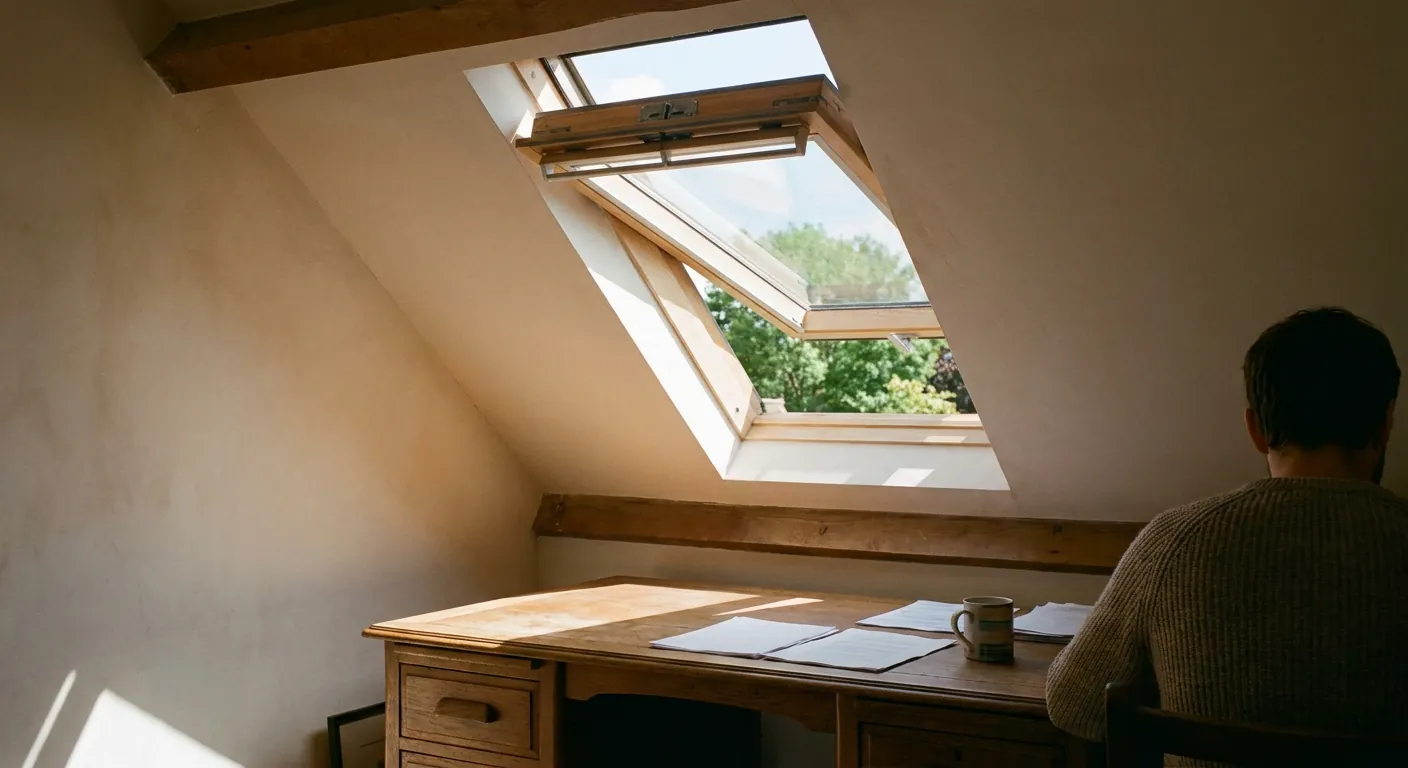
A roof window is built for a pitched roof: it sits in the plane of the slope, fixed into the rafters, sealed to the tiles or slates with a flashing kit, and it is made to be opened, cleaned and used from inside the room.
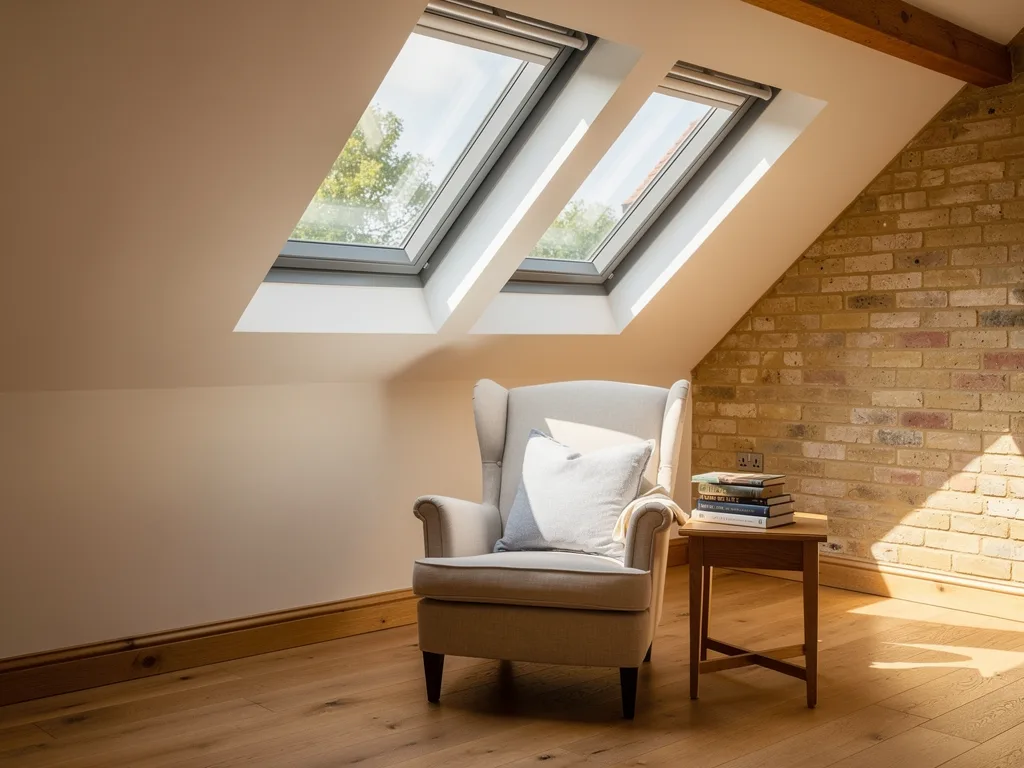
The clue is in the second word. A roof window behaves like a window. It has a sash that pivots or hinges, a handle within reach, and usually a lining and a blind so it reads as part of the room. It is the standard choice for loft conversions, rooms in the roof and first-floor rooms under a sloping ceiling, and it is what fills the rear slopes of converted terraces across Romsey and Petersfield.
The common opening types are centre pivot, where the sash turns on a horizontal axis about halfway up so you can reach the outside pane to clean it, and top hung, where the sash swings outward from the top to give an unobstructed view out. There are side-hung versions sized as escape windows for loft rooms, and balcony designs where the lower part opens forward. Manufacturers state a range of roof pitches each model suits; for mainstream products this is often somewhere around 15 to 90 degrees, but the permitted range varies by model and by flashing, so it is always checked against the actual roof.
VELUX is the best-known maker, which is why "Velux" gets used as a general noun for any roof window in the way "Hoover" does for vacuum cleaners. Other manufacturers make roof windows too. If you want to see how a brand-specific installation or replacement is handled, our pages on roof window installation and VELUX window installation cover the detail, including flashing choices on older tiled roofs.
Roof windows are occasionally described as rooflights in building guidance, because Approved Documents tend to use "rooflight" for any glazing in a roof. That is a regulatory convenience, not a product description. In a showroom or on a quote, a roof window and a flat rooflight are different products with different installation methods.
Where "skylight" fits in
"Skylight" is the public's word, broad enough to cover all of the above, and that breadth is exactly why it needs pinning down before you compare prices.
In everyday speech, skylight covers any piece of glass in a roof. Search engines, estate agents and a good number of builders use it the same way. In American usage, which leaks into online product listings, skylight is also the normal word for what a British architect would call a rooflight. Where the trade uses "skylight" with a narrower meaning, it tends to be for a fixed, out-of-reach unit that lets in light but is not really meant to be opened or looked out of, such as the small unit over a stairwell or a flat rooflight high above a double-height space.
A few other products borrow the word. A sun tunnel is sometimes sold as a "tubular skylight": a small dome on the roof, a reflective tube through the loft and a diffuser in the ceiling, used to bring daylight to a landing or windowless bathroom where a full opening is not practical. Garden rooms and outbuildings may have "polycarbonate skylights" that are very different from double-glazed units on a house.
So when someone says skylight, the useful follow-up question is simple: which roof is it going in, and does it need to open? The answer tells you whether you are really talking about a flat rooflight, a roof window, a lantern or a tube. We use both "rooflight" and "skylight" throughout this site because both are right; the point is to know which product sits behind the word.
The three side by side
A compact comparison helps, as long as you treat it as a map of typical use rather than a set of fixed rules, because products overlap at the edges.
| Name | Usual roof | Opens? | Typical room |
|---|---|---|---|
| Flat rooflight | Flat, low fall | Fixed or opening | Kitchen extension |
| Roof window | Pitched slope | Yes, by hand or motor | Loft room |
| Roof lantern | Flat, raised frame | Usually fixed | Open-plan living |
| Conservation rooflight | Pitched slate or tile | Usually yes | Historic house |
| "Skylight" | Any | Depends | Everyday word |
Two practical differences sit behind the table. The first is how the unit meets the roof. A flat rooflight relies on its upstand and the roof membrane being dressed up and over the kerb; a roof window relies on a flashing kit that laps under the tiles above and over the tiles below. Those are different skills, and a quote that does not say how the unit will be weathered is missing a line.
The second is how the unit is reached. A roof window is designed to be operated and cleaned from inside. A flat rooflight above a ceiling that is three metres or more off the floor usually cannot be touched without steps, which is why opening flat rooflights are often motorised and why glass coatings that help rain wash the pane clean are popular on them.
Why the name changes the light in the room
The real difference between these products is geometry: a flat rooflight faces the sky overhead, a roof window faces the same way as its slope, and in Cambridge's open landscape that angle decides how much direct sun reaches the room in each season.
- Winter solstice, about 14°. The lowest noon sun of the year travels furthest: it crosses the whole room and lands high on the back wall.
- Spring and autumn equinox, about 38°. The light lands on the floor, deep in the room.
- Summer solstice, about 61°. The highest, strongest sun drops steeply and lands close under the window.
- South-facing roof window. The same opening lets in a different patch of light every month.
- Deepest reach. In December the sun patch can be on the wall opposite, which is why we plan where it falls, not just how big the glass is.
Cambridge is close to 52 degrees north and sits on some of the flattest land in England, with almost nothing on the horizon to shade a roof. At solar noon in midwinter the sun is only about 14 degrees above the southern horizon; at midsummer it climbs to about 61 degrees. The glass sees those two suns very differently depending on which product you choose.
A flat rooflight points almost straight up. In midwinter the low sun strikes it at a very shallow, glancing angle, so little direct sunshine gets through and the room is lit mainly by diffuse light from the whole sky. That light is soft and even, and on a deep terrace kitchen it is often exactly what is wanted. In midsummer the high sun arrives far more squarely on the glass, and with long days that means real heat gain across the afternoon. This is why solar control glass, a low g-value and sometimes an external or integrated blind are worth discussing for a large flat rooflight, especially over a room with a lot of glass already.
A roof window in a south-facing slope of around 45 degrees behaves differently. The glass tilts towards the sun, so the low December sun meets it much more directly than it meets a flat pane, and a winter sun patch can travel across a loft floor or desk through the middle of the day. The same slope still takes strong sun in summer, so heat and glare control matter there too, just with a different balance across the year. On a north slope of similar pitch the noon sun does not reach the glass in winter at all, and the light is cool, steady and free of glare, which suits studios and home offices.
These are the kind of trade-offs we set out in the written light plan that comes with every quote. The skylight orientation guide compares all four slopes in more detail, and our page on how we plan the light explains how the sun patch is mapped onto the actual room before any roof is opened.
Reading two quotes that use different words
When quotes describe the same job with different names, set the names aside and compare what is actually specified: the product, its size, its glass, how it meets the roof and what happens inside.
Say one quote for a side-return extension reads "3 x skylights, supply and fit" and the other lists "3 x flat glass rooflights, fixed, double glazed, on new timber upstands". The second is clearer, but it still may not tell you enough to compare. Before deciding, it is reasonable to ask each firm to confirm the following in writing:
- The product type and, where possible, the manufacturer and range, so you know whether it is a flat rooflight, a roof window, a lantern or something else.
- The size, and whether that figure is the external frame, the structural opening or the clear glass area. Those can differ by a surprising margin, and it is the clear glass that lights the room.
- The glazing: double or triple, whether the inner pane is laminated for overhead safety, any solar control or self-cleaning coating, and the stated U-value. Current Part L guidance sets a limiting U-value for rooflights and roof windows, so a figure should be quotable.
- How the unit is weathered: new upstand and membrane detail on a flat roof, or the flashing kit and any underfelt collar on a pitched one.
- Whether it opens, how (manual, electric, rain sensor) and whether it contributes to ventilation.
- The inside finish: plastering the reveal or lining, insulation around the frame, decoration, and any blind.
- Who handles Building Control where the work is notifiable, and what guarantee covers the installation.
Two quotes that answer all seven points can be laid side by side honestly. Two that only say "skylight" cannot. Our guide to choosing a rooflight installer covers the wider questions to ask any firm, and the costs page explains what moves the price once the specification is fixed.
Edge cases where the words overlap
A handful of products sit between the categories, and naming them properly avoids expensive surprises such as a lantern that breaks a height limit or a flat-roof unit ordered for a pitched slope.
A roof lantern is a rooflight in trade terms, but it rises well above the roof. That matters for planning where the lantern is being added to an existing flat roof, because permitted development for roof alterations limits how far glazing can project above the roof plane. The roof lantern page covers sizing and heat for that product specifically.
Some flat rooflights can be installed on shallow pitched roofs, and some roof windows are rated for surprisingly low pitches, which is where the categories genuinely cross. On a lean-to at around 10 to 15 degrees, for example, the right answer depends on the particular products and how each is weathered at that angle. It is a survey question, not a naming one.
Conservation rooflights look like roof windows in function and sit in pitched roofs, but they are designed to lie flush with slate or tile and to present a slim, traditional profile. In conservation areas across Cambridge and the surrounding villages, specifying one rather than a standard roof window can make the difference between a scheme that planners accept and one they do not. The rules are covered in the planning permission and building regulations guides.
Finally, the question of swapping one type for another comes up often at replacement time: an old fixed skylight in a pitched roof that the owner would like to open, or an ageing dome on a flat roof that should become a flat glass unit. Our answer on whether you can replace a skylight with a roof window sets out what that swap involves.
Questions people ask
Is a rooflight the same as a skylight?
In everyday speech, yes: both mean glass in a roof. In the trade, "rooflight" usually means a unit on a flat or low-pitched roof or a slim conservation unit, while "skylight" is the general public term that can mean almost any roof glazing. Ask which product is meant.
Is a Velux a roof window or a skylight?
VELUX is a manufacturer, and its best-known products are roof windows for pitched roofs, though the company makes flat-roof units and sun tunnels too. People often call any roof window "a Velux", so check the make and product type on a quote.
Which lets in more light, a rooflight or a roof window?
For the same glass area, it depends on the angle to the sky and the season. A flat rooflight sees the whole sky overhead and gives strong, even light; a roof window in a south slope catches low winter sun more directly. Position in the room matters as much as the product. To see how it works out in your own room, book a light survey or read more about skylight and rooflight installation in Cambridge.