Four codes, two decisions
The difference between a VELUX GGL, GGU and GPL comes down to two separate choices: the finish of the frame and the way the sash opens. Settle those two and the code writes itself.
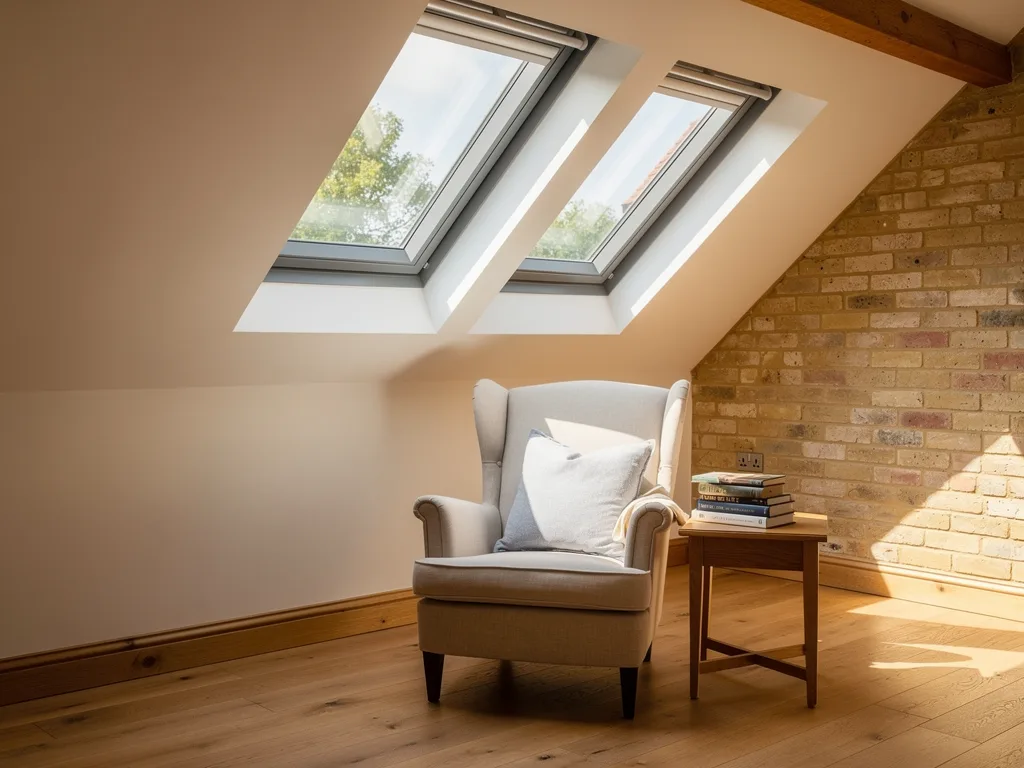
VELUX builds its everyday pitched roof windows in the same sizes, with the same glazing options and the same flashings, and then varies them along two lines. The middle letter tells you how the window opens: G for a centre pivot sash, P for a top hung one. The last letter tells you what the frame is made of on the inside: L for clear lacquered pine, U for white polyurethane moulded over a timber core. So a GGL is a pine centre pivot skylight, a GGU is the same window in white, a GPL is a pine top hung window and a GPU is the white top hung version.
That neat grid hides a real point. The two choices are independent. You can have white polyurethane without giving up the centre pivot, and you can have a top hung sash in either finish. People searching for the difference between GGL, GGU and GPL are often trying to choose one window from three when they are really making two small decisions, one about the room's humidity and look, and one about where the window sits and how you want to use it. This guide takes them in that order.
If you are replacing an existing rooflight and want to read its code first, our guide to VELUX sizes and codes shows where the data plate is and how the size code works. Here we are concerned with what the letters mean for the room you live in.
Lacquered pine: the warm, traditional frame
Pine is the finish VELUX windows have always been known for, and in a dry room it is a good one. It gives the lining a warm timber edge that suits exposed rafters, oak floors and older houses.
The frame and sash of a GGL or GPL are laminated pine, finished in a clear lacquer from the factory. The grain shows through, and the colour warms slowly with age as the timber is exposed to daylight. In a loft bedroom in a Victorian terrace off Mill Road, or in a vaulted room in a village cottage where the rafters have been left visible, the pine frame tends to sit well with the rest of the joinery. Painted plasterboard reveals and a pine frame also make a soft, familiar combination that plenty of owners like precisely because it looks like a roof window rather than a piece of plastic.
What pine asks of you is modest. The lacquer protects it in normal living conditions, but timber does not enjoy standing moisture. Condensation that runs down the glass and sits on the bottom rail of the sash in a cold room will, over years, mark and dull the finish. That is why the choice of finish is really a question about humidity rather than taste. In a bedroom, study, landing or living space with sensible ventilation, pine behaves well and needs little more than a wipe. Some owners choose to paint pine frames to match a white ceiling; that is possible, but it becomes a finish you then have to keep up, and at that point the white polyurethane version is usually the simpler answer.
Pine is also a sensible choice where the window needs to look at home beside older VELUX windows that are staying. If you are adding a second skylight next to a pine one that is only a few years old, matching the finish keeps the ceiling calm. Our answer on adding a second VELUX next to an existing one covers the roof side of that job.
White polyurethane: the finish for steam and clean lines
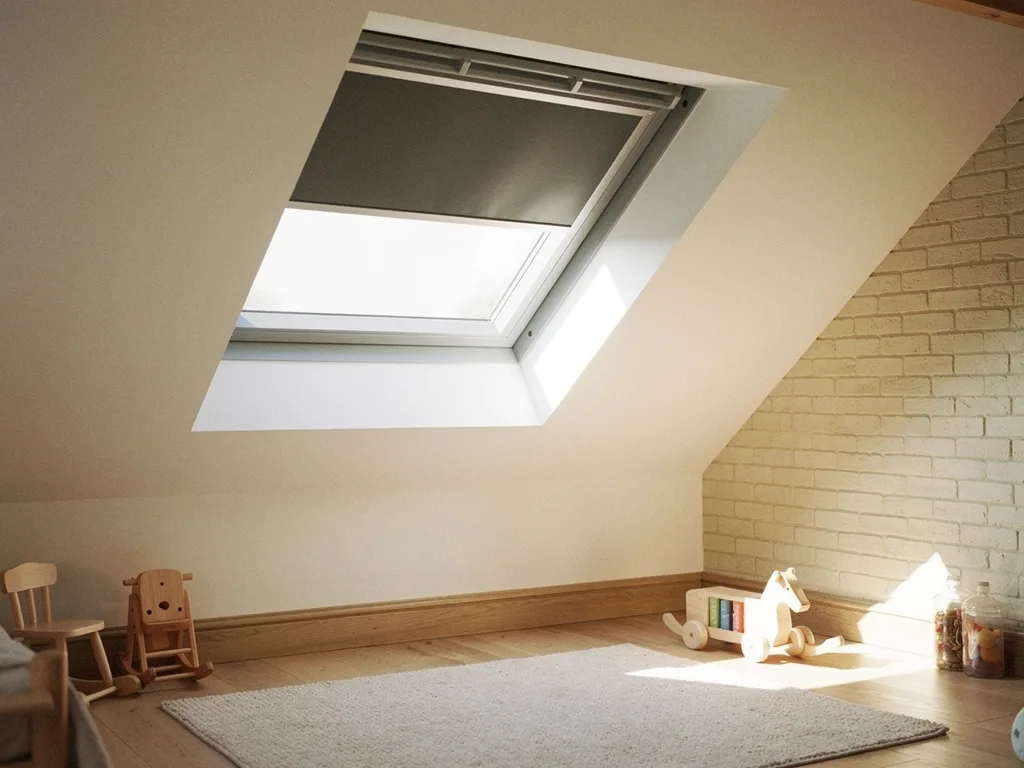
The U versions wrap the same timber core in a one-piece white polyurethane moulding. It needs no painting, shrugs off condensation and wipes clean, which is why it belongs in bathrooms, en suites and kitchens.
A GGU or GPU looks different from the moment it is fitted. The frame reads as a crisp white outline against a white ceiling, with no visible grain and no joints in the finish. For a modern loft conversion, a new home at Eddington or Trumpington Meadows, or any room where the ceiling is plain white plasterboard, that clean outline often looks more at home than timber. It also makes the window seem to recede, so the eye goes to the sky rather than the frame.
The practical reason for the finish is moisture. A bathroom in a loft is the hardest place in the house for a roof window: warm, humid air rises straight to the coldest surface in the room, which is the glass and its frame. Polyurethane does not absorb that water and does not need recoating when it has been wet thousands of times. VELUX points the U finish at bathrooms, kitchens and other humid rooms for that reason, and so do we when we write the light plan. If a skylight is going over a bath or into a shower area, the finish is only one part of the answer; our note on fitting a VELUX over a shower covers ventilation, glass and where the handle can safely go.
White polyurethane is also the easier finish to live with in a kitchen extension, where cooking steam and the odd splash reach the ceiling, and in a utility room or plant space that is warm and damp by design. The glazing, the flashing and the size range are the same as the pine window, so the choice costs you nothing in terms of light or fit. What changes is the look, and how little you have to think about the frame afterwards.
The ranges side by side
Laid out together, the four everyday codes differ only where the letters say they do. Size, glass and flashing choices carry across all of them.
| Code | Opening | Frame finish | Suits |
|---|---|---|---|
| GGL | Centre pivot | Lacquered pine | Dry rooms, high-set windows |
| GGU | Centre pivot | White polyurethane | Bathrooms, kitchens |
| GPL | Top hung | Lacquered pine | Low-set windows with a view |
| GPU | Top hung | White polyurethane | Humid rooms with a view |
Because the size code is shared, an MK04 GGL and an MK04 GPU fit the same opening and take the same flashing, so switching the opening type or the finish at replacement time does not mean resizing the hole. The window can also be ordered with different glazing packages, from standard double glazing to triple glazing and solar protection glass; the article on whether VELUX windows are double or triple glazed explains those. Electric and solar operation is offered mainly on the centre pivot models, which is one more reason the G versions dominate high windows.
Centre pivot: the window you reach up to
A centre pivot sash turns on hinges halfway up its sides, with the handle bar along the top. It is the natural choice when the window sits high, when furniture goes beneath it, or when you want electric control.
Open a GGL or GGU and the top of the sash swings out over the roof while the bottom tips into the room. Because you operate it from the top bar, you do not need to reach the bottom of the window at all, and because the lower edge only swings a short way inwards, a bed head, a desk or a bath can sit close beneath it. In a loft bedroom where the window goes above a bed in the low part of the room, or in a stair void where it is well above head height, that makes a real difference. The control bar also carries the ventilation flap, which lets air in with the sash closed and locked; our answer on VELUX ventilation flaps explains how that works for background ventilation.
There are compromises. When the sash is open, the glass sits across the middle of the opening, so it interrupts the view and you cannot put your head out. The open sash also angles into the room, so it needs clearance from anything tall below the upper half of the window. Where the top of the window is out of easy reach, a rod can operate the bar, or the window can be made electric. Centre pivot windows are also the easiest to clean: the sash rotates right round and locks with the outer glass facing you, as described in how to open a VELUX fully to clean it.
The centre pivot suits almost any pitch VELUX supports, from shallow roofs of about 15 degrees up to very steep slopes, so it is also the default choice for garden rooms and lean-tos where the roof is low in pitch.
Top hung: the window you look out of
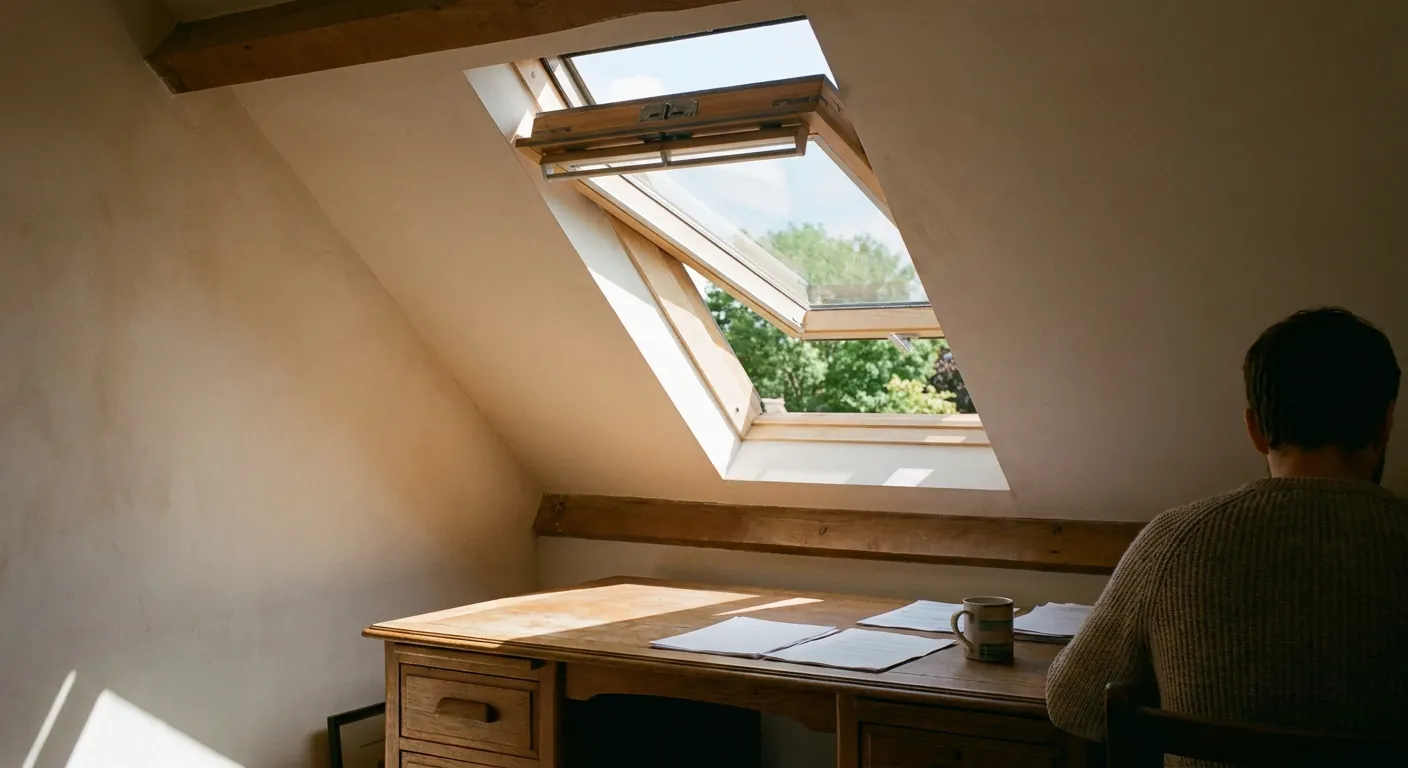
A top hung sash hinges at its head and opens outwards from a handle at the bottom. With the window open, the whole glazed area is clear, so you can stand in it, lean out and see the street or the garden.
That clear opening is the point of a GPL or GPU. In a loft conversion where the window comes down to a level where you can see out comfortably, a top hung sash turns the skylight into something closer to a dormer window: you open it and look out over the roofs rather than at a tilted pane. For a study on the rear slope of a Romsey terrace, a top hung window can frame a view across the gardens towards the Mill Road rooftops that a centre pivot sash would cut in half. The sash can still rotate for cleaning, so you do not lose that convenience.
The handle is at the bottom of the sash, so the bottom of the window must be within easy reach. That is fine when the window sits at a comfortable height, and awkward when it is high on a slope or above a staircase. Top hung sashes also need the roof pitch to suit their balancing mechanism, and the range is intended for a narrower band of pitches than the centre pivot, broadly moderate to steep slopes rather than shallow ones. Check the current product data for your exact pitch at the survey rather than assuming.
A related family builds on the same idea. Dedicated escape roof windows open fully wide enough for a person to climb out if a fire blocks the stairs, and the CABRIO balcony window goes further again by folding out to form a small balcony. Both are specialist choices for particular rooms and roofs, covered in their own guides.
What each opening does to light and air in the room
The opening type changes more than the handle. It decides where the open sash throws its shade and reflections, how air moves through the room and how much of the view you keep with the window open.
With the window closed, a GGL and a GPL of the same size admit essentially the same light. The glazed area is almost identical, and the glass options are shared. The difference arrives when you open them. A centre pivot sash, opened on a warm day, turns its glass into a tilted mirror halfway into the room. On an east or west slope in Cambridge, where the sun comes in low in the morning or evening, that tilted pane can bounce a band of sunlight across the ceiling or onto a screen. A top hung sash opens away from you, so the glass lifts outwards and its reflection goes out over the roof rather than into the room.
Airflow differs too. A centre pivot sash lets warm air leave at the top of the opening while cooler air comes in at the bottom, which suits stack ventilation in a loft, where heat collects under the ridge. A top hung sash opens as a single gap at the bottom that tilts outwards, which is effective in a breeze and easy to leave open in light rain. On a south slope over a loft bedroom, the airflow of the window often matters as much as the glass in keeping summer nights bearable, which is why our light planning method weighs the opening type alongside orientation and shading.
Blinds work with both. The same size-coded blinds fit either opening type, including blackout, roller and external anti-heat awnings. On a slope that takes long afternoon sun, an external blind does more to cut heat than any choice of finish or opening; the VELUX blinds guide sets out which blind to pair with which slope and room.
Matching the range to the room
With both decisions made, the code follows from the room. These pairings reflect how the finish and opening type behave, not a rule you must follow.
- Loft bedroom, window above the bed: GGL for warmth or GGU for a white ceiling. The centre pivot keeps the bed head clear and suits an electric upgrade later.
- Loft en suite or bathroom: GGU. The white polyurethane stands up to steam, and the top control bar keeps the handle away from the bath or shower.
- Loft study with a view over the gardens: GPL or GPU, set low enough to reach the handle and to look out with the sash open.
- Kitchen extension or side return: GGU on a pitched roof, where cooking steam rises and the window is often well above head height.
- Stairwell or landing: GGL or GGU, usually with electric or rod operation because the top bar is out of reach.
- Garden room or lean-to with a shallow pitch: a centre pivot model, because the top hung range is intended for steeper slopes.
Mixing codes in one roof is perfectly reasonable. A loft conversion might take a GPU in the study at the front and a GGU above the bath at the back, with both sharing the same flashing family and the same blind sizes. What we avoid is mixing finishes in the same room, because a pine frame beside a white one reads as a mistake. If the room also sits under conservation rules, the VELUX conservation window changes the picture, since its slim profile and glazing bar are chosen for the look from the street rather than the finish inside.
Choosing at a survey, and changing at replacement
The finish and opening type are settled in the written light plan, alongside size, glass and shading. At replacement, they are also the easiest things to change, because the size code stays the same.
When we survey a room for a VELUX, we look at how high the window will sit, what goes beneath it, whether the room is ever humid, and which way the slope faces. Those four facts settle the code quickly. The light plan that comes with every quote then states the chosen code and the reason for it, so you can see why a GGU is going into the en suite and a GPL into the study. If the window is part of a wider project, our VELUX window installation page sets out the whole service, from opening the roof to fitting blinds.
For replacements, the size code is the constant. An old pine centre pivot window can be replaced with a white polyurethane one, or with a top hung sash, of the same size, and often into the existing lining with a suitable flashing. That makes replacement a good moment to put right a finish that has struggled in a bathroom, or to swap a centre pivot sash for a top hung one where you always wanted to look out. Our guide to replacing an old VELUX window explains what else changes with the swap, from glazing to flashings.
Questions people ask
Is a GGU better than a GGL?
Neither is better in general. They are the same centre pivot skylight with the same glass and sizes; the GGU has a white polyurethane finish that suits humid rooms and plain white ceilings, while the GGL has lacquered pine that suits dry rooms and timber interiors.
Can I replace a GGL with a GPL of the same size?
Usually, yes. The size code is shared, so the opening and flashing family match. The main checks are the roof pitch, because the top hung range suits a narrower band of pitches, and whether the bottom handle will be within easy reach once fitted.
Which VELUX is best for a loft bathroom?
A white polyurethane window, most often the GGU centre pivot, because the finish copes with condensation and the handle sits at the top of the sash, away from the bath or shower. A GPU works too where the window is low and you want to look out.
Do GPL windows let in more light than GGL windows?
Not when closed. Windows of the same size code have very similar glazed areas and the same glass options. The difference appears when open: a top hung sash leaves the whole opening clear, while a centre pivot sash sits across the middle.