Why the generation matters before you replace
Knowing roughly when your VELUX window was made tells you how much of the old opening a new one can reuse, which flashing it needs and whether the lining inside has to be touched. It takes a few minutes with the sash open and costs nothing.
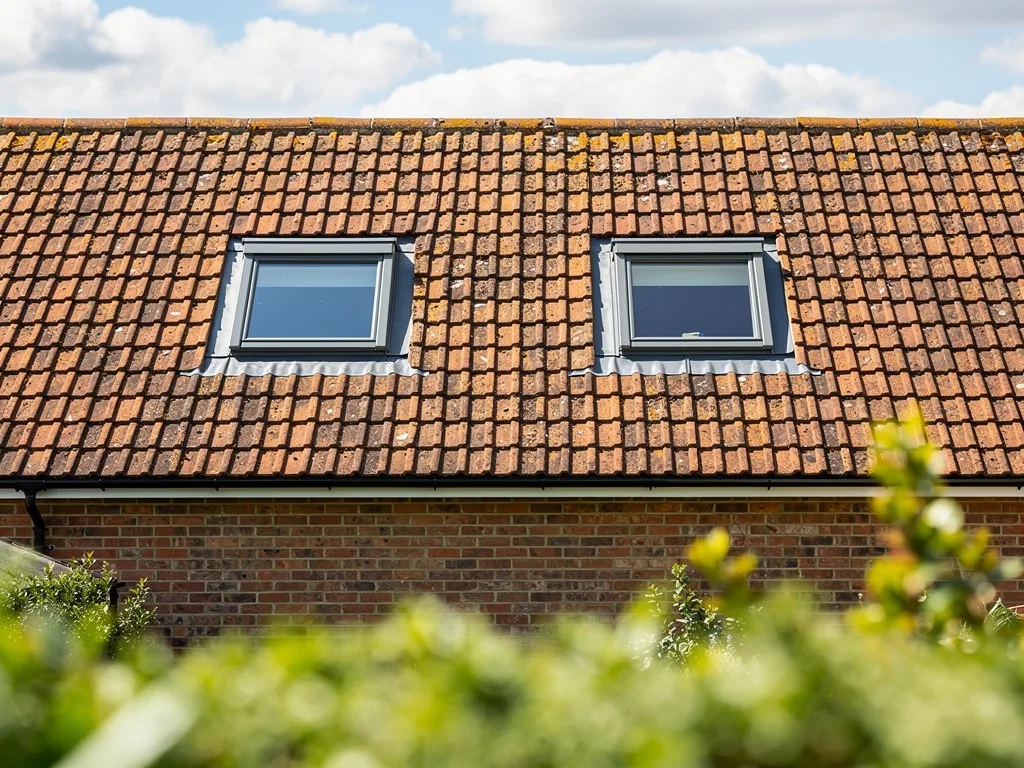
VELUX has changed the way its roof windows are sized, coded and set into the roof more than once. For anyone thinking of an upgrade, three broad groups matter: windows made before 2001, windows made from 2001 to 2013, and the current generation launched in 2013. The outside of the roof can look much the same across all three, and from the landing or the bed a twenty-five year old skylight and a five year old one can be hard to tell apart. The differences show up in the details: the code on the data plate, the depth the frame sits at in the rafters, and which blinds, flashings and add-ons are made to fit it.
Those details decide the shape of a replacement. A like-for-like swap on a later window can be a tidy job, with the new frame sitting on the same rafters and the plasterwork left alone. An older window can still be replaced from much the same position, but it may need a particular flashing to keep the lining intact, or a small amount of making good inside if a standard flashing is used. None of this is a reason to worry. It is simply the information that lets a quote describe the real job rather than a guess.
This guide concentrates on telling the generations apart. Once you know which one you have, the guide to replacing an old VELUX window takes you through what changes on the day, and the main VELUX window installation page covers the wider service in Cambridge.
Finding the data plate on the window
The quickest route to the age of a VELUX roof window is the small data plate fixed to the frame. It is usually hidden while the window is shut and comes into view once the sash is opened.
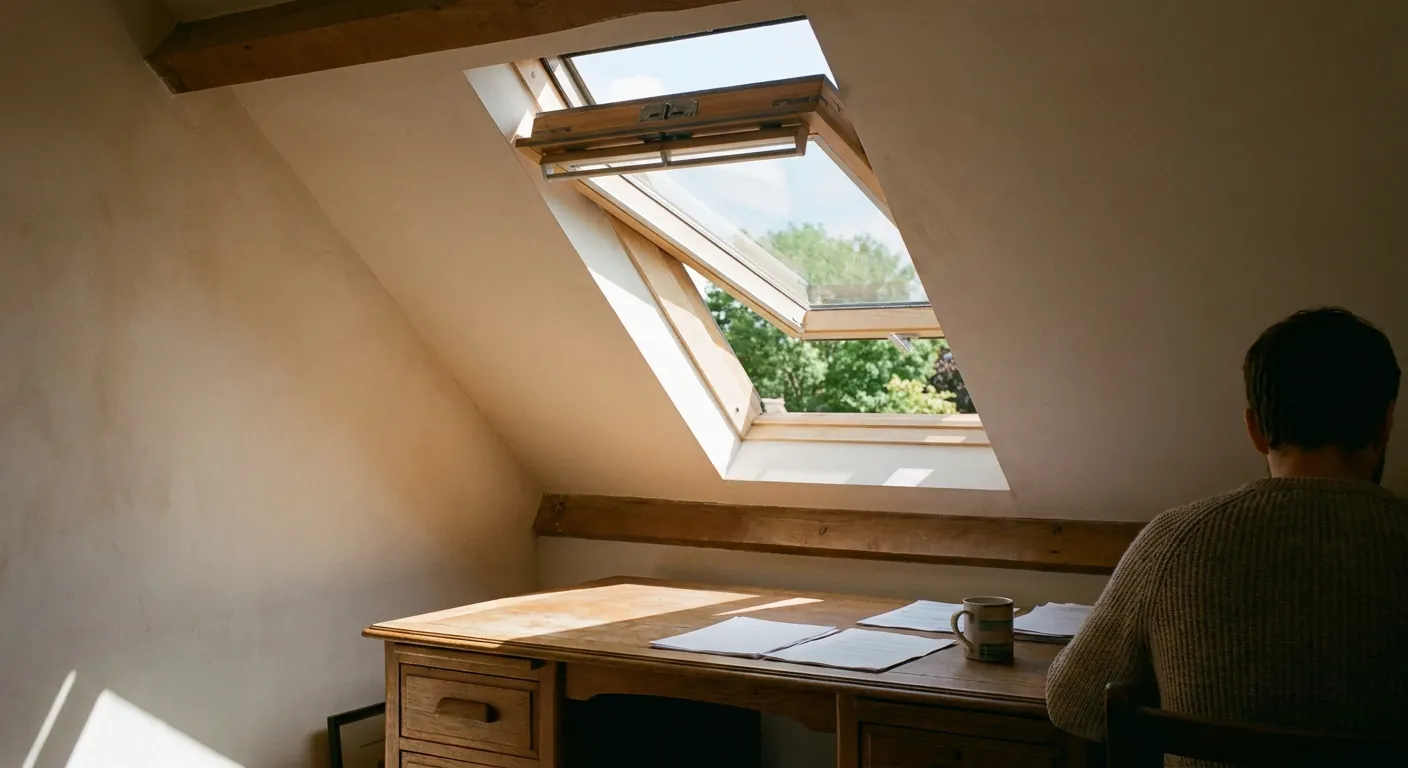
On a centre-pivot window, the kind with a handle bar along the top of the sash that swings the glass round its middle, open the window and look at the top of the outer frame, above the sash. The plate is normally there, a small label or metal strip with a row of letters and numbers. On a top-hung window, which opens outwards from the top like a hatch, open the sash and check the upper part of the frame and the sides. In a loft room with a steep slope you may need a step ladder, and a torch helps because the plate sits in shadow.
When you find it, photograph it straight on in good light rather than copying it by hand. Codes that include a letter O and a figure 0, or an I and a 1, are easy to misread, and a clear photo lets anyone quoting check it for themselves. If you are sending details for a quote, a second photo of the whole window from inside the room, with the blind raised, is useful too, because it shows the lining, the finish and anything that sits close to the frame.
Plates can go missing. Paint, a replaced blind or years of condensation can make the label unreadable, and some windows were lined in a way that covers it. A missing plate does not stop a replacement; it only means the generation has to be worked out from the size and the physical details, which later sections cover. Before you give up, check both sides of the frame and the top rail of the sash itself, since labels were not always placed in exactly the same spot on every model.
How the size code gives away the era
The format of the size code on the plate is the clearest sign of age. Each generation used a different pattern, so you can place a window in its era without knowing anything else about it.
Windows made before 2001 generally carry a size code made only of numbers, usually three digits such as 104, 206, 304 or 606. Windows from 2001 until the 2013 change carry a single letter followed by two digits, such as C02, F06, M04 or S06. Current windows carry a letter, then a K, then two digits: CK02, FK06, MK04, SK06. The K is the giveaway for the present generation, and the hub page describes it as the mark of the current range of sizes.
The size code sits alongside a type code, which describes the model rather than the size. GGL, for example, is a pine centre-pivot window and GPL a pine top-hung one. The type letters have stayed fairly stable over the years, so they help you identify the model but tell you little about the age. Current plates also carry extra digits after the size that describe the glazing and the finish; those numbers, and the pane codes in particular, are explained in the answer on whether VELUX glass is laminated.
| Era | Size code looks like | Example |
|---|---|---|
| Before 2001 | Numbers only | GGL 304 |
| 2001 to 2013 | Letter and two digits | GGL M04 |
| 2013 onwards | Letter, K, two digits | GGL MK04 |
The three examples in the table describe windows of a similar outer size, which is the point: the letters in the later codes carry on the width idea of the earlier numbers, so an M04 and an MK04 are close relations. The exact frame measurements for every code, and how to read the width and height from the letters and digits, are set out in the guide to VELUX window sizes and codes. For this guide, the pattern is what matters: numbers only, letter and digits, or letter, K and digits.
Physical signs when the plate has gone
Without a plate, the window itself still offers clues. None of them is conclusive alone, but together with the frame size they usually point firmly to one era.
- The frame measurement. Measure the outer frame, not the glass, across the width and down the slope. A figure that matches a current size closely suggests a later window; an odd size that does not appear in the current list suggests an older one.
- The depth of the frame in the lining. Older windows sit at a different depth in the roof from current ones. From inside, the frame may appear more deeply set in the reveal, and the plaster or boarding may meet it at a different line.
- The colour of the pine. Clear lacquered pine darkens and yellows with age and light. A deep honey or orange tone on the inner frame points to a window that has seen many summers, especially on a south slope.
- The glass unit. A sealed glass unit often has a code or date printed on the spacer bar between the panes, visible close up. If that date is readable, it is a strong hint to the age of the window, although a unit could have been renewed later.
- The accessories. Blinds, control bars and ventilation flaps have changed across the generations. An old blind with a clip or rail style that no longer appears in the current range suggests an older window behind it.
The house can help too. If you know when the loft was converted, that date gives a floor for the window's age, since the window is rarely older than the room. The Building Control completion certificate from a loft conversion is often among the purchase papers, and it usually shows the year of the work. Many Cambridge terraces in Romsey, Petersfield and along Mill Road had lofts converted over several decades, and the survey and sale documents from when you bought the house can mention the conversion.
Finally, check it is a VELUX at all. Other makers produce roof windows that look similar from a distance, with pine frames and a top handle bar. The maker's name normally appears on the handle, the control bar or the plate. If it is a different brand, the codes in this guide will not apply, although the principles of replacement are much the same.
Pre-2001 windows: what a replacement involves
A window made before 2001 can be replaced with a current VELUX, but the frame depth differs, so the flashing choice decides how much of the inside is touched. It is a normal job and one that is planned for from the start.
The older windows were set into the roof at a different installation depth from later ones. If a current window were fitted with its standard flashing, it would sit at the newer depth, and the lining around it, the plaster reveals inside the room, would no longer meet the frame at the same line. That can be dealt with by adjusting and making good the lining, which is sometimes the right choice if the lining is tired anyway or the reveals are being reshaped to spread more light into the room.
VELUX also makes replacement flashings for these older openings. For tiled roofs and slate roofs there are specific flashings for pre-2001 windows, which let the new window sit at the old depth so the internal lining and plaster can stay as they are. That keeps the job cleaner inside and shorter overall, and it is often the better choice in a finished bedroom where you would rather not redecorate. The guide to VELUX flashing types explains the range and which one suits which roof covering.
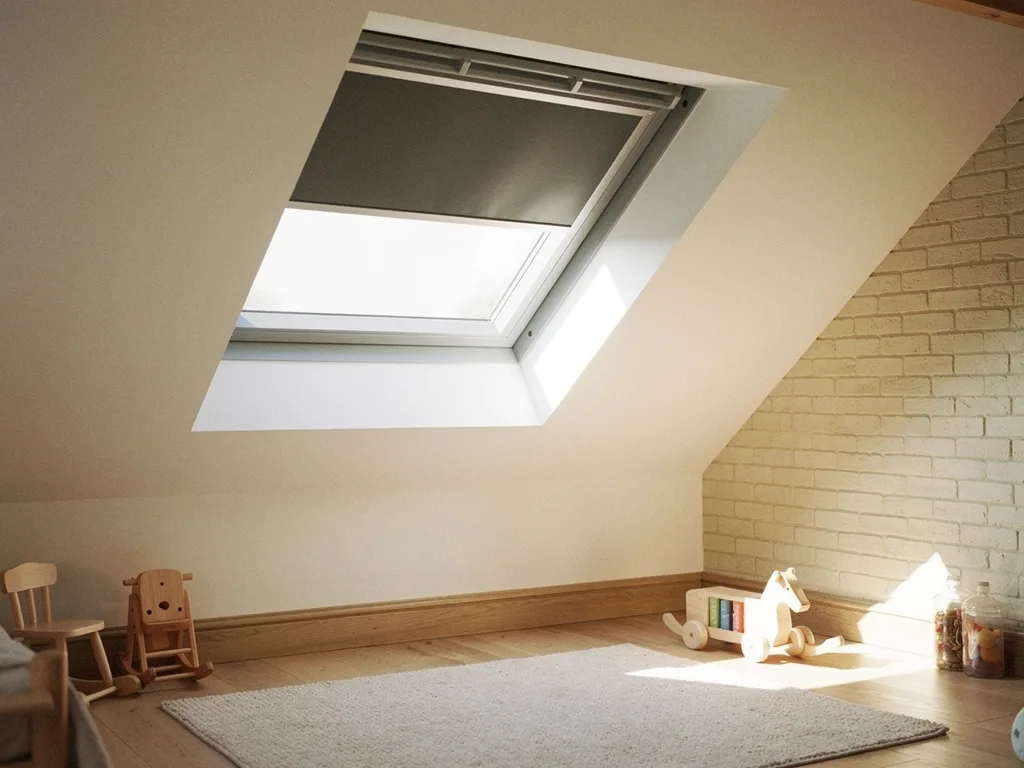
The size of a pre-2001 opening usually corresponds to a current size code closely enough for a straight swap, but it is worth confirming against the plate or a measurement before anything is ordered. The answer to will a new VELUX fit my old opening covers the cases where it does not quite match. Blinds are the other point to plan: blinds made for the old window will not fit the new one, so replacement is usually the moment to choose a new blind, and to think about whether the room needs blackout, a softer roller or external shading against heat.
2001 to 2013 windows: the closest match to today's range
Windows from the letter-and-digit era are the most straightforward to replace, because their sizes line up closely with the current codes and their installation depth is much nearer to the present one.
An M04 from this period and a current MK04 share their outer size family, and the same is true across the range: C02 to CK02, F06 to FK06, S06 to SK06. That makes the order simple. In many cases, current standard flashings can be used on these windows, and the new frame goes back onto the same rafters with the lining left undisturbed. Where the room has been lined and decorated around the old frame, the aim is to keep that work as it is.
That said, the current windows are not identical to these. The 2013 generation brought slimmer sash profiles and changes to the insulation of the frame and the glazing, so a new window of the same code can give a slightly larger glass area and a warmer frame. The practical effect in a Cambridge loft room is a little more daylight from the same hole in the roof and less of a cold surface around the window in January. On a south or west slope, the new glass can also be chosen with solar control in mind, which is a bigger change to the room than the frame itself.
Windows from this era may still be performing well, and there is no need to replace a sound window simply because a newer one exists. The answers on how long VELUX windows last and whether it is worth replacing VELUX windows set out the signs to weigh: misting between the panes, draughts around the sash, a sash that no longer closes cleanly, or a room that has always been too hot or too dark.
Current-generation windows and what they open up
A window with a K in its size code belongs to the range VELUX sells today. Its blinds, flashings and many of its add-ons are made to the same code, which makes later changes easy.
The value of the current generation is less about the window itself and more about what fits it. Because the size code is shared across windows, blinds and flashings, a blind for an MK04 fits every MK04 window of the matching type, whether it opens centre pivot or top hung. If you move into a house on Trumpington Meadows or in Eddington where the roof windows were fitted by the developer, and the bedroom under a south slope is too bright on summer mornings, you can add a blackout blind or an external awning blind without touching the roof. The VELUX blinds guide explains which suits which slope and room.
The same logic applies to operation. Manual current-generation windows can often be converted to solar or electric operation with a kit, which suits a high window in a stairwell or over a bath where the handle is out of reach. The checks involved are set out in the answer on whether a VELUX window can be made electric after fitting. Older generations are a different case, and for a pre-2001 window replacement is the more realistic path to motorised control.
A current-generation window rarely needs replacing for its age. If one is causing trouble, the question is usually about glass, shading or position rather than the window's era, and that belongs in a light plan rather than a like-for-like swap.
Using the replacement to get the light right
Once you know the generation, you know how the old window can come out. The better question is whether the new one should be exactly the same, or whether the room would be better served by different glass, a different size or a different position.
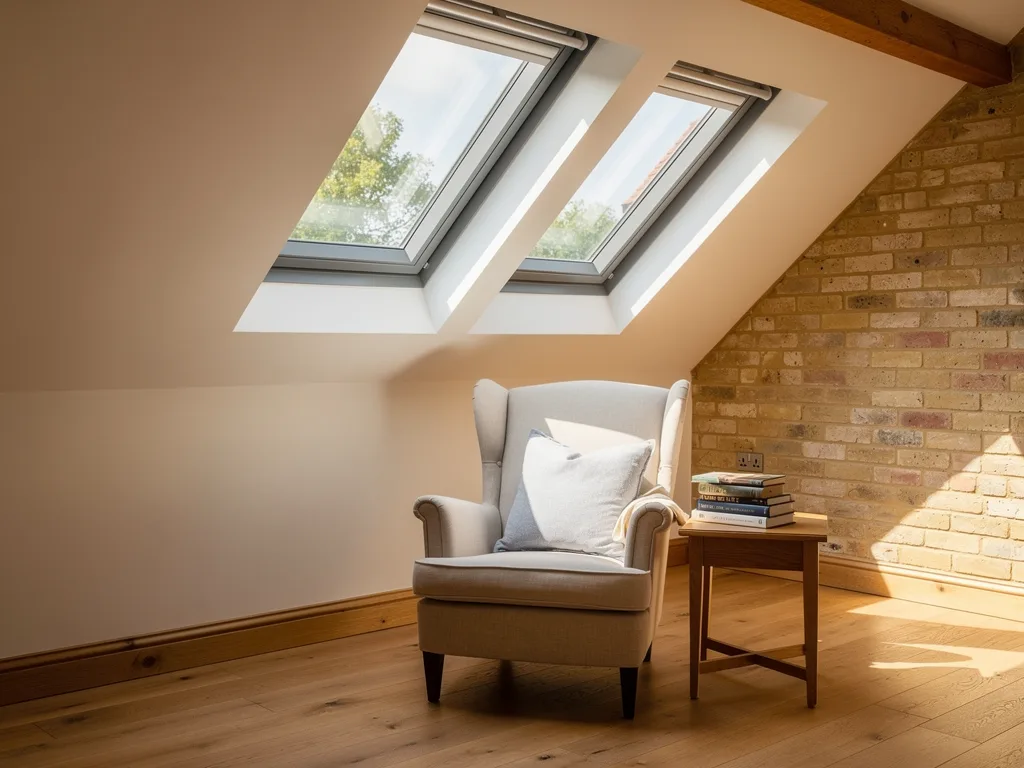
Many older VELUX windows in Cambridge lofts were placed where the rafters made fitting easy, not where the light would be most useful. A window centred over a bed on a south-facing slope pours sun onto the pillow at the height of summer. A small window high on a north slope may light the ceiling and leave the desk below in shade. A replacement is the cheapest moment to change these things, since the roof is already open and the flashing is being renewed.
At our survey we look at which way the slope faces, where the sun will fall through the day and the year, and how the room is used. That tells us whether to keep the same size, go taller in the same width, choose solar control glass, add an external blind, or move the opening to a better place. The written light plan that comes with every quote sets out the position, size, glass and shading we recommend, with the reason for each. Our page on how we plan the light explains the thinking in more detail.
If you have found your plate and want a firm answer on the replacement, book a light survey or message us on WhatsApp with a photo of the plate and one of the window from inside the room.
Questions people ask
Can I tell the exact year my VELUX window was made?
The size code places a window in its era: numbers only before 2001, letter and digits from 2001 to 2013, and letter, K and digits since. A date printed on the glass spacer bar, or the date of the loft conversion, can narrow it further. For planning a replacement, the era is what matters, not the exact year.
Does an old VELUX window mean the lining has to be replaced?
Not necessarily. For windows made before 2001 there are replacement flashings that let a new window sit at the old depth, so the lining and plaster can usually stay. Later windows sit much closer to current depth. The lining is only reworked where it makes sense, for example if the reveals are being reshaped to spread more light.
Will my old VELUX blind fit a new window?
A blind is made for a specific size code and generation, so a blind from a pre-2001 or 2001 to 2013 window will generally not fit a current one. Replacement is a good time to choose the right blind for the slope, particularly external shading on a south or west facing roof.