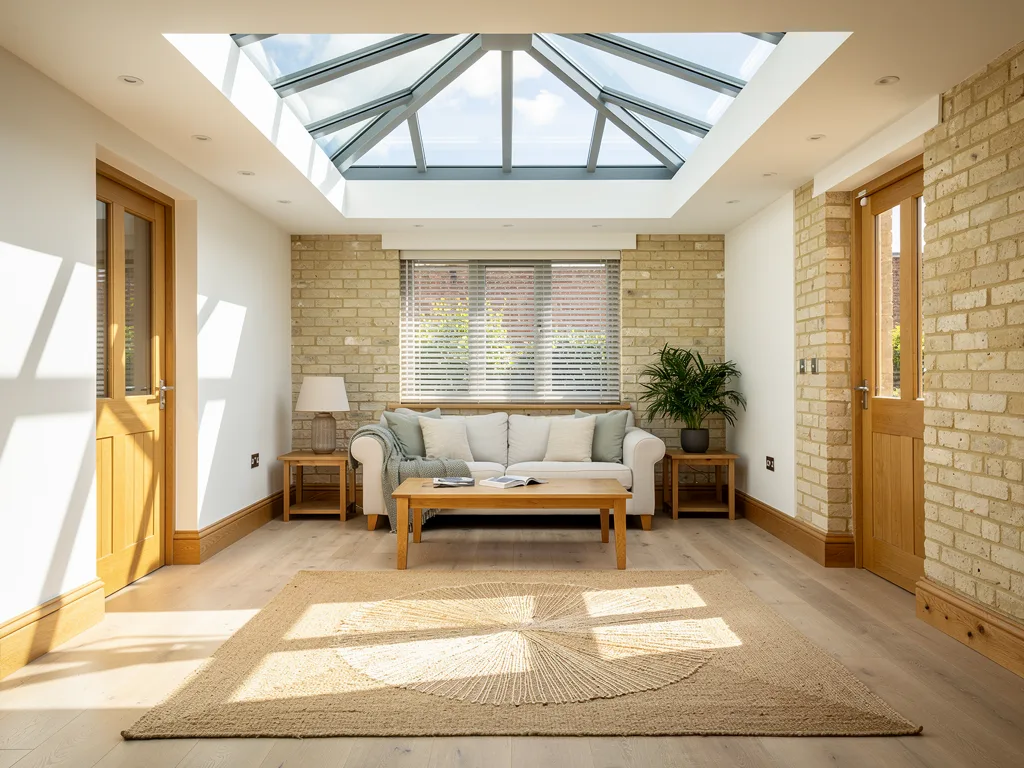
What a replacement changes, and what it keeps
Swapping an old VELUX for a current one keeps the hole in the roof and the rafters either side of it, and changes almost everything you can see or touch: the glass, the frame and sash, the flashing on the roof and, usually, the blinds.
That split is useful to hold in mind before anyone climbs a ladder. The expensive, disruptive part of a roof window is the structure: cutting rafters, fitting trimmers, forming the opening and building the lined reveal inside. An old VELUX window replacement avoids nearly all of that, because the opening was made years ago and is usually still sound. What you pay for is the part that has aged. A pine sash that has darkened to orange, a sealed unit that has misted between the panes, a handle that no longer pulls the sash tight against its seals, and a flashing whose rubber and aluminium have been through twenty or thirty Cambridge winters.
The new window arrives with its own frame, sash, glazing and flashing kit, and the old ones come out as a set. It is tempting to think of it as swapping a pane of glass, but the flashing is what keeps rain out of the roof, and it is matched to the frame. Putting a new window into an old flashing, or an old window back into a new one, defeats the point. So the flashing is renewed every time, and the tiles or slates immediately around it are lifted and relaid.
What can often stay is the inside of the room: the plasterboard reveal, the decoration around it and the ceiling beyond. Whether it does depends on the age of the old window and the depth the new one needs to sit at, which the next chapters explain. If you are not yet sure which generation you have, our guide on how to identify your VELUX window generation shows where the data plate is and how to read it, and the parent page on VELUX window installation in Cambridge sets out the whole service.
The glass: a different pane for the same slope
The glazing is the change you will notice most, because it decides how warm the room feels in January, how hot it gets in July, and whether the rain sounds like a drum at night.
An old VELUX skylight from the 1980s or 1990s usually has a basic double-glazed sealed unit. Some have an early low-emissivity coating and some have none; the gap between the panes may have held air or a gas fill that has long since escaped through the edge seal. Once that seal goes, moisture gets in and the pane mists from the inside, which no amount of cleaning will clear. Even where the glass is still clear, it loses far more heat than a current unit, and the inner face runs cold enough in winter for condensation to form and run down onto the lining.
A current VELUX comes with double glazing as standard, with a low-emissivity coating, an inert gas fill and a laminated inner pane, and triple glazing is available across much of the range. The laminated inner pane matters on a window above a bed or a landing: if it breaks, the interlayer holds the fragments in place rather than letting them fall. Our answer on whether VELUX glass is laminated explains the pane types, and the one on double or triple glazing covers when the extra pane earns its place.
Here is where the light comes in. The pane you choose should suit the slope the window sits on. On a north slope, the light is steady and soft all day, with little direct sun, so a clear, well-insulated pane lets through as much daylight as possible and there is nothing to control. On a south slope over a loft bedroom, the sun is high and strong from late morning to mid afternoon for much of the year, and a pane with a solar control coating cuts the heat that reaches the room before a blind is even drawn. East and west slopes sit between the two, with low, raking sun at one end of the day that can glare straight across a desk or a pillow.
For an old VELUX skylight replacement, this is the real gain. The old window was probably chosen from a catalogue with no thought for any of that. A replacement is the chance to put the right glass on the right slope. The answer on whether VELUX glass reduces heat from the sun compares solar protection glazing with external shading.
The flashing: renewed every time, matched to the roof
The flashing is the set of shaped aluminium pieces and underlay collar that make the joint between the window and the roof covering, and it is always replaced with the window rather than reused.
Old flashings were made for old frames. The profiles, the depth at which the frame sits and the way the pieces interlock have all changed across the generations, so a current window will not seal properly into an original flashing. Even where the outline looks similar, the old rubber gaskets and foam strips have hardened, and the aluminium has usually been bent and flattened by the last person who lifted the tiles around it.
For windows made before 2001, the frame sat deeper in the roof than a current window is designed to. VELUX makes flashings for this case that let the new window sit at the old installation depth, so the inside of the opening does not have to be rebuilt. For windows from 2001 onwards, the depths are closer and a standard flashing for the roof covering is usually the right choice. The type depends on the covering: profiled concrete tiles, plain clay tiles and Welsh slate each take a different flashing, and a pair of windows side by side takes a combination kit. Our guide to VELUX flashing types is the place for the codes; what matters here is that choosing the flashing is part of choosing the window.
Around the new flashing, the tiles or slates are relaid and cut to line up with the courses either side. On a gault brick terrace in Romsey or off Mill Road, the rear slope is often Welsh slate, and sound slates are set aside and reused. On a 1930s semi in Cherry Hinton or Chesterton, it is more likely to be plain or interlocking concrete tiles. A new underlay collar goes in under the covering so that any water driven under the tiles is carried out over the flashing, which older installations often lacked entirely.
The lining and the plaster: when the room is left alone
Whether the inside of the room needs work depends on two things: the depth at which the new frame sits, and whether the new window's outer frame size matches the old opening.
A like-for-like swap in the same size, at the same depth, leaves the lining where it is. The old frame is unscrewed from the rafters, the new one fixed in its place, and the joint between the frame and the existing plasterboard reveal is finished off with a trim or a small amount of making good. Paint may need touching in, but the ceiling is not disturbed.
The lining changes when something else changes. If the old window is replaced with a taller one, the head or sill trimmer moves and the reveal has to be rebuilt to the new size. If the old reveal was never built properly, with the top running parallel to the ceiling slope rather than level and the bottom running at right angles to the glass rather than vertical, daylight will have been squeezed and warm air trapped against the glass for years, and a new lining built to the right shape spreads the light further into the room. And if there was never any insulation around the old frame, a current insulation collar and vapour control collar close the gap that caused the cold ring of damp and mould on the plaster.
These collars are a small part of the materials and a large part of the result. Our guide to VELUX insulation collars and installation kits explains what each one does and why an old opening without them tends to stain around the edges. If you want to know whether your particular opening will take a current window without touching the plaster, the answer on whether a new VELUX will fit your old opening matches old sizes to current ones.
The blinds: why the old ones rarely carry across
Blinds are sized to the window generation, so a blind made for a window from the 1990s will not usually fit the frame of a current one, and new blinds form part of the replacement.
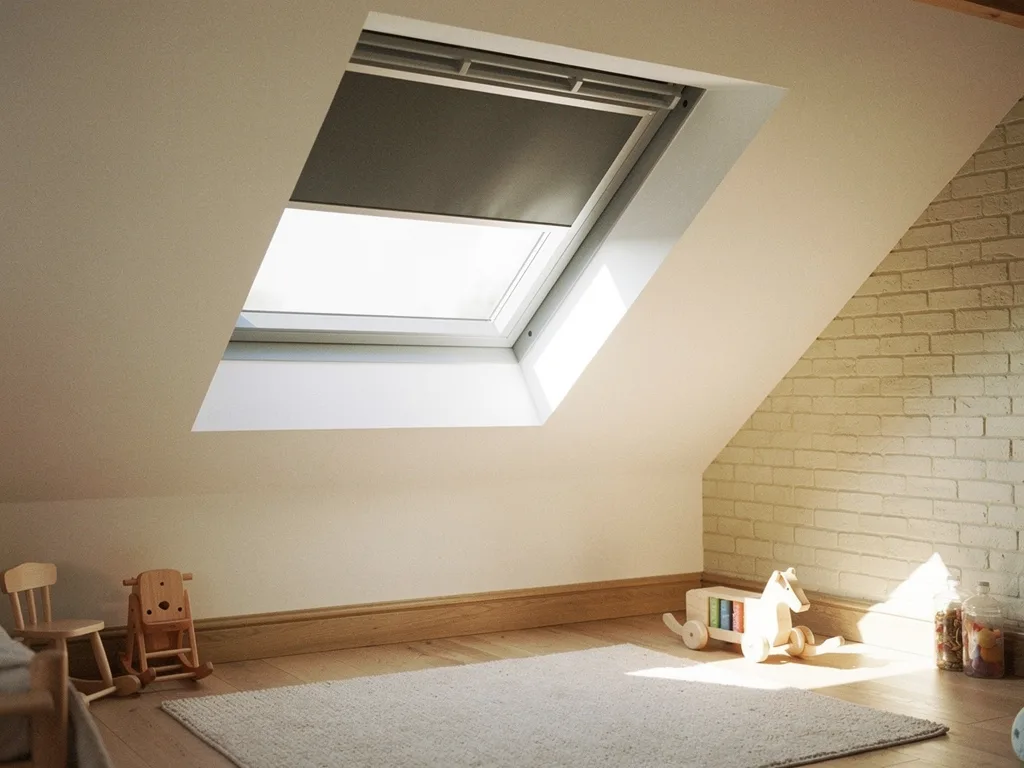
That can feel like a waste if the old blackout blind is in good condition, but it is also a chance to fix whatever never worked. A current VELUX frame has brackets ready for blinds, so they clip in without screwing into the lining, and the blind runs in side channels that stop light creeping round the edges. For a child's room or a loft bedroom used by a shift worker, that difference in blackout is noticeable from the first night.
| Part | Old window | After replacement |
|---|---|---|
| Glazing | Basic double, may be misted | Low-E double or triple, laminated inner pane |
| Flashing | Original, hardened seals | New, matched to frame and covering |
| Lining | Often uninsulated edges | Kept, or rebuilt with collars |
| Blinds | Old size, may not fit | New, on factory brackets |
| Operation | Manual | Manual, electric or solar |
The blind should suit the slope as well as the room. On a north slope, a light-filtering roller blind softens the light without darkening a study. On a south or west slope, an external awning blind on the outside of the glass stops the sun's heat before it reaches the pane, which an internal blind cannot do; the internal blind can still be fitted inside for privacy or blackout. The VELUX blinds guide sets out each type and where it suits.
Operation, finish and fresh air
Replacing the window also lets you change how it opens, what it is made of and how it ventilates the room, without changing the size of the opening.
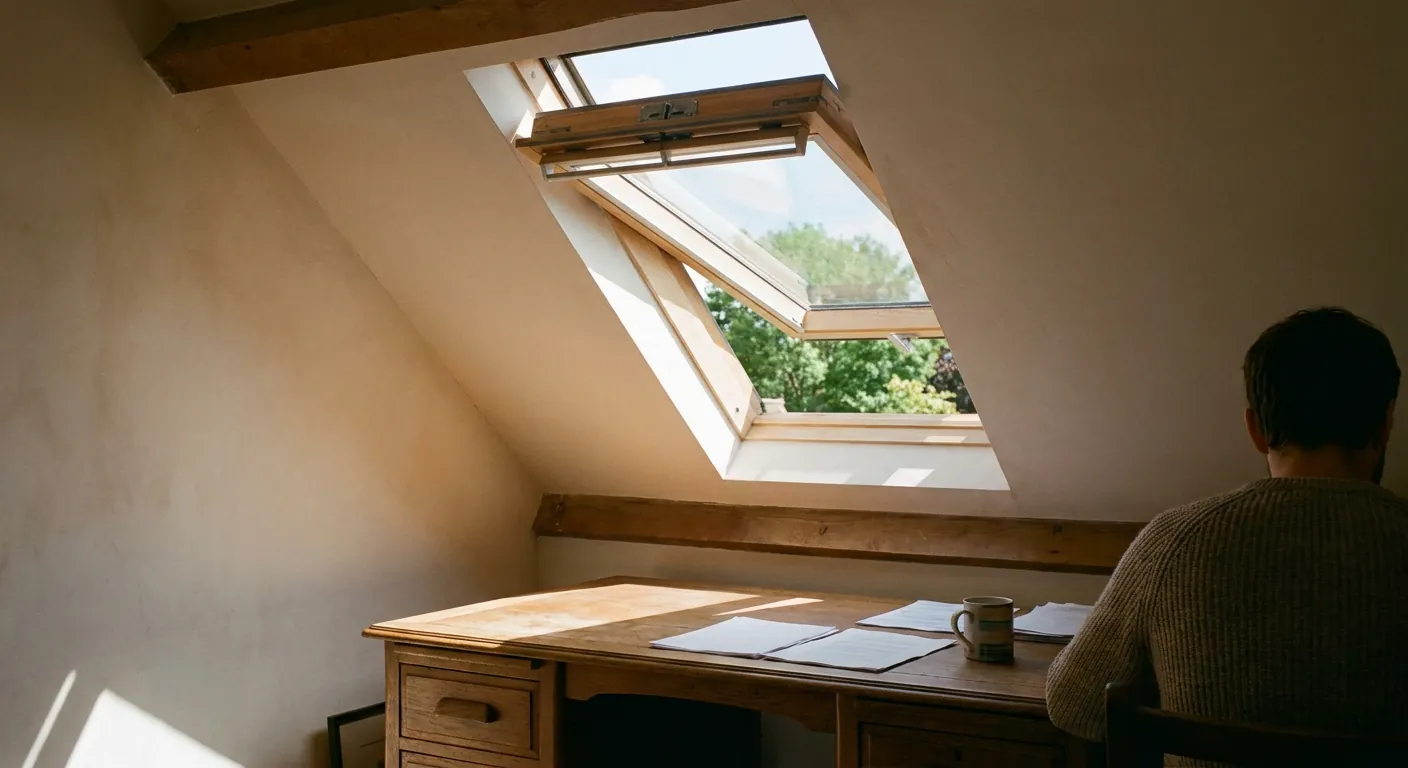
Old VELUX windows were mostly centre pivot in varnished pine. The current range offers centre pivot and top hung versions in the same sizes, in lacquered pine or in white polyurethane, which is a moulded coating over a timber core that does not need painting and copes well with steam. For a bathroom, an en suite or a kitchen, white polyurethane is the usual choice, and the answer on fitting a VELUX over a shower covers the moisture points. For a loft room where you want to stand at the window and look out over the roofs towards the Gog Magog Hills or the fen edge, a top hung window opens outward from the top and leaves the whole glass area clear. Our comparison of VELUX window ranges goes through the finishes and the ways of opening.
An old manual window high above a stairwell or at the top of a sloping ceiling is often never opened, because reaching it is awkward. A replacement can be electric, wired to a mains supply, or solar, charged by a small panel on the window and needing no cables inside the room. Both come with a rain sensor that closes the window at the first drops, which means you can leave it open for air on a warm afternoon and go out. The guide to VELUX INTEGRA electric and solar windows compares the two.
A current window also carries a ventilation flap in the top of the sash that lets a small amount of air through while the window is shut, with a filter behind it. That background ventilation helps keep condensation down in a closed room overnight, which is one reason a replaced window often stays drier than the old one did.
Rethinking the light while the roof is open
A replacement is the one time the opening is exposed, the scaffold or roof access is already in place and the rafters are visible, so it is the cheapest moment to ask whether the window is in the right place and the right size.
Plenty of old roof windows were put where they were easiest to fit rather than where the light was wanted. A skylight over the foot of a bed lights the duvet and leaves the desk in the far corner dim. A window near the ridge of a tall loft lights the ceiling and throws a bright sun patch on the floor at midday, while the part of the room where you sit stays flat and grey. Before we quote, we look at which way the slope faces, where the sun reaches through the day and the year, and where in the room you actually spend time. Our page on how we plan the light shows the method.
Sometimes the answer is the same window in the same place with better glass and a blind. Sometimes it is a taller window in the same width, which keeps the rafters and reaches lower down the slope so you can see out while seated. Sometimes it is a second window alongside the first, sharing a combination flashing, which spreads the light across a wide room. And occasionally the best change is to move the opening. The answers on fitting a bigger VELUX window and moving a VELUX to a different position explain what each involves. Every quote comes with a written light plan that sets out the position, size, glass and shading, and the reason for each, so you can compare a straight swap with a change before deciding.
Paperwork, planning and the day itself
Replacing a roof window with one of the same size in the same place is usually permitted development, but the new window still has to meet current Building Regulations, and the work may need notifying.
Replacement windows in an existing home are controlled work under the Building Regulations in England, so the new window has to meet the current thermal standard, and a notification or certificate follows the job. We install to current Building Regulations and handle the Building Control notification where the work is notifiable, so you receive the paperwork you will need when you sell. If the size or position changes, that is structural work and Building Control will want to know about it in any case.
On planning, a like-for-like roof window in a house generally raises no issue, because nothing about the outside appearance changes beyond a cleaner frame. It is worth checking first if the house is listed, in which case listed building consent may be needed even for a replacement, or if it is in a conservation area with an Article 4 direction; Cambridge City and South Cambridgeshire have many conservation areas between them, and Greater Cambridge Shared Planning publishes a map. On a street-facing slope in a conservation area, a flush-fitting conservation window may be the better replacement. The answer on planning permission for VELUX windows covers the rules.
On the day, a straight swap of one window in the same size takes around half a day. The old sash comes out from inside, the frame is released from the rafters, the covering is lifted around it, and the new frame, underlay collar, flashing and window go in from the bottom up before the tiles or slates are relaid. Much of the work is done from inside the room through the opening, but the flashing and the covering need safe access on the roof. Dust sheets go down inside, and the room is usable again the same day. The answer on how long a VELUX installation takes covers what adds time, such as a larger window or a rebuilt lining.
Questions people ask
These are the points that come up when Cambridge homeowners weigh up an old VELUX against a new one.
Can I replace just the misted glass in an old VELUX?
A new sash or pane is sometimes available for older sizes, but it leaves the old frame, the old flashing and the old seals in place, and none of the other changes described above. Replacing the whole window renews the flashing, adds insulation around the frame and brings the glazing up to current standards in one visit.
Will the new window look different from outside?
From the street, a like-for-like replacement looks much the same, with a neater, grey aluminium flashing and a cleaner frame. If you change to a larger size or add a second window, the outside changes too, and that is covered in the light plan and the quote.
Do I need to redecorate afterwards?
For a same-size swap at the same depth, usually only the edge of the reveal needs touching in. If the lining is rebuilt or the window size changes, the new plasterboard will need painting once it has dried. To see what your window needs, book a light survey or message us on WhatsApp.