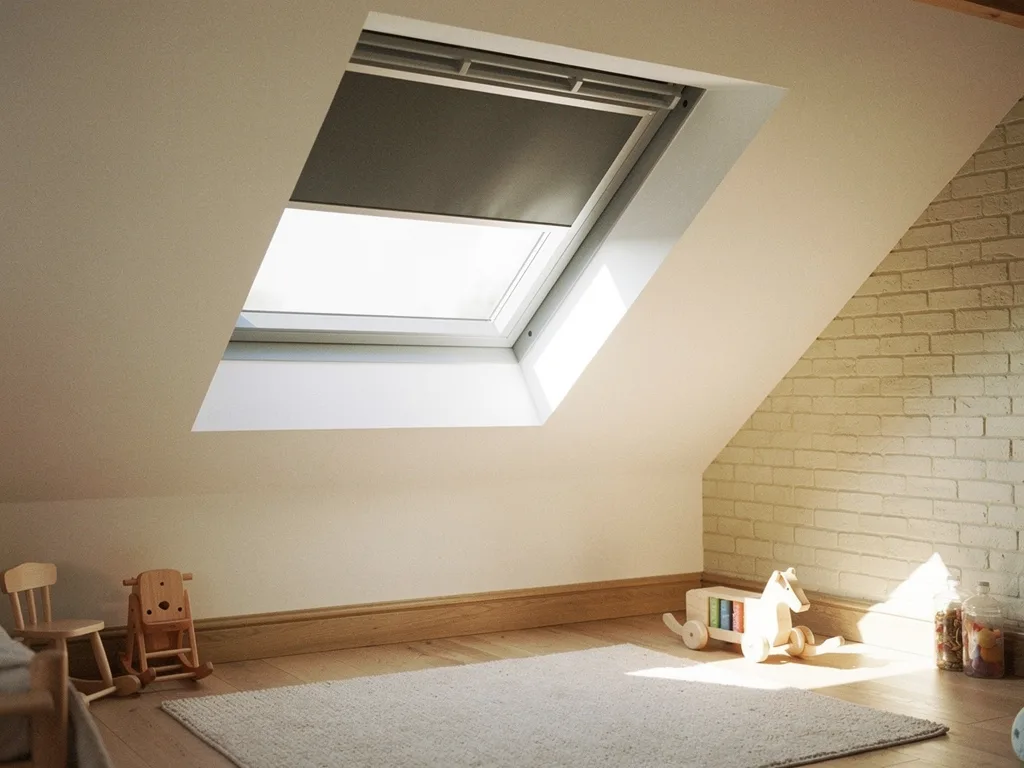
What comes as standard in a VELUX window
An ordinary VELUX roof window, the kind fitted into a loft conversion or a bedroom slope, arrives double glazed unless a different pane is ordered. That double glazed unit is already a well-specified piece of glass, not a basic one.
Look at the current standard pane in layers from outside to in. The outer sheet is toughened, so it takes hail, a dropped slate or a careless foot on a ladder. The inner sheet is laminated, so if it ever breaks the pieces stay stuck to the interlayer rather than falling into the room, which matters for glass over a bed or a desk. Between the two sits a sealed cavity filled with an inert gas, and one of the inner faces carries a low-emissivity coating that reflects heat back into the room. The outside face usually has an easy-to-clean coating that helps rain carry dirt off the glass.
The glazing is written into the product code on the data plate. The last two digits of a code such as GGL MK04 2070 name the pane, and 70 is the laminated double glazed pane that has been the common choice in the UK for years. Older windows carry other numbers, so a code from a pre-2013 window will not match today's list. Our guide to VELUX sizes and codes shows how to read the plate, and Is VELUX glass laminated? explains the safety layers in more depth.
- Outer toughened pane: heat-strengthened to take hail, foot traffic during maintenance and thermal stress.
- Solar-control coating (optional) on the inside face of the outer pane, cutting heat gain on south and west roofs.
- Argon-filled cavity: a denser gas than air, so less heat crosses the gap.
- Warm-edge spacer: a low-conductivity edge that keeps the units’ edges warmer and cuts condensation at the frame.
- Low-E coating: a microscopically thin metal layer on a cavity face that reflects room heat back inside.
- Inner laminated pane: two sheets bonded to an interlayer, so if it ever breaks, the glass stays in place overhead.
- Triple glazing only: a third pane and a second argon cavity, usually with a second low-E coating. Warmer, heavier, and it lets in slightly less light.
How triple glazing differs
A triple glazed VELUX pane adds a third sheet of glass and a second gas-filled cavity. That lowers heat loss, raises the temperature of the inner surface and cuts more outside noise, at the cost of weight and a little light.
The gain is measured by the U-value, the rate at which heat escapes through the window. Part L of the Building Regulations sets a limiting U-value of 2.2 W/m2K for rooflights and roof windows, now assessed in the horizontal plane, and it applies when a window is replaced as well as when a new one goes in. A current double glazed VELUX sits well inside that limit. A triple glazed one goes further, which is why the extra pane is aimed at homes chasing low heat bills rather than simply at meeting the rules.
Three trade-offs come with it. The sash is heavier, which is noticeable on the biggest sizes and on top hung windows that swing out. Each extra layer of glass passes slightly less daylight and slightly less solar heat, so the room is a touch dimmer on a grey day. And the pane costs more, both on its own and on the bill for the window. None of these is a reason to avoid triple glazing, but they are reasons to choose it where it earns its place.
| Point | Double glazed | Triple glazed |
|---|---|---|
| Heat loss | Low, meets Part L | Lower still |
| Inner glass in frost | Cool | Warmer |
| Rain and traffic noise | Reduced | Reduced further |
| Daylight through | Slightly more | Slightly less |
When the third pane is worth paying for
Triple glazing pays back best where a room loses a lot of heat through its roof glass and gains little from the sun. That points to big windows, cold slopes and rooms people sit in for long stretches.
- North-facing slopes. A north roof window gives steady, glare-free light but almost no winter sun, so the glass is a heat loss with nothing coming back. Better insulation there is pure gain.
- Large or grouped windows. Two or three windows side by side, or a tall pair stacked in a loft, add up to a lot of glass. The lower U-value multiplies across the whole area.
- Bedrooms and bathrooms. A warmer inner pane is less likely to run with condensation on a cold morning, which helps over a bed and in a steamy room. Our answer on a VELUX over a shower covers the ventilation side.
- Noisy positions. A loft facing a busy road, a railway line or a flight path benefits from the extra pane as much for sound as for heat. Heavy rain on a roof window is also softened.
- Low-energy homes. Where the rest of the house has been insulated to a high standard, a double glazed roof window can become the weakest surface in the room.
In Cambridge that list maps onto real houses. The rear slopes of gault brick terraces in Romsey and Petersfield often face north or close to it, and loft bedrooms there sit right under the glass. Homes close to the railway through the east of the city, or near Hills Road and the ring roads, have a noise case. Newer homes at Eddington and Trumpington Meadows were built to tighter energy standards, so owners adding roof windows tend to want the glass to match.
When double glazing is the better choice
On a south or west slope the problem in a loft room is usually too much heat in summer, not too little in winter. There, the money is often better spent on solar control glass or an external blind than on a third pane.
Triple glazing does trim solar gain a little, but it is not designed as heat protection. A south-facing loft bedroom under a double glazed window with an external awning blind will usually be cooler on a July afternoon than the same room under triple glazing with nothing outside, because the awning stops the sun before it reaches the glass. Our answer Does VELUX glass reduce heat from the sun? explains the solar control options, and the VELUX blinds guide sets out which blind suits which slope.
Double glazing also makes sense for a small window lighting a landing or a storage loft, where the glass area is so modest that the extra pane barely changes the heat loss of the house. And on a tight budget, putting the money into a correctly fitted insulation collar round the frame can do more for comfort than upgrading the glass, because a cold gap round a window loses heat and invites condensation whatever pane is in it.
Upgrading an older window to triple glazing
The glass in an existing VELUX is sealed into its sash, so the usual way to get triple glazing is to replace the window. A like-for-like replacement can often keep the old lining and plasterwork.
A VELUX from before about 2001 or from the 2001 to 2013 generation will almost always have a double glazed pane with an older coating, and after many years the seal may have failed so the unit mists between the panes. Swapping to a current window lets you pick the pane at the same time: standard double, triple, or a glass aimed at heat or noise. It is worth checking the generation first with our guide to identifying your VELUX window, then reading replacing an old VELUX window for what changes in the swap. Not every type and size is made in every glazing option, so we confirm the exact pane available for your window code before quoting.
For new windows and replacements alike, we install to current Building Regulations and handle the Building Control notification where the work is notifiable. The service page for VELUX window installation in Cambridge covers the whole job.
Questions people also ask
Can you tell if a VELUX window is triple glazed by looking at it?
Sometimes. Look at the edge of the glass from inside with the sash open: a triple glazed unit shows three sheets and two spacer bars, and the whole pane is visibly thicker. The surer check is the data plate on the top of the frame, where the last digits of the code name the pane type.
Does triple glazing stop condensation on a VELUX?
It reduces it, because the inner pane stays warmer, but it does not remove the cause. Condensation comes from moist air meeting a cold surface, so ventilation matters just as much. Using the ventilation flap and an extractor in a bathroom does more than glass alone.
Is a triple glazed VELUX too heavy for my roof?
The extra weight is carried by the frame and rafters in the normal way and is well within what a sound roof takes. It is felt more in the sash, which is heavier to turn for cleaning, and electric operation can help on the larger sizes.
Are VELUX flat roof windows double or triple glazed?
The VELUX flat roof range pairs an insulated glazed unit with an outer glass or polycarbonate top, so the layers are arranged differently from a pitched roof window. Our guide to VELUX flat roof windows explains the options and how they compare.