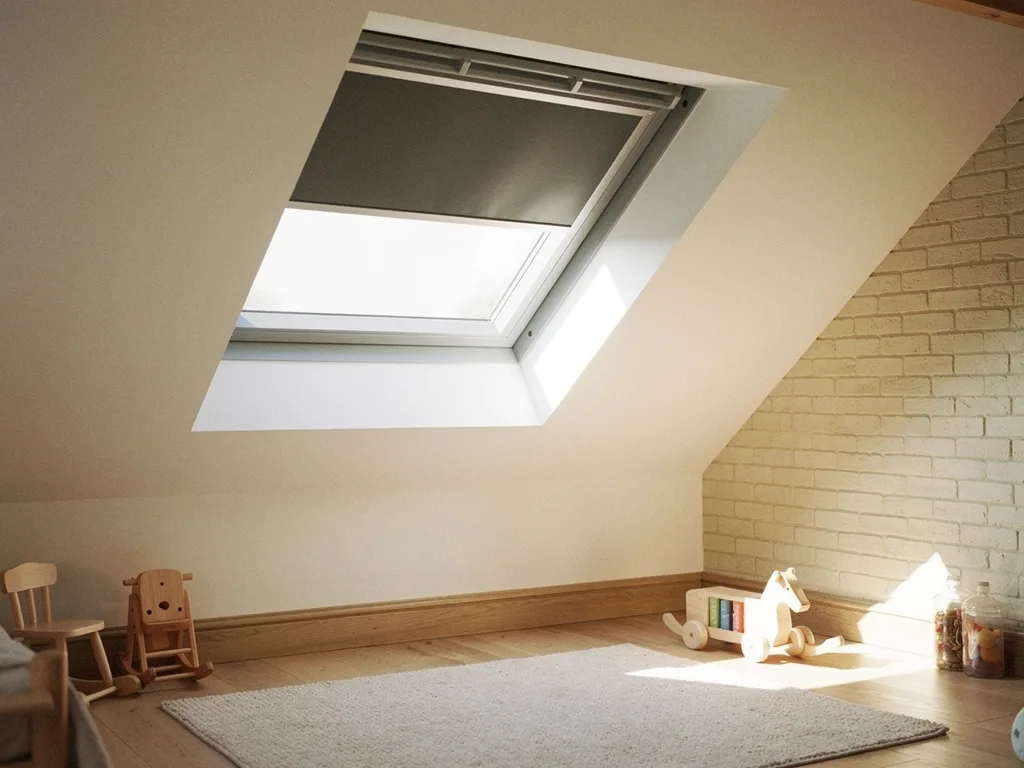
What film actually does on overhead glass
A window film is a thin polyester sheet, usually applied to the inside face of the glass, that either absorbs or reflects part of the sunlight hitting it. On a rooflight it works harder than on a wall window, because horizontal and shallow-pitched glass faces the high summer sun almost head on.
The films sold for homes fall into a few families. Solar control films carry a metallised or ceramic layer that reflects and absorbs part of the solar heat. Tinted films simply darken the glass. Retrofit low-E films aim to hold warmth in during winter. Frosted and privacy films diffuse the view, and safety films hold broken glass together. Each changes the balance between daylight and heat that the unit was designed around, and each adds a layer of plastic to a surface you will look up at every day.
The heat a film stops is split between what it reflects back out and what it absorbs. Reflected heat leaves the building. Absorbed heat stays in the glass, and part of it then radiates and convects into the room. An internal film that works mainly by absorption therefore does less for a hot loft bedroom than its headline figure suggests, and far less than shade that stops the sun before it reaches the glass. The guide to g-value and light transmission explains how that total solar heat figure is measured.
Why a sealed rooflight unit is the risky part
The main danger is not to the film but to the glass beneath it. A film that absorbs sunlight heats the pane it is stuck to, while the edges of that pane stay cool inside the frame, and that temperature difference can crack the glass.
This is called thermal stress. The centre of the pane expands as it warms, the shaded edge does not, and if the difference is large enough a crack starts at the edge and runs inward. Toughened glass tolerates this well. Annealed and laminated glass are more vulnerable, and many rooflights have a laminated inner pane precisely because Part K and good practice call for safety glass overhead. A dark film on a laminated inner pane, under a clear outer pane, under a south-facing Cambridge summer sky, is close to the worst combination.
Heat also builds up inside the sealed cavity. A double or triple glazed unit is sealed at the edge, and the low-E coating and argon fill inside it rely on that seal staying intact. Repeated high cavity temperatures push the seal harder than it was designed for, and a failed seal lets moisture in, which shows as misting between the panes that cannot be wiped away. Film makers publish glass compatibility charts for this reason, and some film types are simply not recommended on certain sealed units.
Finally, there is the paperwork. Rooflight and sealed unit makers often exclude glass that has had film applied after installation, so a crack or failed seal may no longer be covered. Check the product warranty before anything is stuck to the glass.
Film types against a rooflight
Some films are far gentler on a sealed unit than others. Light, clear and mainly reflective films carry less risk than dark, absorbing ones.
| Film | Main effect | Risk to the unit |
|---|---|---|
| Dark tint | Less light, some heat cut | High: absorbs heat |
| Reflective solar | Cuts more heat | Medium to high |
| Clear spectrally selective | Heat cut, light kept | Lower, check chart |
| Frosted or privacy | Diffuses the view | Low to medium |
| Clear UV or safety | Cuts UV, holds glass | Low |
These are general tendencies, not a rating for any product. The figure that matters is the solar absorption of the film on your specific glass, which a reputable film supplier can check against the unit make-up before fitting.
What film does to the light in the room
Every film trades daylight for comfort, and on a rooflight that trade is visible all day because the glass is your view of the sky.
Tinted and reflective films lower light transmission, often noticeably, and some shift the colour of the room grey, bronze or blue. A rooflight added to brighten a deep Victorian terrace kitchen off Mill Road can end up doing half the job it was fitted for. Reflective films can also give a mirrored look from inside after dark, when the room is brighter than the sky. Film applied overhead is hard to get perfectly flat: small bubbles, dust and edge lines catch the eye more on a skylight than on a wall window, because the sky behind them is bright and even.
Clear UV-blocking film is the exception. It barely changes the light, and it can help if your concern is sun fading on a floor or sofa rather than heat. Our answer on whether rooflights fade furniture covers the glass options that do the same job from inside the unit.
Better ways to cool or soften a skylight
If the problem is summer heat or glare, the most effective fixes stop the sun outside the glass or build the control into the sealed unit itself.
- External shading. An awning blind or shade on the outside of the rooflight stops heat before it reaches the glass, which no internal layer can match. Our guide to external shading for rooflights compares the options.
- Solar control glass. A replacement unit with a solar control coating on the right face cuts heat while keeping a clear, neutral view, and it carries its own warranty.
- Internal blinds. Useful for glare and blackout, with limits on heat, as set out in our answer on whether internal blinds stop overheating.
- Position and orientation. For a new opening, the slope it faces decides most of the heat before any glass is chosen, which is what our light planning works out.
Where an older unit is already overheating, upgrading the glass tends to be the lasting answer. Our energy efficient rooflights service replaces tired units with glass matched to the slope, and the summer overheating guide explains why roof glass gathers so much more sun than a wall window. If you would like the glass and shading worked out for your own roof, book a light survey or message us on WhatsApp.
Questions people also ask
Can window film crack a double glazed skylight?
It can. Dark or strongly absorbing film makes the inner pane hotter than its edges, and that difference can start a thermal stress crack, particularly on annealed or laminated glass. Toughened glass and light, clear films carry far less risk. A film supplier should check compatibility with the exact unit first.
Does film on a rooflight void the warranty?
It can. Many glass and rooflight makers exclude units that have had film applied after they left the factory, because film changes how the glass heats up. Read the product warranty, or ask the maker, before fitting any film.
Is it better to put film on the inside or outside of a rooflight?
External film rejects more heat, but on a roof it faces rain, frost and ultraviolet light, wears faster and is hard to reach safely. Internal film lasts longer but works partly by absorbing heat, which is the source of the glass stress risk. Neither matches a solar control unit.
Will window film make my rooflight darker?
Most heat-reducing films do, some only slightly and some a great deal. Clear spectrally selective films keep the most light. For a comparison with coated glass, see whether solar control glass makes a room darker.
