What an EPC is actually scoring
An Energy Performance Certificate rates a home from A to G on the modelled cost of heating, hot water and lighting per square metre of floor, so a rooflight counts only through the heat it loses, the sun it admits and the electric light it saves.
The rating comes from a calculation, not a meter reading. For an existing house the assessor uses RdSAP, the reduced data version of the Standard Assessment Procedure, which fills gaps in what can be seen on a visit with defaults tied to the age and construction of the building. A new home at Eddington or Trumpington Meadows was rated with full SAP at completion, from the architect's drawings and the specified products. Either way the output is a SAP score, usually somewhere between 1 and a little over 100, and the band letter is read off that score: 92 and above is A, 81 to 91 is B, 69 to 80 is C, 55 to 68 is D, and so on down to G.
Two things follow for anyone thinking about a rooflight or skylight EPC rating. First, the certificate never measures how the room feels. A south slope loft bedroom that reaches uncomfortable temperatures every July can score perfectly well, because SAP is built around a heating season and a cost figure. Second, a rooflight is a small part of a whole house model. The walls, the loft insulation, the boiler or heat pump and the hot water system carry far more weight. A skylight changes the score at the margin, and the sections below explain which way and why.
The certificate lasts ten years. You need a valid one when you sell or let a home, and you can commission a fresh one at any time if you have improved the building and want the record to show it.
Three ways a rooflight enters the calculation
Inside the model, a rooflight is a patch of roof with a much higher U-value, a window facing the sky that collects solar heat, and a source of daylight that reduces the modelled need for electric lighting.
The heat loss side is the one people expect. A well insulated pitched or flat roof in a modern extension might sit around 0.15 to 0.18 W/m²K. Even a very good sealed glass unit is several times that. So every square metre of glass you put in the roof, in place of insulated roof, adds to the modelled fabric heat loss. The size of that addition depends on the whole-unit U-value of the rooflight and its area, which is why our guide to rooflight U-values spends so long on which figure to read.
The solar side runs the other way. SAP credits useful solar gain through glazing during the heating months, weighted by orientation and pitch. Glass that faces the sky sees more of it than a wall window of the same size, especially a flat rooflight or a roof window on a shallow south slope. That gain is reduced by the g-value of the glass and by the proportion of the opening taken up by frame.
The daylight side is easy to overlook. SAP estimates how much electric lighting a home needs from the glazed area in relation to floor area, with roof glazing given generous credit because it faces the brightest part of the sky. Adding a skylight to a dark rear room can nudge the lighting figure down. It is a small effect on the score, but it is real, and it matches what you notice in the room: the lights stay off for more of the day. The answer on whether a rooflight can reduce lighting costs looks at that in more practical terms.
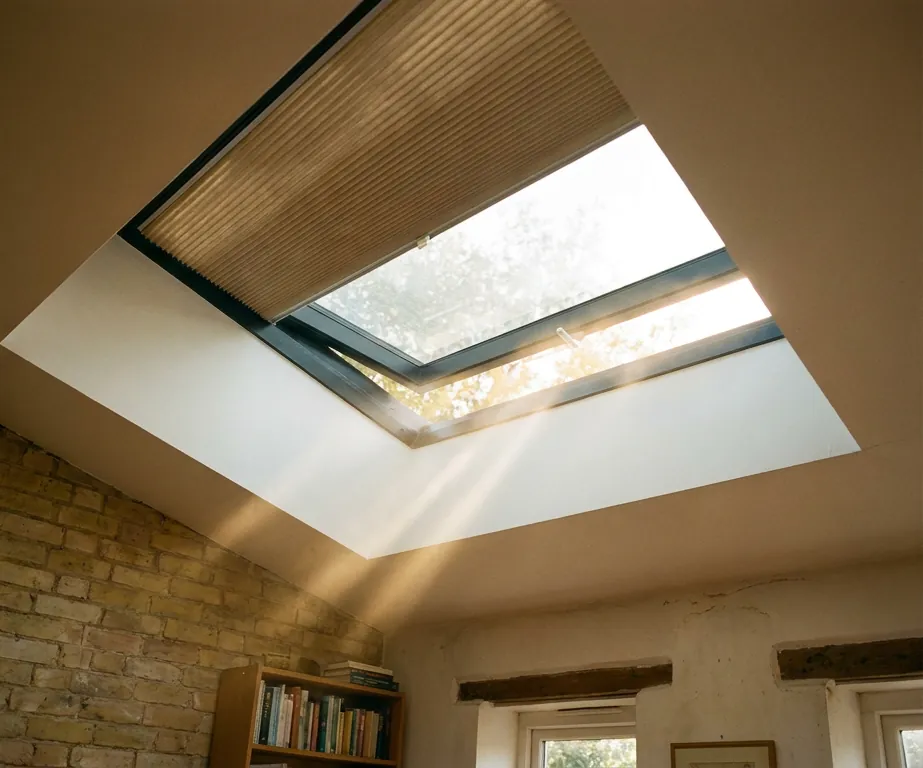
What the assessor sees, and what they have to assume
An RdSAP assessor records what they can observe and prove; where they cannot prove a better specification, the software falls back to cautious defaults, and that is where rooflights often lose points they deserve.
On a visit the assessor measures or estimates the glazed area, notes whether each window and roof window is single, double or triple glazed, and looks for the age of the glazing. The more recent versions of RdSAP record windows in more detail than older ones did, including roof windows as their own items, so a rooflight is less likely to be folded into a general glazing figure than it used to be. What the assessor usually cannot see is the true whole-unit U-value, the gas fill, the coating or the spacer. Without evidence, the software assigns a default value for that glazing type and age, and defaults are set to be safe rather than flattering.
| Item recorded | How it is found | What helps |
|---|---|---|
| Glazed area | Measured on site | Easy access to the opening |
| Single, double or triple | Visual check | Nothing extra needed |
| Age of glazing | Seal marks, paperwork | Installation date on file |
| Whole-unit U-value | Default unless proven | Manufacturer data sheet |
| Solar and light values | Default unless proven | Stated g-value and light transmission |
The practical point is simple. If you have a modern rooflight with a whole-unit figure well below the default, the certificate only benefits when the assessor can see the paperwork. Keep the product data sheet, the order confirmation that names the exact unit and size, and the Building Control completion certificate for the job. Hand them over before the visit rather than after it.
Adding a new rooflight: does it lower the rating?
Cutting a new skylight into an insulated roof usually adds a little modelled heat loss, gains a little solar and daylight credit, and leaves the band letter where it was; the result depends on size, orientation and the unit chosen.
Take a typical Cambridge case: a gault brick terrace in Romsey or off Mill Road with a single-storey side return extension and a long, dark middle room. Putting a flat rooflight or a slim run of glass over that middle room replaces perhaps one or two square metres of insulated roof. The glass loses more heat than the roof it displaces, so the fabric loss goes up. At the same time, that glass sits almost horizontal, sees the whole sky, and in SAP terms brings useful winter sun and a large daylight credit to a room that had almost none. Whether the net effect on the score is slightly up or slightly down depends on the U-value and g-value of the unit and on how much glass is involved.
What changes the outcome is scale. A single modest rooflight is a small figure in a whole house model. A roof lantern that covers a large share of a kitchen extension, or a row of big roof windows across a loft, is a bigger figure, and the heat loss side starts to dominate. That is one reason we size the opening from the room and the light it needs, rather than simply fitting the biggest glass the structure allows. Our light planning page explains how we decide where the light should land and how much glass it really takes.
If the new rooflight is part of an extension, the extension as a whole has to meet Building Regulations, and the new glazing is checked against the limiting value in Part L. That is a compliance question for Building Control, separate from the EPC, but the two meet at the end: a well specified extension rarely pulls the certificate down.
Replacing an old rooflight: where the gain is
Swapping a single-glazed, wired-glass or early double-glazed rooflight for a modern sealed unit is the clearest way a rooflight can improve an EPC, because the old unit is often the worst performing piece of the whole roof.
A single sheet of glass in an uninsulated frame loses heat many times faster than a current double-glazed rooflight with a thermally broken frame and a low-E coating. Older plastic domes and early sealed units with aluminium frames sit between the two. When one of these is replaced, the modelled heat loss through that opening falls sharply, and because the opening is the same size, there is no loss of roof insulation to count against it. The daylight credit stays. Depending on the glass chosen, the solar credit may fall slightly, which we come back to below.
Will it move the letter? In a home that sits just below a band boundary, possibly. In most houses a rooflight is too small an area for its replacement alone to change the band, and it is better treated as one line in a wider set of improvements that together do. The honest reason to replace is usually comfort: no cold downdraught, no condensation running down the upstand, and a room that holds its heat. Our guide to upgrading single-glazed rooflights covers the practical side, and the answer on whether replacing an old rooflight saves energy looks at when the saving justifies the work.
Keep in mind that a replacement is often notifiable to Building Control, and the new unit has to meet current standards. We handle the notification where the work needs it, which also produces the completion paperwork the next assessor will want to see.
Glass choices, the score and the room
Lower U-values always help the EPC, but lower g-values trade a small amount of modelled winter gain for a large improvement in summer comfort, and on a south or west slope the room should win that argument.
SAP rewards a low U-value without qualification: less heat escapes through the glass, and the score rises. That is where triple glazing, warm edge spacers, argon fill and thermally broken frames earn their place in the model. Our comparison of double and triple glazed rooflights sets out when the third pane is worth its weight and its slight cost in light.
The g-value is more subtle. A clear, high g-value unit lets in more solar heat, and in the heating season SAP counts some of that as useful. A solar control unit with a lower g-value admits less, so on paper it can shave a sliver off the winter credit. But a certificate built around the heating season does not see what happens in the room in June, when the sun is high and a south-facing flat rooflight in a kitchen extension can pour heat onto the worktop all afternoon. The land around Cambridge is flat, with almost nothing on the horizon to shade a roof, so a sky-facing pane catches the full sun path in every season.
Our advice is to choose glass for the room and the slope, then let the EPC fall where it falls. On a north slope, a clear low-E unit with a good U-value is usually right, because there is little direct sun to control. On south and west slopes, solar control glass with a sensible g-value and light transmission balance keeps the room usable. The difference on the certificate is marginal; the difference in the room is the reason you will like or dislike the rooflight for the next twenty years.
Landlords, sales and the rules around the certificate
For owners selling or letting in Cambridge, the rooflight question is usually about getting credit for good glazing already fitted, or about clearing an old single-glazed unit before a minimum standard bites.
Cambridge has a large private rented sector, from terraced houses let to students and researchers to flats and newer homes around the edges of the city. Rented homes in England and Wales must currently meet a minimum EPC band, and the government has set out plans to raise that minimum over the coming years. The details, dates and exemptions have shifted more than once, so check the current position on gov.uk before you plan work around a deadline. Where a landlord needs a few points to clear a threshold, replacing an old single-glazed rooflight is a small, contained job that is easy to evidence, but it is unlikely to be enough on its own. Loft insulation, heating controls and the heating system usually move the score further.
For a sale, the aim is accuracy. A buyer reads the certificate, and a home with modern rooflights recorded at default values looks weaker than it is. Commission the EPC after the work is complete and have the paperwork ready. If you have recently replaced several rooflights or added a well specified extension, a new certificate can be worth commissioning even if the old one has years left to run.
If you are also planning a heat pump, the heat loss calculation for sizing it is a separate and more detailed exercise than the EPC, though it draws on the same U-values. The answer on whether rooflights affect heat pump sizing explains how the glazing feeds into that figure.
Listed buildings and conservation rooflights
Older homes in the villages and the city's conservation areas often need slim, flush conservation rooflights, and these can be modelled well provided the product's own figures are on file.
A conservation rooflight on a cottage in Grantchester or a Victorian house in a city conservation area is chosen first for how it sits in the roof: flush, low profile, with a slim frame and often a central glazing bar. Modern conservation units carry sealed double glazing and thermally broken frames, so their performance can be close to that of a standard roof window of similar size. The assessor, though, sees a slim frame and small glass and may not know that. Again, the product data sheet is what lets the software use the real figure.
Listed buildings bring their own rules. Changes need listed building consent, and how EPC requirements apply to a listed home is a question to check with the council or on gov.uk for your circumstances rather than to assume. What we can say is that a conservation rooflight chosen for the building, with a good whole-unit U-value, does the fabric no harm on paper and makes the room beneath warmer and brighter in practice.
Getting the most from a rooflight on your next certificate
The steps are straightforward: specify the unit on performance, not just appearance, keep every piece of paperwork, and time the assessment after the work is signed off.
- At the planning stage, ask for the whole-unit U-value, the g-value and the light transmission of the rooflight being quoted, not just the centre-pane glass figure.
- Match the glass to the slope: good insulation everywhere, solar control where the sun will reach the glass for hours at a time.
- Keep the data sheet, the order details that name the exact unit and size, and the Building Control completion certificate together in one place.
- Commission the EPC once the work is finished and signed off, and give the assessor that bundle before the visit.
- If the old certificate predates the work, consider a new one, especially before a sale or a new tenancy.
A new rooflight should be judged on the room it creates first and its paper performance second. If you would like to see how a rooflight would light your room, and what its glass would do for heat and for the certificate, look at our energy efficient rooflights service, or book a light survey and we will put it in writing.
Questions people ask
Will adding a skylight lower my EPC rating?
Usually only slightly, if at all. The glass loses more heat than the insulated roof it replaces, but it also earns solar and daylight credit in the calculation. A modest rooflight with a good whole-unit U-value tends to leave the band unchanged. Very large areas of roof glazing have a bigger effect.
Can replacing an old rooflight improve my EPC band?
It improves the score, sometimes noticeably where the old unit was single glazed. Whether it crosses a band depends on how close the home already sits to a boundary. It is best treated as one of several improvements rather than the whole answer.
Does triple glazing in a rooflight make a big difference to the EPC?
It lowers the U-value and so helps the score, but the rooflight is a small area in the whole house model, so the change is modest. Triple glazing is more often chosen for comfort, condensation control and a warmer surface above the room.
Does the assessor need proof of my rooflight's performance?
To use anything better than default values, yes. A manufacturer data sheet naming the exact unit, together with the installation paperwork, gives the assessor grounds to enter the real U-value. Without it, the software assumes a cautious figure for that type and age of glazing.