Which old unit you have decides the answer
The energy case depends almost entirely on how bad the existing skylight is, so start by identifying it rather than by looking at new products.
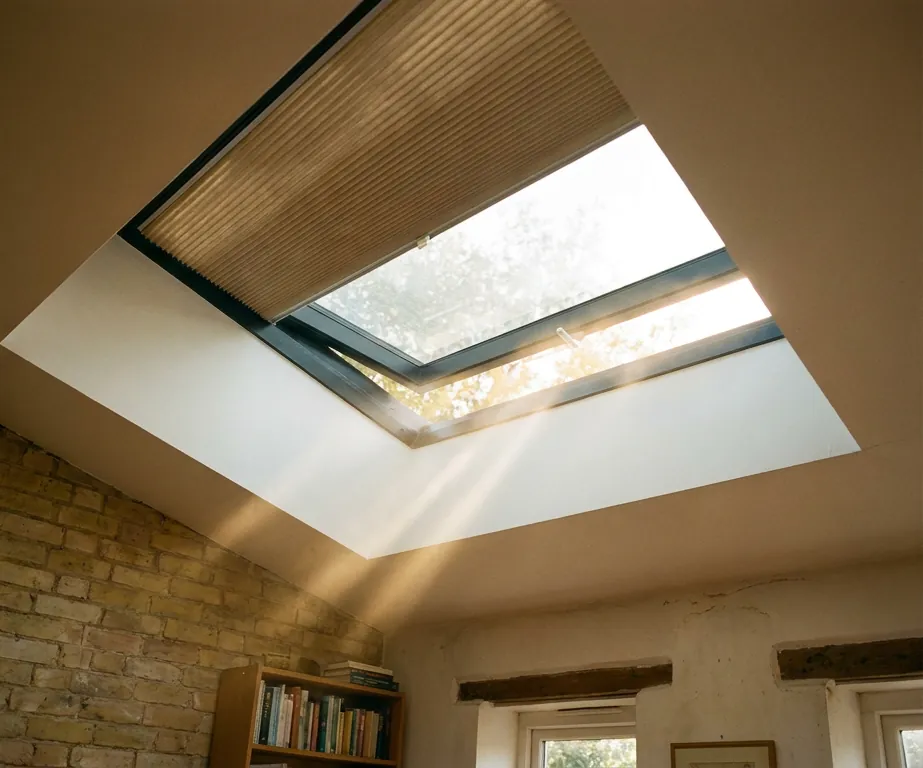
Old roof glazing in Cambridge homes falls into a few recognisable groups. Victorian and Edwardian terraces in Romsey, Petersfield and around Mill Road often still have a cast iron or timber rooflight over a back bedroom or stair, with a single sheet of glass, sometimes wired. Flat roofed kitchen and bathroom extensions from the 1970s and 1980s commonly carry a plastic dome or a multiwall polycarbonate sheet. Loft conversions from the 1990s and early 2000s tend to have first generation double glazed roof windows with a plain air or basic gas filled unit and an aluminium spacer bar.
Each group loses heat at a very different rate. Single glazing in a metal frame sits somewhere around 5 to 6 W/m²K. A single skin plastic dome is similar, and a twin skin dome or thin multiwall sheet is only a little better. An early double glazed roof window is typically around 2.8 to 3.3 W/m²K once the frame is counted and the unit is assessed lying in the roof slope, where glass performs worse than it does upright. A good modern rooflight assessed the same way is typically 1.0 to 1.6 W/m²K. The gap between your old unit and that range is the size of the prize, and our guide to rooflight U-values explains how the figures are measured.
When the saving pays its way
For single glazed, wired glass and plastic rooflights, the saving is large enough to be a genuine reason on its own.
A rough way to size it is to multiply the drop in U-value by the area of the opening and by the heating degree hours in an eastern England winter, which comes to something like 50,000 on a common base temperature. On that basis, swapping one square metre of single glazing for a modern double glazed unit saves in the region of 200 kWh of heat a year. A larger lantern or a pair of old rooflights over a side return multiplies that. Treat the figure as an illustration rather than a forecast for your house, because it ignores winter sun and assumes the room is heated all season.
Moving from an early double glazed unit to a new one closes a smaller gap, perhaps 70 to 100 kWh per square metre a year on the same rough basis. That is real, but on a single roof window of well under a square metre it will not repay a replacement on its own for a very long time. If your old unit is single glazed, our page on upgrading single-glazed rooflights covers the options in detail.
| Existing unit | Energy case | Main gain |
|---|---|---|
| Single or wired glass | Strong | Heat and comfort |
| Plastic dome or sheet | Strong | Heat, noise, clarity |
| Early double, misted | Moderate | Clear view, less condensation |
| Early double, clear | Weak | Comfort, summer heat control |
Comfort is often the bigger gain
Even where the bill saving is small, people notice the change in the room first: no cold fall of air, no dripping, and far less heat in July.
Old overhead glass has a cold inner surface in winter. Air next to it cools, sinks and drops onto whoever is sitting below, which is why a loft desk under a 1990s roof window can feel draughty with the heating on. A modern unit with a low-E coating, gas fill and a warm edge spacer keeps the inner pane much closer to room temperature, so that downdraught largely disappears. The same warmer surface stops condensation forming and running down onto the lining. Our answer on why a rooflight feels cold underneath goes into the mechanism.
Summer is where older glazing often causes more trouble than winter. Clear glass lying almost flat takes the high June sun head on, and a south slope in Cambridge, with no hills to shade it, can turn a loft bedroom into a hot box by mid afternoon. Replacing the unit lets you choose a lower g-value or solar control glass for that slope, which may do more for how the room feels than any winter saving. On a north slope the choice runs the other way, towards the best insulating glass and a high light transmission, because there is no direct sun to manage.
What else changes when the unit is replaced
A replacement is not only new glass: the frame, the seal to the roof and the insulation around the opening are all renewed, and those parts carry much of the benefit.
Older aluminium framed rooflights often have no thermal break, so a cold line runs round the edge and gathers condensation even if the glass is sound. A thermally broken frame removes that. On a flat roof, the timber kerb or upstand under an old dome is frequently uninsulated, and insulating it during the replacement closes a heat path that no glass upgrade can reach. On a pitched roof, the lining and the insulation packed round the frame can be brought up to a better standard at the same time.
A replacement rooflight in an existing home is also expected to meet the Part L limiting U-value of 2.2 W/m²K, measured in the horizontal plane. Any decent modern unit meets that comfortably, but it rules out simply refitting a like for like old specification. The work is normally notifiable to Building Control, and we handle the notification where it applies. Our answer on whether a replacement rooflight has to meet Part L sets out how that works.
When to wait, and when not to
If your early double glazed skylight is clear, dry and comfortable, there is no energy reason to rush, and the better moment is often when other work is planned.
Replacing during a reroof, a loft conversion or a kitchen refit costs less disruption, because the scaffold, the roof finish and the internal lining are being disturbed anyway. That is a sensible time to reconsider the size and position too, so the light lands on the part of the room you use. A misted unit, wet linings, a failing plastic dome or a roof window that no longer opens are good reasons to act sooner, because the unit has reached the end of its useful life regardless of the energy figures.
At a light survey we look at the old unit, the slope it faces, the room below and how you use it, then set out in the written light plan what a new unit would change for heat, comfort and light. You can read how we approach this on the light planning page, or see the wider picture on our energy efficient rooflights service page. When you are ready, book a light survey or message us on WhatsApp.
Questions people also ask
Will a new rooflight improve my EPC rating?
It can help, particularly when single glazing is replaced, but rooflights are a small share of most homes' heat loss, so the effect on the overall rating is usually minor. Our guide to rooflights and EPC ratings explains how they are counted.
Is triple glazing worth it on a replacement rooflight?
On a north slope or a large flat rooflight over a room you heat all day, triple glazing adds comfort and a lower U-value. It is heavier and passes slightly less light, so on a small roof window a good double glazed unit is often the better balance.
Can I just replace the glass in an old skylight?
Sometimes a sealed unit can be swapped within a sound frame, but an old frame without a thermal break keeps its cold edge, and the upstand and insulation stay as they were. Replacing the whole unit is what brings the full energy and comfort gain.
How long does a modern rooflight last?
A quality unit that is well installed typically gives 20 to 30 years of service before the sealed glazing needs renewing, which is worth weighing against the age of the one you have now.