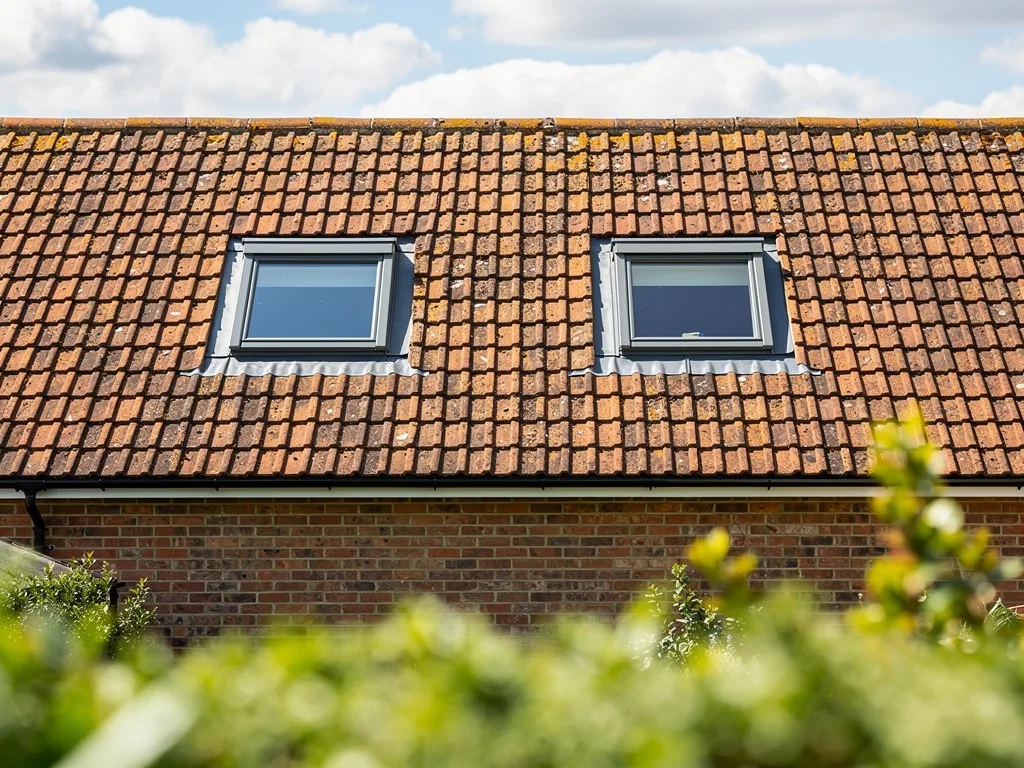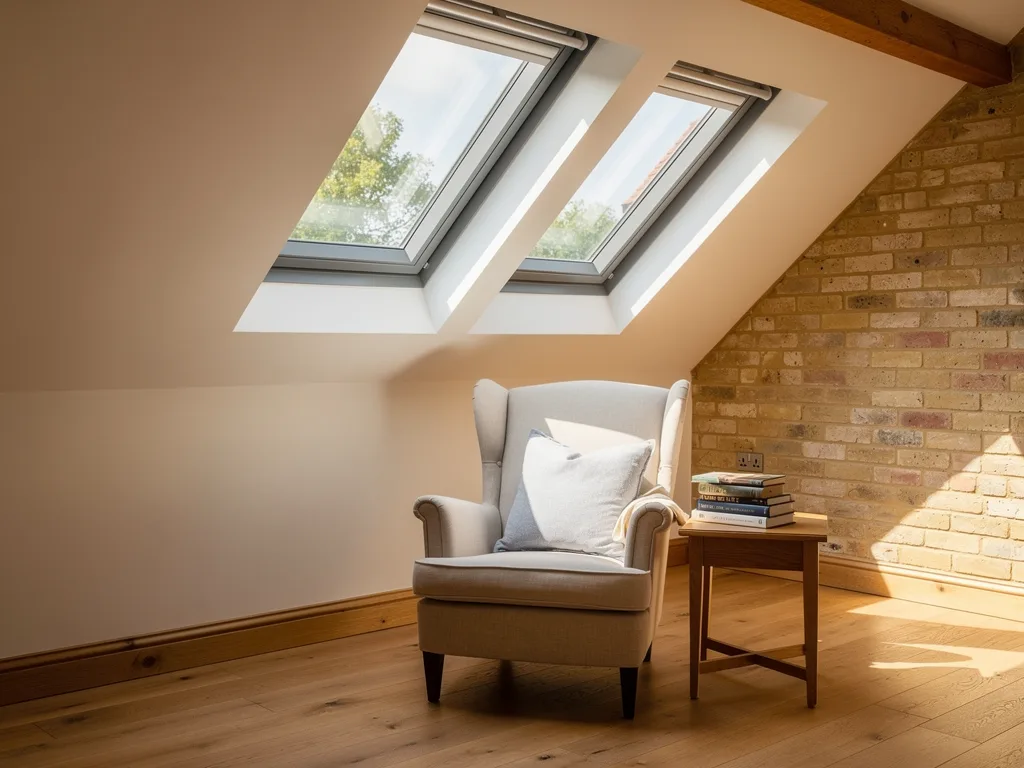
What VELUX ACTIVE actually does in a house
VELUX ACTIVE indoor climate control is a small system of sensors, a gateway and an app that watches the air in a room and opens or closes your electric VELUX windows and blinds to keep it fresh, dry and comfortable. It does not replace the window; it gives the window a reason to move without you touching it.
An ordinary electric roof window only does what it is told. You press a button on the wall keypad or the remote and the sash opens; you press again and it closes, and a rain sensor on the frame shuts it if the weather turns. That is useful, but the window still has no idea whether the room needs air. A loft bedroom can fill with stale, damp air overnight while the window sits closed, and a south-facing study can reach an uncomfortable temperature on a May afternoon while nobody is home to notice.
VELUX ACTIVE adds the missing half. Indoor climate sensors measure temperature, relative humidity and carbon dioxide (CO2) in the room. The gateway reads those sensors, checks them against local weather information, and sends commands to the motorised windows, blinds and shutters it is paired with. If the air is getting stale, a window opens for a short airing. If the room is warming up in strong sun, blinds come down and a window may open to let the warm air out at the top of the room. When the readings settle, everything returns to where it was.
The result is ventilation that follows what is happening in the room rather than a timer or your memory. For roof spaces in Cambridge, where a dormer-less loft or a top-floor bedroom under a slope has no other high-level opening, that matters more than it would in a ground-floor room with a sash window you can crack open as you pass.
The parts: gateway, sensors, departure switch and app
The system is built from three physical pieces and one piece of software, and each has a clear job. Knowing what each part does makes it easier to decide how many you need and where they should go.
- The gateway. A small unit that plugs into a socket and connects to your home Wi-Fi. It talks to the windows and blinds over VELUX's wireless control protocol, io-homecontrol, and to the app over the internet. It is the brain of the system and holds the rules.
- Indoor climate sensors. Small units fixed in each room you want monitored. Each one measures temperature, relative humidity and CO2, and reports back to the gateway. The starter kit comes with one; more can be added room by room.
- The departure switch. A wall switch placed by the front door. One press as you leave closes every paired window and can lower blinds for privacy or heat, so you are not walking round the house checking sashes.
- The VELUX ACTIVE app. Used to set up the system, name rooms, see the readings, change how much the windows may open and override anything by hand. It also links the system to supported smart home and voice assistant platforms if you use one.
The wall keypad or remote that came with your electric windows still works alongside all of this. ACTIVE is a layer on top of the normal controls, not a replacement for them, and a manual command always takes priority at the moment you give it.
Because the gateway uses Wi-Fi and the windows use their own wireless link, placement matters. The gateway needs a decent Wi-Fi signal and a reasonable radio path to the windows. In a Victorian terrace in Romsey or Petersfield with a loft conversion two floors above the router, the gateway usually sits better on the landing below the loft than beside the router in the front room. We check signal strength at both ends when we set the system up.
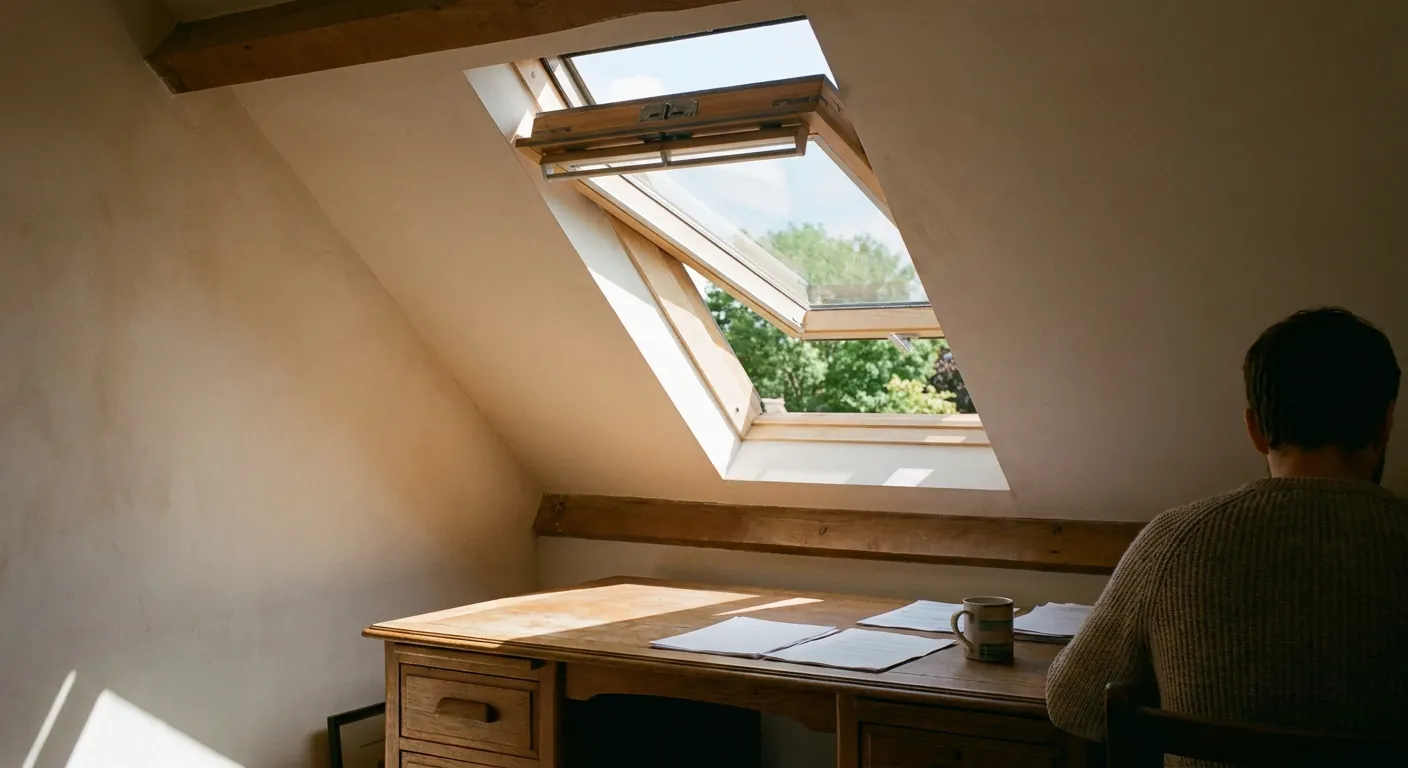
How the sensors decide when to open a window
The system works on three readings: CO2 as a sign of stale air, humidity as a sign of moisture that could turn into condensation, and temperature as a sign of overheating. Each has a threshold, and when one is crossed the gateway weighs the outdoor conditions before moving anything.
Carbon dioxide. Every person in a room breathes out CO2, so its level rises steadily in an occupied space with the door and windows shut. Outdoor air sits a little above 400 parts per million (ppm). Indoors, readings climbing towards and past 1,000 ppm are commonly linked with a room that feels stuffy, and a closed bedroom with two people in it can go well beyond that by morning. CO2 is not harmful at those levels in the way a pollutant is, but it is a good proxy for how much fresh air a room is getting. When the sensor shows the level rising, the gateway opens a window for a short airing to bring it back down.
Humidity. Showers, cooking, drying laundry and breathing all add moisture to the air. Relative humidity between about 40% and 60% is the comfortable band usually quoted for homes; readings that stay higher encourage condensation on cold surfaces and, over time, mould. Roof spaces are particularly exposed because warm, moist air rises and meets the coldest surfaces in the house at the top. When the humidity reading stays high, ACTIVE opens a window to exchange the damp air for drier outdoor air.
Temperature. In warm weather the system watches for the room heating up. It can lower blinds to stop sun reaching the glass and open windows to vent the hottest air, which gathers at ceiling level under a roof slope. In cold weather it keeps openings short, so an airing freshens the room without dumping the heat you have paid for.
The gateway also takes account of the weather outside, so it will not open a window into forecast rain or when it is much hotter outside than in. The rain sensor built into electric VELUX windows remains the final safeguard: if drops land on it, the window closes regardless of what the climate logic wanted.
| Reading | What it signals | Typical response |
|---|---|---|
| CO2 rising | Stale air, occupied room | Short airing, then close |
| Humidity high | Moisture, condensation risk | Open to exchange air |
| Temperature high | Sun and trapped heat | Lower blinds, vent at the top |
| Rain on sensor | Weather arriving | Close at once |
You can adjust how the system behaves in the app: how far windows open, whether particular rooms may be aired at night, and whether it should favour fresh air or warmth. The defaults are sensible for a starting point, and the useful adjustments come after living with it for a week or two and seeing how each room responds.
Which windows and blinds can join the system
VELUX ACTIVE only moves products that have a motor and speak io-homecontrol, so the starting point is an electric or solar VELUX INTEGRA window. Manual windows cannot be controlled until they are converted or replaced.
Current electric and solar INTEGRA windows are the natural partners. Mains electric windows take power from a cable run inside the lining; solar windows charge a small battery from a panel on the frame and need no wiring into the room. Both respond to ACTIVE in the same way. If you are weighing up which type suits a loft or a vaulted ceiling, our guide to VELUX INTEGRA electric and solar windows covers the trade-offs in detail.
Many existing manual VELUX windows can be motorised with a conversion kit, which then lets them join the system. The kit adds a chain actuator at the head of the sash and, for the solar version, a panel and battery. Whether it suits your window depends on its generation, size and condition; the answer page on whether a VELUX window can be made electric after fitting sets out what is needed. If the window is old, draughty or misted, replacing it with a current INTEGRA window is usually the better path, since you also gain better glazing and a new flashing.
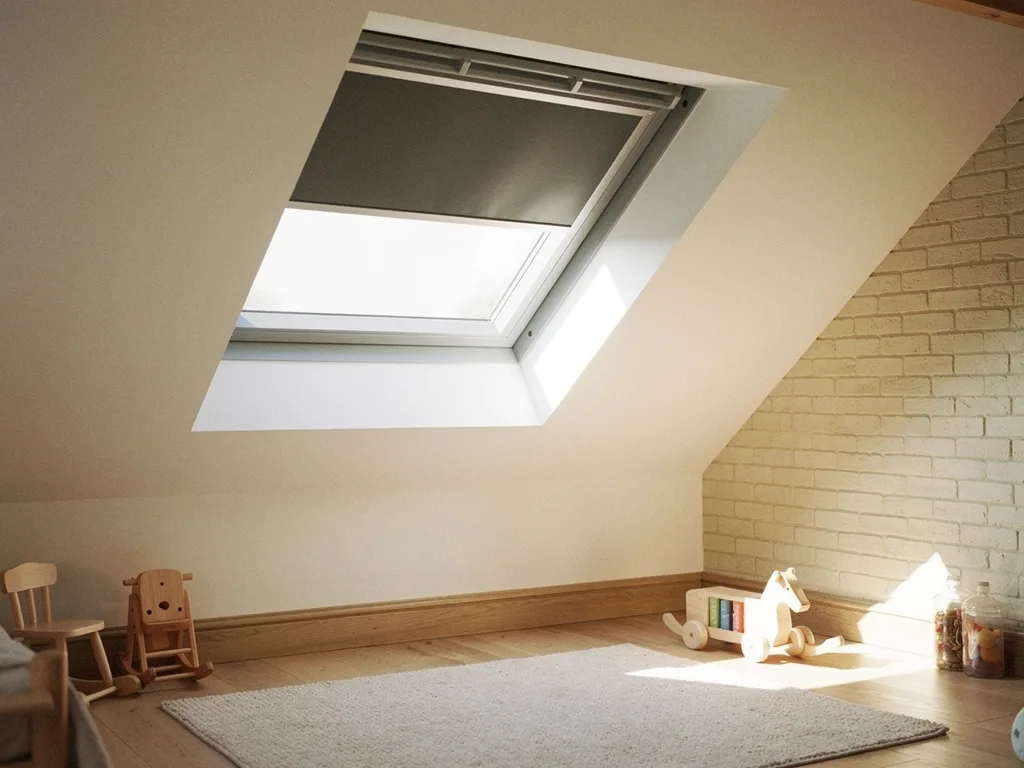
Blinds and shutters are part of the picture too. Electric and solar interior blinds (blackout, roller and Venetian) and exterior awning blinds and roller shutters with io-homecontrol motors can all be paired. For heat control the exterior products do far more than an interior blind, because they stop sunlight before it reaches the glass. The VELUX blinds guide explains the options by slope and room.
Some older motorised VELUX products predate io-homecontrol and will not pair with the gateway. If you have electric windows from an earlier generation, the data plate on the frame tells you what you have, and the guide to identifying your VELUX window generation helps you read it. We confirm compatibility at the survey rather than guessing from a photo.
Orientation changes what you want the system to do
The same sensors behave very differently depending on which way the roof slope faces, because the sun sets the heat load. Setting up ACTIVE well starts with knowing where the light and warmth will come from through the day and the year.
A south-facing roof window in Cambridge sees the sun for most of the day in summer, high and strong around midday. Under flat, open land with little to shade the roof, a loft bedroom on that slope can gain a lot of heat between late morning and mid afternoon. Here the priority is heat: exterior awning blinds that close before the room warms, and a window that vents the top of the room once it starts to climb. Letting the system act while you are out at work is where it earns its place, because by the time you get home on a July evening the heat is already in the plasterboard.
A west-facing slope takes the low, hot afternoon and evening sun, just when a bedroom is about to be used. The temperature rule tends to fire later in the day, and blinds need to come down before about 3pm on bright days rather than when you notice the glare.
An east-facing slope gets the morning sun, bright and early in summer. It rarely overheats in the afternoon, so the system on that side is mostly about CO2 and humidity: airing a bedroom after the night, clearing a bathroom after the morning shower.
A north-facing slope gives steady, soft daylight with almost no direct sun. Heat is seldom the issue; moisture can be, because the north side of a roof stays colder and surfaces there are more prone to condensation. Humidity-led airing does the useful work.
Our light planning page shows how each orientation behaves over the seasons, and the same reasoning goes into the written light plan we give with every quote. When ACTIVE is part of the job, the plan notes which rules matter most on each window.
Where the system earns its place, room by room
Automatic climate control is not needed in every room with a roof window. It is most useful where air goes stale or damp quickly, where heat builds up while nobody is there, or where the window is simply out of reach.
Loft bedrooms. A converted loft in a Mill Road or Chesterton terrace is often a compact room with a sloping ceiling and a door kept shut at night. CO2 and humidity rise steadily while you sleep. ACTIVE can open the window a small amount for short periods through the night, which keeps the air fresher without the noise and chill of leaving it open until morning. It will close for rain, and you can limit or switch off night airing if you prefer.
Bathrooms and en suites under the roof. Moisture from a shower hangs around in a small top-floor room. Humidity-led airing clears it after use. A roof window in a wet room brings its own points about glass and ventilation, covered in the answer on fitting a VELUX window over a shower. The mechanical extract fan that Building Regulations expect in a bathroom is still needed; ACTIVE works alongside it, not instead of it.
Home offices. A single person working in a small room for a full day raises CO2 more than you would expect, and concentration tends to drop as the air goes stale. A sensor on the desk wall and a short airing every so often keeps the room comfortable without you having to remember.
Stairwells and vaulted rooms with high windows. A roof window three or four metres up over a stair or in a vaulted kitchen is awkward to reach even with a rod. Warm air collects at the top of these spaces, so a high window is the right place to let it out. Automating it means the window actually gets used.
Newer homes built to tighter standards. Houses at Eddington, Trumpington Meadows or Great Kneighton are more airtight than older stock, which keeps heat in but means moisture and CO2 build up faster when windows stay shut. Owners adding roof windows to these homes, or upgrading existing ones, can gain a lot from windows that open themselves at the right moments.
A ground-floor room with good openable windows on two sides, or a north-facing hallway that is seldom used, gains little. We would rather say so at the survey than add a sensor that never has anything to do.
Ventilation, Building Regulations and what ACTIVE does not change
VELUX ACTIVE improves how a window is used, but it does not change what the window itself must provide under Building Regulations. The regulations are met by the window, its ventilation flap and any extract fans; the automation is a comfort layer on top.
Approved Document F sets out the ventilation expected in homes. Background ventilation is usually provided by a trickle vent or, on VELUX windows, by the ventilation flap in the top of the sash, which lets air through with the window closed. The answer on whether VELUX windows have trickle vents explains how the flap works. Purge ventilation, the ability to clear a room quickly after cooking or painting, comes from an openable window of adequate size, and an electric roof window can serve that purpose whether or not ACTIVE is controlling it.
Installing an automated window does not make a roof window notifiable where it otherwise would not be, and adding sensors and a gateway to existing electric windows is not building work. A new roof window in a new opening, or a replacement that changes the structure, follows the same rules as any other; where the work is notifiable we handle the Building Control notification. The page on VELUX window installation in Cambridge sets out how we approach new openings and replacements.
Two practical limits are worth knowing. The system relies on power and, for remote access, on your broadband. If the internet drops, the gateway keeps running its local rules and the keypad still works, but you lose the app while you are away. If the power fails, mains-powered windows stop until it returns; solar windows carry on from their batteries. Neither case leaves a window stuck open in the rain, because the rain sensor and the close command are handled at the window.
Security is the other question people raise. You decide which windows may open automatically and how far, and the departure switch closes everything when you leave. On a ground-level or easily reached roof, such as a single-storey extension below a bedroom window, it is sensible to keep automatic opening for that window to a small ventilation position or to switch it off when the house is empty.
Setting it up well after the windows are fitted
The hardware takes little time to install once electric windows are in; the value comes from placing the sensors correctly and tuning the rules to how you live. A careless setup gives readings that do not reflect the room and windows that open at odd times.
- Place each sensor where you breathe, not where the sun hits. A spot at normal height on an inside wall, away from radiators, the kitchen hob and direct sunlight, gives honest readings. A sensor in a sun patch will read warm and trigger venting on a cool day.
- Put the gateway between the router and the windows. It needs Wi-Fi at one end and a clean radio path to every paired product at the other. We test it from the loft before leaving.
- Pair every window, blind and shutter, then name them by room. Clear names make the app usable and let the system treat each room separately.
- Set opening limits per window. A small opening for night airing in bedrooms, a larger one for purge ventilation in a kitchen or stairwell.
- Live with the defaults for a week or two. Watch the readings in the app, then adjust. A room that airs too often in winter may need a gentler rule; a south loft that still gets warm may need blinds to close earlier.
When we fit new electric windows, ACTIVE can be added during the same visit, which saves a second trip and means the whole system is tested together. The page on the VELUX window installation process describes the day itself. Where you are adding ACTIVE to windows already in place, the job is usually a short visit to check compatibility, place the gateway and sensors, pair everything and walk you through the app.
What it costs depends on how many rooms you want monitored and whether manual windows need converting or replacing first. The costs page sets out general market ranges for roof windows and what moves the price, and the survey turns that into a firm figure for your house.
Questions people ask
Does VELUX ACTIVE work with manual VELUX windows?
Not directly. It can only move motorised io-homecontrol products. A manual window can be fitted with an electric or solar conversion kit, after which it can join the system, or it can be replaced with a current INTEGRA window if it is older or in poor condition.
Will the windows open in the middle of the night?
They can, for short airings in a bedroom when CO2 or humidity climbs, and only as far as the limit you set. If you prefer the room left closed overnight, you can turn night airing off for that room in the app.
Can I control it without the app?
Yes. The wall keypad or remote supplied with your electric windows keeps working, the departure switch closes everything at the door, and supported voice assistants can be linked if you use one. The app is needed for setup and for changing rules.
Is one sensor enough for a whole loft conversion?
For an open loft room with one or two windows, usually yes. If the loft is split into a bedroom and an en suite, each space has different air and benefits from its own sensor, so the system can air the bathroom without chilling the bedroom.