Why a sun tunnel cannot take an ordinary blind
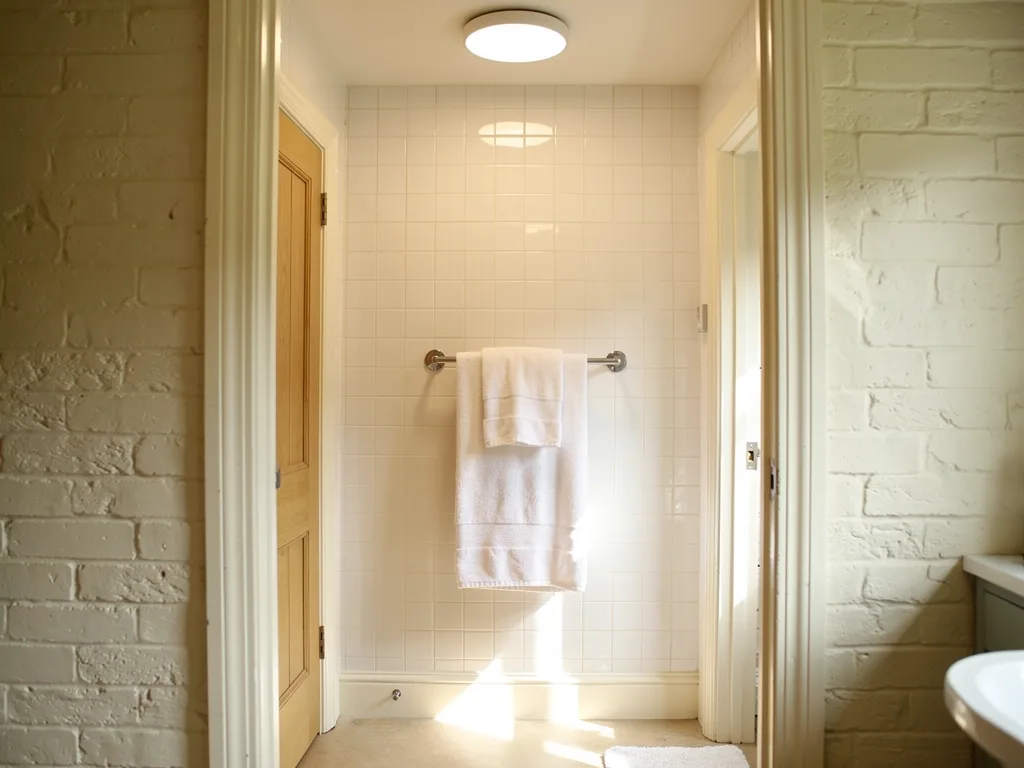
The light comes out of a flat, round diffuser flush with the ceiling, so there is no window reveal, no frame and nothing a roller or pleated blind could hang from.
With a roof window or a flat rooflight you dim the room by drawing a blind across the glass. A sun tunnel works differently. A dome on the roof gathers sky light, a mirror-lined tube carries it down through the loft, and the diffuser spreads it across the room below. Our guide to how sun tunnels work follows that path in detail. The only sensible place to control the light is inside the tube itself, somewhere between the dome and the ceiling.
That is also why taping card or fabric over the diffuser is a poor answer. It looks untidy, it traps any warmth that collects just above the ceiling ring, and it defeats the point of a clean circle of daylight. A purpose-made kit does the same job out of sight.
How a dimmer or damper kit works
A damper is a set of vanes or a disc fitted across the tube that can be opened, part-closed or shut, so the room gets full daylight, a softer level or very little.
Designs vary between makers, and each one is built for that maker's tube diameter and fittings. The common patterns are these:
- Manual kits, worked by a pull cord or a short rod that hangs down beside the diffuser, much like the controls on a roof window blind.
- Electric kits, where a small motor turns the vanes from a wall switch or a remote. Some are mains wired, and some makers offer battery or solar powered versions.
- Combined units, where the damper sits in the same section of tube as a light kit or a ventilation fan, so one ceiling ring does several jobs.
Because the parts are matched to one system, a damper from one brand will not normally fit another brand's tube. If you already have a sun tunnel, the first question is who made it and whether that maker still supplies a kit for that model and diameter.
Which rooms actually need dimming
Sun tunnels usually go into halls, landings, bathrooms and cupboards, where nobody needs to turn the daylight down, so a damper earns its place only in a few rooms.
A bedroom is the obvious one. In late June the sun rises in Cambridge before five in the morning, and on a clear day a tube in a bedroom ceiling will glow brightly long before anyone wants to be awake. A nursery or a child's room is similar, with daytime naps added. A room used for screens, such as a study with a monitor facing the diffuser or a snug with a television, may also want the light brought down on bright afternoons. For those rooms a damper turns the tube from an always-on light into one you control.
In a hallway, a landing, a walk-in wardrobe or a windowless bathroom, dimming is rarely worth the extra parts. There the aim is usually more light, and the better questions are about tube diameter and how long the run is.
Planning for dimming at the start
The cheapest and neatest time to include a damper is when the tunnel goes in, because the kit becomes part of the tube rather than something cut into it later.
At installation we can choose a system from a maker that offers a damper for the diameter you need, set the kit at a height where the cord or rod falls in a sensible place, and run any cable for an electric version while the ceiling and loft are already open. Adding one to an existing tunnel may still be possible, but it depends on the product: some kits drop into the lower tube section, others need parts of the tube replaced, and for some older or discontinued models there is simply no matching kit. In that case replacing the whole tunnel with a current system is sometimes the tidier route.
An electric damper wired to the mains is ordinary lighting circuit work and needs to be installed by a competent electrician in line with Part P. That is the same position as an LED light kit in the tube, and the two are often planned together.
| Option | What it changes | Best decided |
|---|---|---|
| Manual damper | Light level, by cord or rod | At installation |
| Electric damper | Light level, from a switch or remote | At installation, with wiring |
| Smaller diameter | Overall brightness | At the light survey |
| Softer diffuser | Spread and glare | At installation |
Getting the level right without a damper
Often the better answer is to plan a tube that gives the right amount of light in the first place, so it never feels too bright to live with.
A tube sized for the room, rather than the biggest one the loft will take, keeps a small bedroom from glaring at dawn. The diffuser matters too: a frosted or prismatic lens spreads the light evenly, while a clearer one throws a brighter pool. The dome's position on the roof also plays a part, because a south slope catches more direct sun than a north one. This is the kind of balance we work out as part of planning the light: how bright the room should be, when, and whether dimming is needed at all. If you are weighing a tunnel against a window in the roof, sun tunnel vs skylight sets out how the two differ, including how easily each can be shaded.
Questions people also ask
Can you fit a dimmer to a sun tunnel you already have?
Sometimes. It depends on whether the maker of your tube offers a damper for that model and diameter. Where it does, the kit may fit into the existing tube; where it does not, a replacement tunnel with a matching kit is the usual way to get dimming.
Does a damper stop a sun tunnel letting heat in?
Closing the vanes reduces the light reaching the room, and with it some of the warmth that comes with sunlight. The bigger factors are the dome, the insulation around the tube and the size of the opening, which our page on whether sun tunnels let heat in covers.
Can a tubular skylight be dimmed from a light switch?
Yes, if you choose an electric damper kit. The motor can be controlled from a wall switch or a remote, and some makers link the damper and an LED kit so one set of controls handles day and evening light.
Is dimming worth it in a hallway?
Rarely. Halls and landings usually need all the daylight a tube can give. Put the money into the right diameter and a short, straight run instead. To plan it for your own rooms, see our sun tunnel installation page or book a light survey.
