Why glass in a slope is its own problem
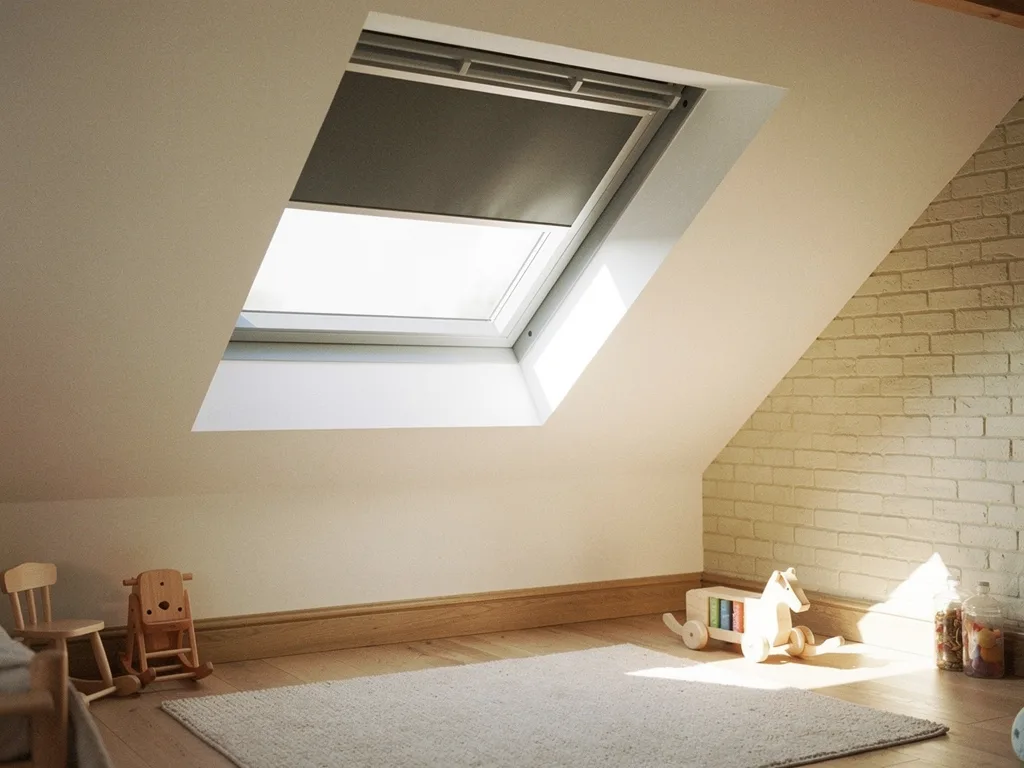
A roof window sits over your head and faces the sky at an angle, so its glass has to cope with falling objects, hail, rain drumming and the sun striking it far more squarely than any wall window. Those four pressures decide which roof window glazing options are worth choosing.
Take a typical Victorian terrace in Romsey or Petersfield with a rear roof pitched at around 40 degrees. If that slope faces south, the glass is tilted back so that it looks up at an angle of about 50 degrees above the horizon. Cambridge sits a little above 52 degrees north, and at noon in late June the sun stands roughly 61 degrees up. The sun and the face of the glass are only about 11 degrees apart, so the pane takes the summer sun almost head on. A vertical window in the wall below meets the same sun at a steep glancing angle and reflects much of it away. That single piece of geometry is why a south-facing loft can overheat when the bedroom beneath stays comfortable.
In December the picture reverses in your favour. The noon sun is only about 14 degrees up, yet it still reaches a south slope at a useful angle and throws a long sun patch deep into the room, which is welcome in a loft on a cold morning. The glass you choose has to accept that winter gift without letting the summer heat through, and it has to do both while being safe to stand under.
The pitched roof skylight glazing options on the market come down to a short list of ingredients: the build of the inner pane, the build of the outer pane, the number of panes, the coatings on them, and whether any of the layers is made for sound or privacy. This guide takes each in turn, then puts them together room by room. If you are still choosing the window itself, our guide to the roof window installation service sets out the whole job, and the glass decisions below slot into it.
Laminated inside, toughened outside
The pane nearest the room should be laminated, because it is the one that would fall on you if it ever broke. The outer pane is usually toughened, because it faces hail, branches and the stresses of sun and frost.
Laminated glass is two sheets bonded to a clear plastic interlayer. If it cracks, the pieces stay stuck to the interlayer and the pane stays in the frame as a crazed sheet rather than dropping into the room. That is the behaviour you want from glass above a bed, a desk or a stairwell. Approved Document K deals with glazing in places where people could be hurt by breakage, and overhead glass is treated as a safety matter across the industry, which is why a laminated inner pane is the sensible baseline for any roof window over a lived-in room.
Toughened glass is heat treated so that it is several times stronger than ordinary float glass of the same thickness. When it does fail, it breaks into small, blunt granules. On the outside of a roof window that strength matters: the outer pane takes the impact of hailstones, the odd twig from a garden tree and the thermal shock of a cold shower hitting a pane that has been baking in the sun. Toughening also lets the outer pane cope with the uneven heating that happens when part of the glass is shaded by a chimney stack or the flashing and part is in full sun.
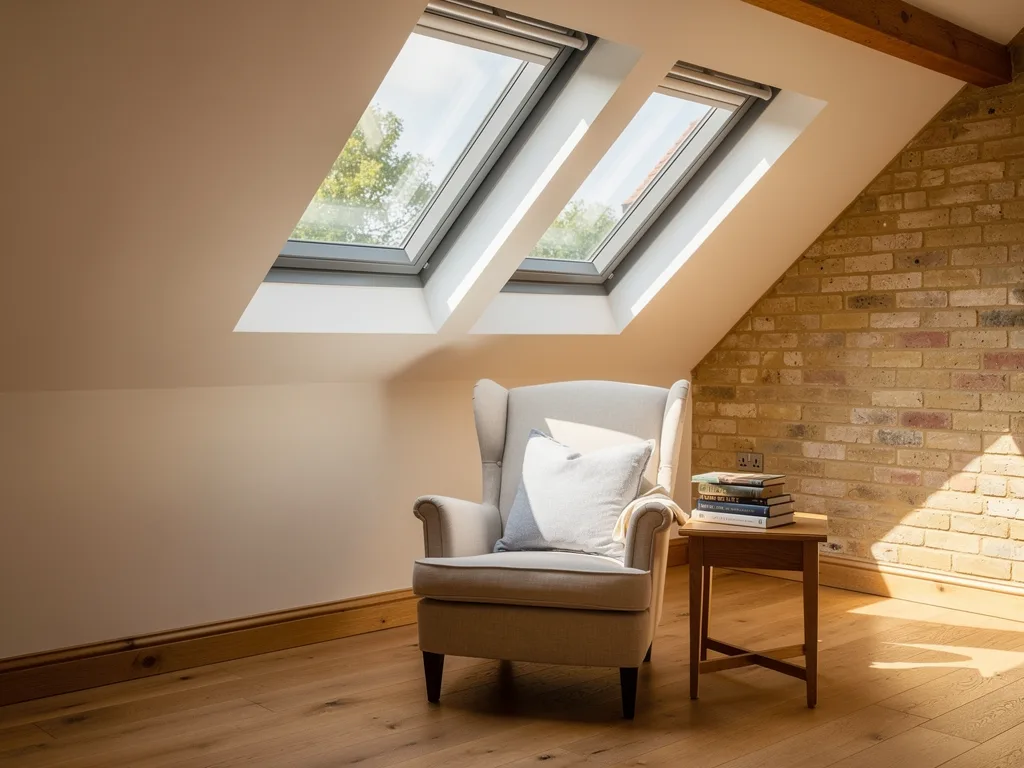
Where the two meet is a sealed unit: toughened outside, a cavity, laminated inside. Some ranges offer a laminated outer pane as well, which adds a little weight and cost but gives a second retained layer. That can make sense on a roof overhung by a large tree, or where a window sits below a higher roof that sheds ice or debris in winter.
Double or triple panes, and what Part L asks
Double glazing with a low-emissivity coating and an argon-filled cavity comfortably meets current thermal rules for a roof window. Triple glazing earns its place on a cold north slope, in a room you use at night, or where you want the quietest possible glass.
Approved Document L sets a limiting U-value of 2.2 W/m²K for new and replacement roof windows in existing homes. A good double-glazed roof window with a low-E coating and argon fill sits well below that, and a triple-glazed unit lower still. The U-value measures how much heat escapes through the window, so a lower figure means a warmer room and less cold air sliding down off the glass in winter. Because a roof window leans back, warm room air rises against it rather than past it, and the pane loses heat faster than an upright window of the same build. The published figure for a roof window is calculated with that slope in mind, so compare roof windows against each other rather than against the patio doors downstairs.
Triple glazing adds a third pane and a second cavity. The gains are a lower U-value, a warmer inner surface and less condensation on cold nights. The costs are extra weight on the sash, a slightly heavier feel when opening, and a small drop in daylight, because every extra pane reflects and absorbs a little light. On a north slope, where the window is there for steady soft light and never sees direct summer sun, triple glazing is often the natural pairing: the room loses less heat through the glass on the side of the roof that never warms up.
On a south slope the argument shifts. A triple unit keeps heat in, and it also keeps heat in on a July afternoon. It is not a substitute for solar control; if a south-facing loft is your concern, the coating and the blind matter more than the pane count. Our guide to roof windows and Building Regulations explains how the thermal figures are checked when the work is notified.
- Outer toughened pane: heat-strengthened to take hail, foot traffic during maintenance and thermal stress.
- Solar-control coating (optional) on the inside face of the outer pane, cutting heat gain on south and west roofs.
- Argon-filled cavity: a denser gas than air, so less heat crosses the gap.
- Warm-edge spacer: a low-conductivity edge that keeps the units’ edges warmer and cuts condensation at the frame.
- Low-E coating: a microscopically thin metal layer on a cavity face that reflects room heat back inside.
- Inner laminated pane: two sheets bonded to an interlayer, so if it ever breaks, the glass stays in place overhead.
- Triple glazing only: a third pane and a second argon cavity, usually with a second low-E coating. Warmer, heavier, and it lets in slightly less light.
Solar control and low-E coatings for each slope
Coatings are where roof window glass is matched to the direction the slope faces. A low-E coating keeps winter warmth in; a solar control coating turns away part of the summer sun before it becomes heat in the room.
Two numbers describe what a coating does. The g-value is the share of the sun's energy that ends up inside, so a lower g-value means a cooler room. Light transmittance is the share of visible daylight that passes through. The best solar control glass lowers the first a good deal more than the second, so the room stays bright but gains less heat. A strong solar control coating can also give the glass a slight tint or a more reflective look from outside, which is worth checking on a front slope in a conservation area where the planning officer may prefer glass that reads as ordinary.
A south slope is where solar control pays back most clearly. A loft bedroom under a south-facing roof in Chesterton or on a 1930s semi in Cherry Hinton will take the midday sun almost square on from May to August, and a coating with a low g-value makes a real difference to how the room feels at bedtime. A west slope gets the late afternoon sun low and hot, straight into the room, which is the hour people come home to a stuffy loft. Solar control is worth serious thought there too. East slopes get bright early sun, pleasant in a bedroom and gone by late morning, so a standard low-E unit is usually enough. North slopes rarely see direct sun in the warm months and gain little from solar control; clear low-E or triple glazing lets the most daylight through.
Glass cannot do the whole job alone on a hot slope. An external awning blind stops the sun before it reaches the pane and does more for summer comfort than any coating. We cover how glass and shading share that work in will a roof window make my loft too hot, and in the wider method on our light planning page.
Quieter glass for rain, roads and trains
A roof window sits in the part of the house that takes rain first and hears the sky most. Acoustic glazing uses a special laminated interlayer and panes of different thicknesses to take the edge off both rain drumming and outside noise.
Rain on glass in a slope sounds different from rain on a wall window, because the drops land on the pane rather than running down it. On a heavy night that can be loud in a bedroom directly under the glass. Tiles and slates absorb that noise; a large pane does not. Acoustic laminated glass uses an interlayer designed to damp vibration, and pairing panes of unequal thickness stops the whole unit ringing at one pitch. The result is a softer, duller sound of rain rather than silence, but the difference is noticeable when you are trying to sleep.
Outside noise matters in parts of Cambridge. Terraces near the railway through Romsey and Petersfield, homes along Hills Road, Histon Road or Newmarket Road, and houses close to the A14 or the M11 hear traffic and trains through the roof as well as the walls. A loft conversion takes away the roof void that used to buffer that sound, so the new room can be noisier than the bedroom below it. Acoustic glass will not make a loft on a busy junction quiet, because sound also comes through the roof covering and any ventilation, but it closes the weakest point in the slope.
There is a small trade. Acoustic units are heavier and sometimes limited to certain sizes, and they cost more than a standard pane. They are worth it in bedrooms and home offices that face the noise, and rarely needed on a quiet cul-de-sac in a village like Comberton or Barton.
Privacy glass and bathroom panes
Obscure or frosted glass is not usually needed in a roof window, because the glass looks at the sky rather than across at the neighbours. It becomes useful where a roof window is low, overlooked by a taller building, or in a bathroom where people want no doubt at all.
On a Cambridge terrace the rear slopes often face each other across narrow gardens, and a roof window low in the slope of a back addition can be seen from a first-floor window opposite. In that position a satin or frosted inner pane gives privacy while still passing daylight. It diffuses the light, spreading it evenly around the room instead of throwing a sharp sun patch, which in a bathroom is often exactly what you want. The trade is that you lose the view of the sky, which is one of the pleasures of a roof window.
Bathrooms add moisture to the list. Warm, humid air meets the coldest surface in the room and condenses, and in a bathroom the roof window can be that surface. A warmer inner pane, from triple glazing or a warm edge spacer between the panes, reduces condensation, and so does a white moisture-resistant frame finish rather than lacquered timber. If you want to keep the view, an integral blind or a pleated blind gives privacy only when you need it. Our answer on putting a roof window in a bathroom covers position over baths and showers in more detail.
Easy-clean and anti-dew outer coatings
Two outer coatings are worth knowing about because they change how the glass looks day to day. One helps rain wash the pane; the other stops morning dew misting the view.
Easy-clean or self-cleaning coatings work in two stages. Daylight breaks down organic dirt on the surface, and the coating makes rain spread out in a sheet rather than beading, so it rinses the loosened dirt away. On a roof window pitched at 35 to 45 degrees that works well, because water runs off the slope freely. It works less well on a pane that rarely sees rain, such as a window tucked beneath a deep overhang, and it does not shift bird droppings or tree sap. Around the tree-lined streets of Newnham and De Freville it reduces the cleaning but does not end it.
Anti-dew coatings deal with a problem people often notice only after moving into a loft room. On clear, still nights the outer pane radiates heat to the sky and cools below the air temperature, and by morning it is covered in dew. Very well insulated glass makes this more likely, because less warmth from the room reaches the outer pane. A coating that keeps the outer surface a little warmer reduces that morning mist so you can see out at breakfast. Where it is offered, it is worth considering on triple glazing and on east slopes where you want the early view. When cleaning is due, how to clean the outside of a roof window explains how rotating sashes let you reach the outer pane from inside.
Choosing glass room by room
The same house can need three different panes. The table below sets out a starting point by room; the slope and what you do in the room decide the final choice.
| Room | Main concern | Glass to consider |
|---|---|---|
| Loft bedroom | Summer heat, rain noise | Laminated inner, solar control on south or west, acoustic if loud |
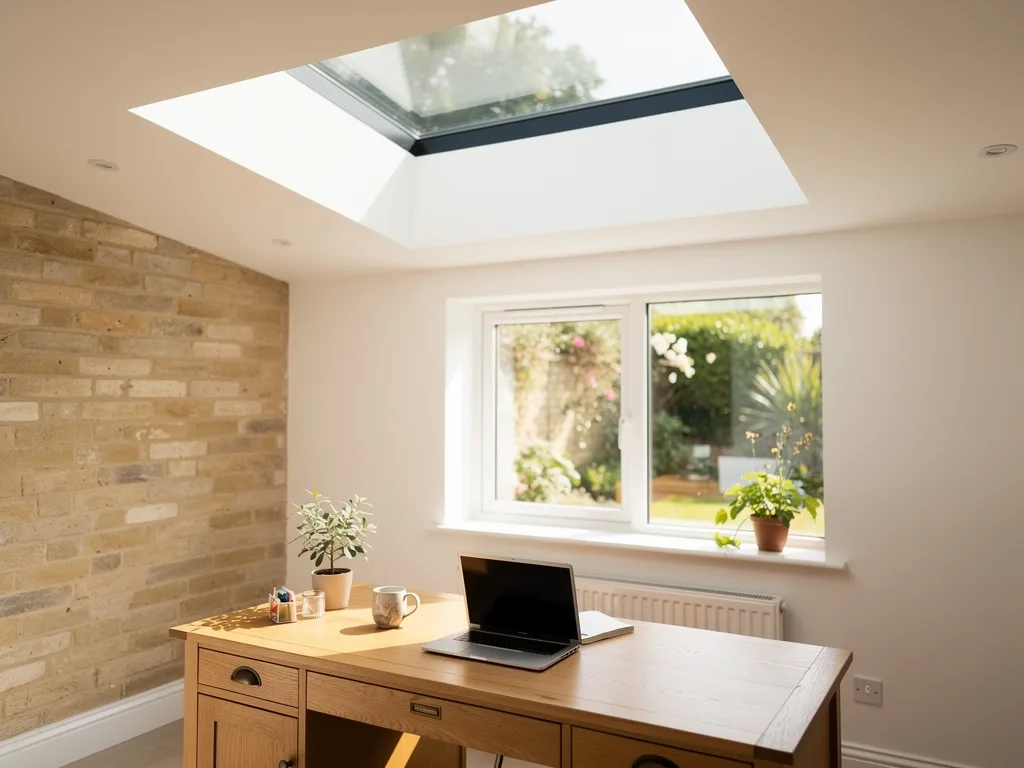
| Home office | Glare on screens | Solar control, low-g glass with a blind |
| Bathroom | Privacy, condensation | Warm edge or triple, obscure inner if overlooked |
| Landing | Safety over stairs | Laminated inner, clear low-E for daylight |
| Vaulted living room | Heat, fading, view | Solar control on sunny slopes, clear on north |
A loft bedroom is the room where glass mistakes are felt most. People sleep in it on warm nights, and the window is often directly over the bed. On a south or west slope, solar control glass plus an external blind is the combination that keeps the room usable in July. On an east slope, clear low-E glass lets in the early sun, which is a pleasant way to wake, with a blackout blind for the summer months. See roof windows for loft bedrooms for the rest of that room's planning.
A home office needs glass that reduces glare as well as heat, because a bright pane in the corner of your eye or a reflection on a screen wears you down through a working day. Lower-transmission solar control glass softens the brightness, but position does more than glass here; our answer on where a roof window should go for a home office explains why.
Over a stairwell or landing, safety comes first because the glass hangs above a drop. A laminated inner pane is essential, and clear glass lets the light travel down the stairs to the hall. The guide on lighting a stairwell landing covers the rest. On a north slope anywhere in the house, the aim is the most daylight you can get, so clear glass and a better U-value beat any tint; north-facing roof windows explains what that light is like to live with.
Questions people ask
These are the glass questions that come up at survey, answered briefly. Your written light plan names the exact glass for each window and the reason for it.
Can I change just the glass in an existing roof window?
Some manufacturers supply replacement glazing units or complete replacement sashes for their older windows, which lets you upgrade to laminated or solar control glass without disturbing the frame and flashing. Where the frame itself is tired, replacing the whole window is usually the better long-term choice, and we can advise on which applies after seeing it.
Does solar control glass make a room darker?
A little. Good solar control glass cuts more heat than light, so the drop in brightness is modest, but a strongly tinted or reflective pane does look darker on a dull winter day. That is why we suggest it for sunny slopes and not for north-facing ones.
Is triple glazing worth it on a roof window?
On a north slope, in a bedroom, or where noise matters, it often is. On a south slope it helps in winter but does nothing for summer heat, so solar control and shading come first there.
Does the glass choice change the price much?
Laminated, acoustic, triple and coated panes each add to the cost of the window, and the difference grows with size. Our costs page sets out what drives the overall figure, and the survey fixes the real price. To see the right glass for your own rooms, book a light survey.