Why the slope decides the room
A skylight can only take the sun its slope is given. Skylight orientation, more than size, decides whether a room gets soft, even light, a bright morning, a warm evening or an afternoon it has to hide from.
A rooflight in a pitched roof is tilted towards one quarter of the sky. Glass on a south slope leans towards the midday sun; glass on a north slope leans away from it and looks at the open sky instead. East and west slopes sit between the two and take the sun at either end of the day. Two identical roof windows, fitted the same week by the same hands, can give two rooms that feel nothing alike, because one faces south over a garden in Romsey and the other faces north over the street.
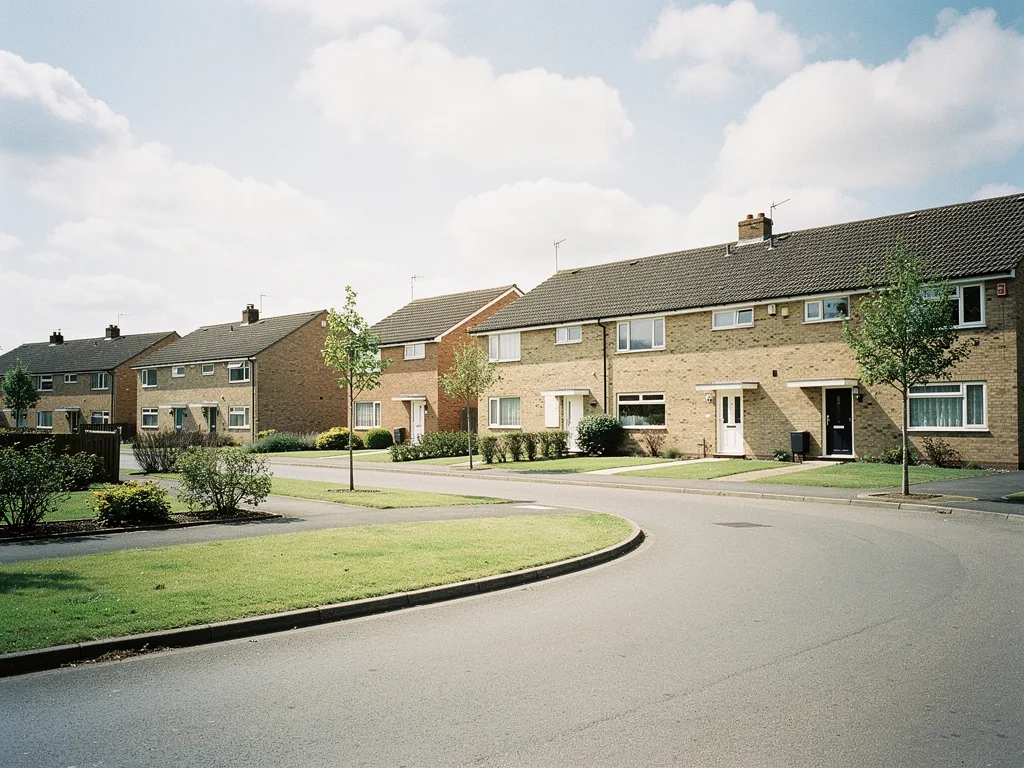
Cambridge sharpens the difference. The city and the country around it are flat, with no hills to cut off the low winter sun or the long summer evenings, so the whole arc of the sun reaches most roofs. The things that do shade a rooflight here are close by: a neighbour's rear outrigger, a two-storey wall beside a side return, a mature lime tree, a chimney stack. On open ground at Eddington or Northstowe there may be almost nothing at all between the glass and the horizon.
On most houses the direction of each slope is already fixed by the street. A terrace running east to west has one slope facing north and one facing south, and nobody is going to turn it. What you can choose is which slope takes the glass, where in that slope it goes, how big it is, what the glass is made of and how it is shaded. That is the work behind every written light plan, and it starts with knowing what each direction does across a Cambridge year.
The Cambridge sun in three heights
At noon the sun stands about 14 degrees above the horizon in midwinter, about 38 degrees at the spring and autumn equinoxes and about 61 degrees at midsummer. Tilt a roof at 40 degrees under that sun and each slope meets it at a very different angle.
The angle that matters is the one between the sun and the glass itself. At 90 degrees the sun strikes the pane square on and each square metre of glass collects the most light and the most heat it can. At a shallow angle the sunlight grazes the pane and much less of it gets through. Below zero the sun is behind the plane of the glass and no direct sun reaches it at all; the rooflight then works on light from the sky alone.
- North slope. Soft, steady light all day with no direct sun: even, glare-free and good for studios, kitchens and home offices.
- East slope. Bright morning sun that has moved off by lunchtime: bedrooms and breakfast rooms.
- South slope. The strongest light, peaking at midday. Worth pairing with solar-control glass or a blind to keep summer heat down.
- West slope. Warm, low evening sun: living rooms and kitchens used after work.
- The sun’s path. It rises in the east, is due south at noon and sets in the west, higher in summer and lower in winter.
| 40° slope facing | Midwinter noon | Equinox noon | Midsummer noon |
|---|---|---|---|
| South | about 54° | about 78° | about 79° |
| East or west | about 11° | about 28° | about 42° |
| North | below the glass | level with it | about 21° |
These figures are for solar noon, which in Cambridge falls close to 12 o'clock on the clock in winter and close to 1pm in summer, once British Summer Time has moved the clocks. They describe the middle of the day only. An east slope does its real work in the morning and a west slope in the afternoon, when the sun has swung round to face them.
Pitch moves the numbers. At noon every extra degree of pitch adds roughly a degree to the south slope figures and takes one away from the north, so a steep Victorian slate roof at 45 degrees is a little kinder to a south rooflight in winter and a little harsher to a north one. A shallow 30 degree extension roof behaves more like flat glass, which has its own chapter below.
South: the most sun, and the most to manage
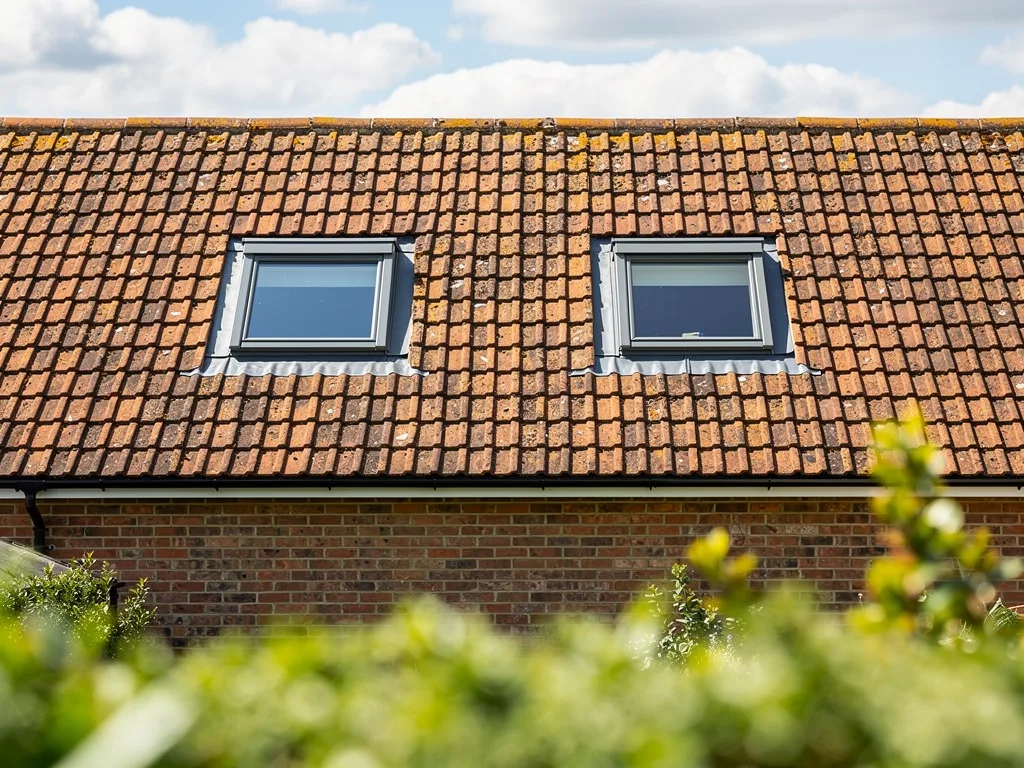
A south-facing rooflight is the only one that brings real sunshine into a room in December. The same geometry makes it the hardest to keep comfortable from May to August.
In midwinter the noon sun meets a 40 degree south slope at about 54 degrees. The sky may be grey more often than not, but on a clear January day a south skylight throws a bright, moving sun patch across the floor and up the opposite wall, and the room feels warmer for it. At the equinoxes the sun is close to square on, at about 78 degrees, and it stays close to that at midsummer, at about 79. The angle hardly changes between March and June; what changes is the length of the day. In summer the south slope is in direct sun from mid-morning until well into the afternoon, for hours at a stretch.
That is where the heat comes from. Sunlight passes through the glass, lands on the floor, the worktop and the sofa, warms them, and they warm the air. In a loft room under a south slope, with warm air already collecting at ceiling level, the result can be a bedroom that is still hot at midnight. The glare follows the same path: a hard-edged pool of light on a dining table or across a laptop screen.
None of this means south is the wrong choice. It means a south rooflight needs a heat and glare plan from the start:
- solar control glass with a low g-value, which lets the light through and holds back more of the heat;
- an external awning or shade where the room will be used in summer afternoons, because it stops the sun before it reaches the glass;
- an opening or electric unit high in the roof, so warm air can leave where it gathers;
- a position that puts the sun patch where it helps, on a floor or a wall, and keeps it off the television, the desk and the hob.
The energy efficient rooflights page sets out the glass choices in more depth. South slopes are also where solar panels want to go, so if both are planned it is worth deciding early which one gets the best part of the roof; sharing a slope with solar panels covers how that is usually arranged.
East: early light and a calm afternoon
An east-facing rooflight belongs to the morning. It takes low sun early in the day, then goes quiet just as the house and the weather are warming up.
At noon an east slope has almost lost the sun already: about 11 degrees to the glass in midwinter, 28 at the equinoxes, 42 at midsummer. The useful hours come earlier. In June the sun rises well north of east, before 5am, and it climbs across the face of the slope through the early morning. In December it rises in the south-east at around 8am, so an east rooflight catches a short, low, golden spell of mid-morning sun and little else.
Morning sun arrives in a room that has cooled overnight, and it has moved on before the hottest part of the day. That makes east the most forgiving direction for heat. It suits a breakfast kitchen, a bathroom used first thing, or a bedroom for anyone who likes waking to daylight. For anyone who does not, a blackout blind is part of the specification, because a midsummer dawn through an east skylight is very early indeed.
The catch with east is the angle. Low sun comes in almost level, so instead of landing on the floor below the rooflight it reaches deep into the room and across it, onto the far wall or straight into the eyes of someone sitting up in bed. The fix is usually position rather than glass: set the opening so the early beam falls on a wall or a wardrobe, not a pillow. Stopping glare from a skylight goes through the options room by room.
West: the long evening and the hot bedroom
A west slope mirrors an east one in geometry and differs from it completely in comfort. Its sun arrives in the afternoon and evening, after the house has spent the day warming up.
The noon numbers are the same as east: about 11, 28 and 42 degrees across the year. Then the sun swings round to face the glass. In midwinter it sets in the south-west before 4pm, so a west rooflight gives a short, low glow on a winter afternoon, often the most welcome light of the day in a living room. In midsummer the sun sets well north of west after 9pm, and for the last few hours it shines low and straight into a west slope.
Those hours are the problem. Outdoor air is at or near its warmest in the late afternoon, the roof has been soaking up heat all day, and now the sun is pouring in at a low angle, deep into the room. A loft bedroom under a west slope is the hardest room in the house to keep cool on a July night. If that is where the rooflight has to go, the glass, the external shading and the ventilation carry the design.
That means solar control glass, an external blind that can be left down through the afternoon, and an opening unit that can be left on a secure vent setting overnight. A rain sensor on an opening roof window helps here, because it lets the window stay open while you are out.
West does have its admirers. A sitting room or a kitchen used in the evening gets warm, low, golden light just when people are home to see it. The same care over glare applies as for east: low sun travels a long way into a room, and it will find the television if it can.
North: steady sky light, and the winter question
A north-facing rooflight sees very little direct sun and a great deal of sky. That gives the calmest, most even light of the four directions, and the dimmest winter.
At noon in midwinter the sun is below the plane of a 40 degree north slope, so the glass gets no direct sun at all. At the equinoxes the sun is about level with it. At midsummer it rises to about 21 degrees above the glass at noon, and early in the morning and late in the evening, when the June sun is in the north-east and north-west, it can strike the slope at a low angle for a while. For most of the year, though, a north rooflight is lit by the sky dome: bright cloud, blue sky, reflected light.
That light is soft and shadowless, it barely changes through the day, and it does not throw a sun patch across screens or faces. It is why painters asked for north light, and it is why a north rooflight suits a home office, a studio, a kitchen that already overheats, a bathroom, or a loft on a street of south-facing new homes that are already bright and warm. It also rarely needs a blind for heat, though some people still want one for privacy or for sleep.
Winter is the trade-off. On a dull December afternoon a small north roof window gives a modest amount of light, and none of it is sunshine. The answer is to plan for that season rather than for June:
- a larger unit, or two side by side, to take in more of the sky;
- a splayed lining, wider at the ceiling than at the glass, so the light spreads rather than falling in a narrow column;
- pale reveals and ceiling, which pass the light on instead of absorbing it;
- good thermal glass, because a north rooflight loses heat like any other and gains little back from the sun.
There is sometimes a planning benefit too. On many terraces the rear slope faces away from the street, and in conservation areas a rooflight on a slope that cannot be seen from public places is often easier to agree. The planning permission for rooflights guide covers when that matters. For a deep, dark room with only a north slope to work with, skylights for dark rooms goes further.
Flat roofs, lanterns and the slope you do not have
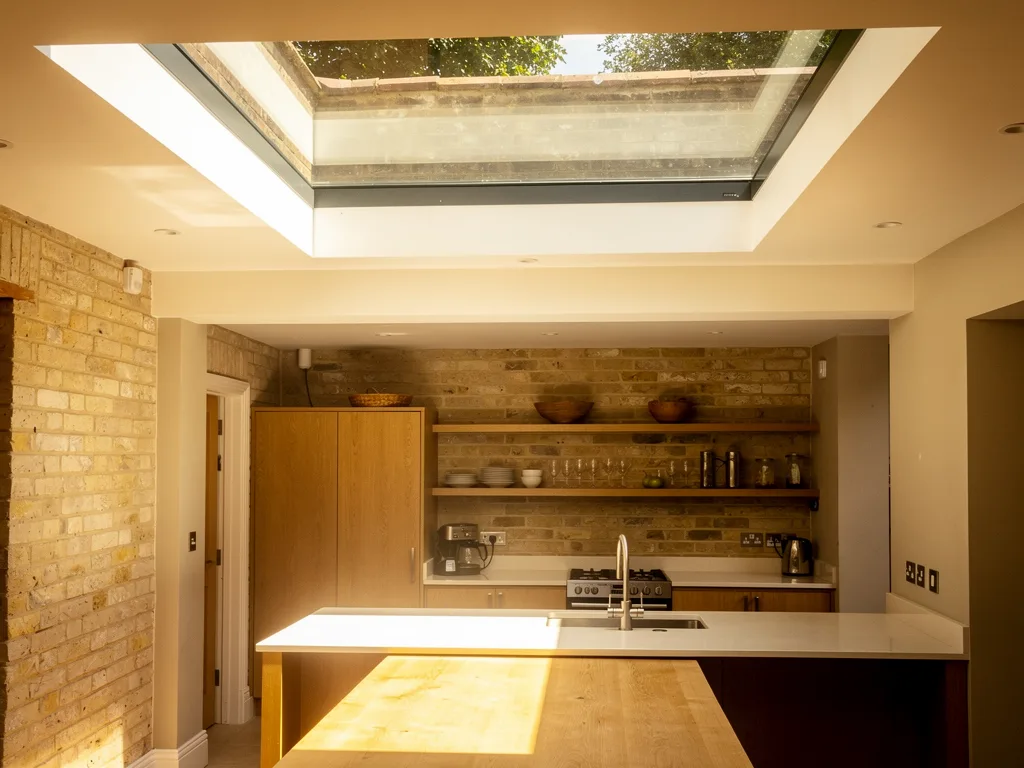
Glass laid almost flat takes the sun at its own height, whatever the compass says. On a flat roof the direction of the extension matters less than what surrounds the rooflight and where its light lands.
A flat rooflight is set on an upstand with a small fall, usually a few degrees, so rain runs off. To the sun it is close to horizontal, which means it meets the noon sun at about 14 degrees in midwinter, 38 at the equinoxes and 61 at midsummer, in any orientation. In winter that is poor for sun: a shallow grazing angle, nothing like the 54 degrees a south roof window gets. In summer it is the reverse, with a high sun beating down on level glass for most of a long day. Flat glass gathers light from the whole sky, which serves it well under Cambridge's frequent cloud, but its heat risk is a summer one, and it faces every direction at once.
What changes the result on a flat roof is shade from the side. At 14 degrees, the midwinter sun casts a shadow roughly four times as long as the height of whatever stands in its way. In a side-return extension on a Mill Road or De Freville terrace, the two-storey wall of the main house or the neighbour's outrigger will usually keep direct winter sun off a rooflight entirely, so the room runs on sky light from October to February. That is not a reason to leave the rooflight out. It is a reason to place it near the far end of the extension, away from the tall wall, and size it for the sky rather than the sun. More on this is on the flat roof rooflight installation page.
A roof lantern is a small pitched roof sat on a flat one, so its sloping faces each have a direction and behave, on a smaller scale, like the slopes above. The way its ridge is set decides which faces meet the sun.
Matching the direction to the room
The best rooflight orientation is the one that suits how the room is used and when. The compass is only half of it; the other half is who is in the room, at what time of day, doing what.
A useful way to think it through is to picture the room at the hours it is actually busy, then ask which slope is lit at those hours:
- Kitchen and family room: used from breakfast to late evening. South gives the most winter cheer and needs heat control; east lights breakfast and stays cool; west lights supper and needs the most shading.
- Home office: north first, for even light with no sun patch on the screen; east next, since the sun has left the glass by late morning.
- Bedroom: east for light at waking, with a blackout blind; north for cool sleep; west only with solar control glass and external shading.
- Bathroom and landing: almost any direction works, since the room is used briefly and privacy matters more than sun.
- Living room: south or west for warmth in the evenings and in winter, with glare kept off the television by position.
Often the room and the roof disagree: the loft office sits under the only south slope, or the new kitchen has a west-facing lantern. That is where glass, shading, opening and position earn their keep. A blind, a different glass, or moving the opening half a metre can turn a difficult slope into a good one, and whether a skylight needs a blind depends as much on direction as on anything else.
The same thinking runs through every job described on the skylight and rooflight installation in Cambridge homepage. At the survey the slope is measured with a compass, the room and its obstructions are checked, and the written light plan that comes with the quote sets out the position, size, glass and shading, with the reason for each. If you would like that done for your own roof, book a light survey or message us on WhatsApp.
Questions people ask
These come up when people are deciding which slope should take a new skylight or rooflight.
Is a north-facing skylight a waste of money?
No. A north rooflight gives the steadiest light of any direction, with no glare and very little heat, which suits offices, studios and warm rooms. It gives less light in deep winter than a south one, so it is usually sized a little larger and fitted with a splayed lining. See do skylights give much light in winter for what each slope gives in December.
Which direction gives the most light in winter?
South, clearly. At midwinter noon the sun meets a 40 degree south slope at about 54 degrees, while it grazes an east or west slope at about 11 degrees and stays below the glass on a north one. A flat rooflight sits in between, taking the sun at its own low height of about 14 degrees.
Can glass make a south or west rooflight comfortable in summer?
Glass does a large part of it. Solar control glass with a low g-value lets daylight through while holding back more of the heat, and an external blind stops the sun before it reaches the pane. Add an opening unit high in the room so warm air can leave, and a south or west rooflight can be a pleasure rather than a problem.