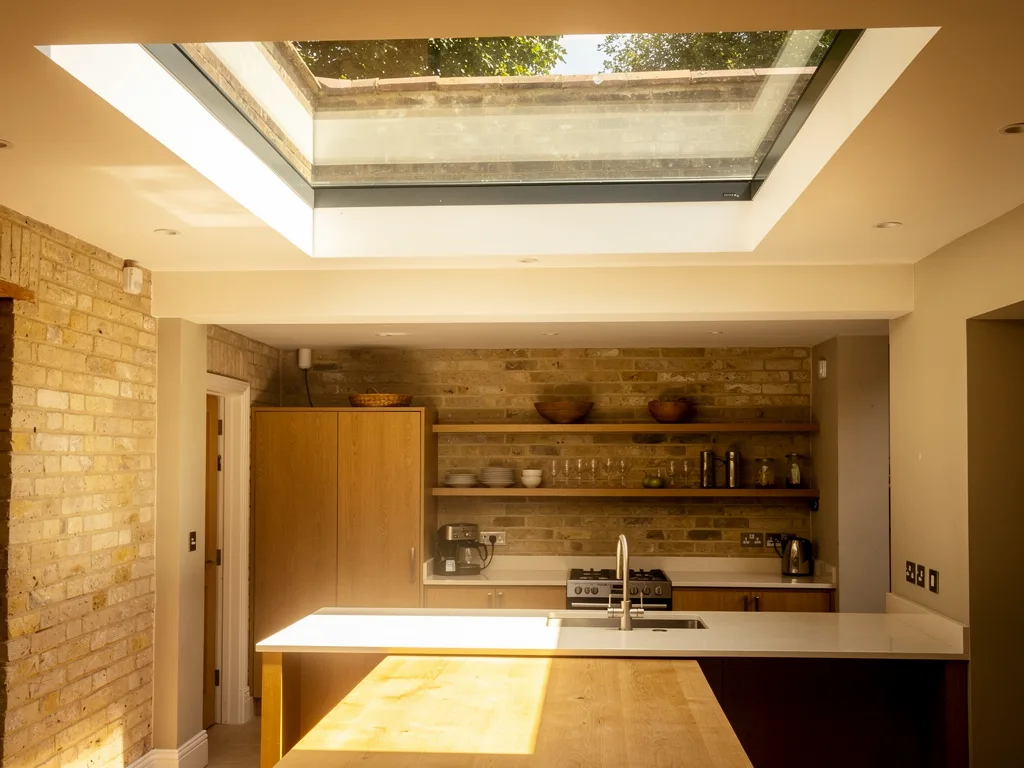
Why rain sounds louder under some rooflights than others
Rain noise is the sound of drops striking a surface and making it vibrate, so the question is really how easily the surface above you is set moving.
A tiled or slated roof with a loft full of insulation beneath it has weight, air and soft material between the rain and your ceiling. A rooflight replaces a piece of that build-up with a single glazed panel, and the sound reaches the room with fewer layers to pass through. Three things then decide how much you hear: how heavy and stiff the glazing is, whether it has more than one pane with a gap between, and how steeply the rain strikes it.
Weight and stiffness matter most. A light, thin sheet flexes under each drop and behaves a little like the skin of a drum. A heavier, stiffer pane moves less and passes on less sound. A sealed unit with two or three panes adds a further step, because the vibration has to cross the cavity before it reaches the inner pane.
The angle matters too. Rain falls close to vertical in still air, so a flat rooflight takes the full force of every drop on nearly level glass, while a roof window in a steep slope gets a glancing blow and sheds water quickly. That does not make a flat roof skylight a noisy choice, but it is why the glass specified for a flat roof deserves the same care as the light plan. Our guide to types of rooflight explains how each form sits on the roof.
Glass compared with polycarbonate
Glazing material is the single biggest difference, and it separates modern glass rooflights from older plastic ones.
| Glazing | Rain noise | Where you find it |
|---|---|---|
| Multiwall polycarbonate sheet | Loud, a drumming patter | Older conservatory and lean-to roofs |
| Acrylic or polycarbonate dome | Noticeable, hollow sound | Older flat roof domes, sun tunnels |
| Double glazed sealed unit | Moderate, softened | Modern skylights and lanterns |
| Unit with a laminated pane | Lower still | Flat rooflights, rain-noise options |
Polycarbonate is light and tough, which is why it was used on so many conservatories and outbuildings, but its low weight is exactly what makes it loud. Anyone who has sat in a polycarbonate conservatory during a downpour knows the sound. A glass rooflight in a solid roof is a different experience, because the glass unit is much heavier for the same area and is held in a frame set into an insulated structure.
If you are replacing an old plastic dome or a polycarbonate lantern with glass, a quieter room in the rain is one of the side benefits, alongside clearer light and better heat performance. Our skylight replacement options guide covers the choices when an older unit comes out.
How laminated glass reduces the sound
Laminated glass is two sheets bonded together with a plastic interlayer, and that interlayer damps vibration as well as holding the glass together if it breaks.
When a drop strikes the outer pane, the energy has to pass through the bonded layers. The interlayer is softer than glass, so it absorbs part of the vibration rather than passing it straight on. Some interlayers are made specifically for sound control and are sold as acoustic laminates. Pairing a laminated pane with a second pane of a different thickness also helps, because the two panes do not ring at the same pitch.
Laminated glass is often already part of a skylight for safety reasons. Overhead glazing is commonly specified with a laminated inner pane so that broken glass stays in the frame, as our guide to safety glass in rooflights explains. That means many rooflights already carry some of the damping effect before any noise option is added.
The room below makes a difference
How loud rain sounds indoors depends on the space under the rooflight as well as the glass in it.
A skylight at the top of a deep, insulated light shaft is quieter than one set straight into a vaulted ceiling, because the lined shaft absorbs some of the sound before it reaches the room. A lantern over a hard-surfaced kitchen extension, with a tiled floor, plaster walls and glass doors, lets sound bounce around, so the same shower seems louder than it would over a carpeted sitting room. Soft furnishings, rugs and a fabric blind all take some of the edge off.
Bedrooms are where the question matters most. In a loft conversion in a Romsey or Chesterton terrace, a roof window can sit close above the bed, and some people find the sound of rain relaxing while others do not. If you are a light sleeper, raise it at the survey so the glass and the blind are chosen with it in mind. Upgrading skylights in a loft conversion covers the wider choices for older loft rooms.
What we check at the survey
Rain noise is one of several things weighed when the glass for a rooflight is chosen, next to heat, glare, safety and the direction the roof faces.
- Which room the skylight serves, and whether anyone sleeps or works under it.
- Whether the roof is flat, shallow or steep, and so how directly the rain will strike.
- What glazing any existing unit has, and whether it is plastic that could be replaced with glass.
- Whether the maker offers a laminated or rain-noise glazing option for that range and size.
- How the choice sits with the solar control and energy efficient glazing the orientation needs.
The result goes into the written light plan with the quote, so you can see what glass is proposed and why. Where there is a real trade-off, such as a heavier laminated unit needing a suitable kerb on a flat roof rooflight, we explain it there rather than on the day. If you would like it looked at for your own home, book a light survey or message us on WhatsApp. You can read more about how we plan skylights and rooflights across Cambridge on our homepage.
Questions people also ask
Are roof lanterns noisy in the rain?
A glass roof lantern with sealed double glazed units is usually far quieter than an old polycarbonate one. You will still hear heavy rain and hail on the glass, and a hard-finished kitchen below can make it sound louder than it is.
Does an opening rooflight let the rain in if it is left open?
It can, which is why many electric opening rooflights are fitted with a rain sensor that closes the unit when the first drops land. That is about keeping water out rather than about noise.
Are sun tunnels noisy in the rain?
The dome on a sun tunnel is usually acrylic or polycarbonate, so it can make a light patter in heavy rain. The tube and diffuser sit between it and the room, which reduces what you hear, but a glass rooflight will generally be quieter.
Is acoustic glass the same as rain-noise glass?
They overlap. Both usually rely on laminated panes, but acoustic glass for traffic, rail or aircraft noise is aimed at a different kind of sound. Our answer on whether acoustic glass can stop noise through a skylight covers outside noise in more detail.
