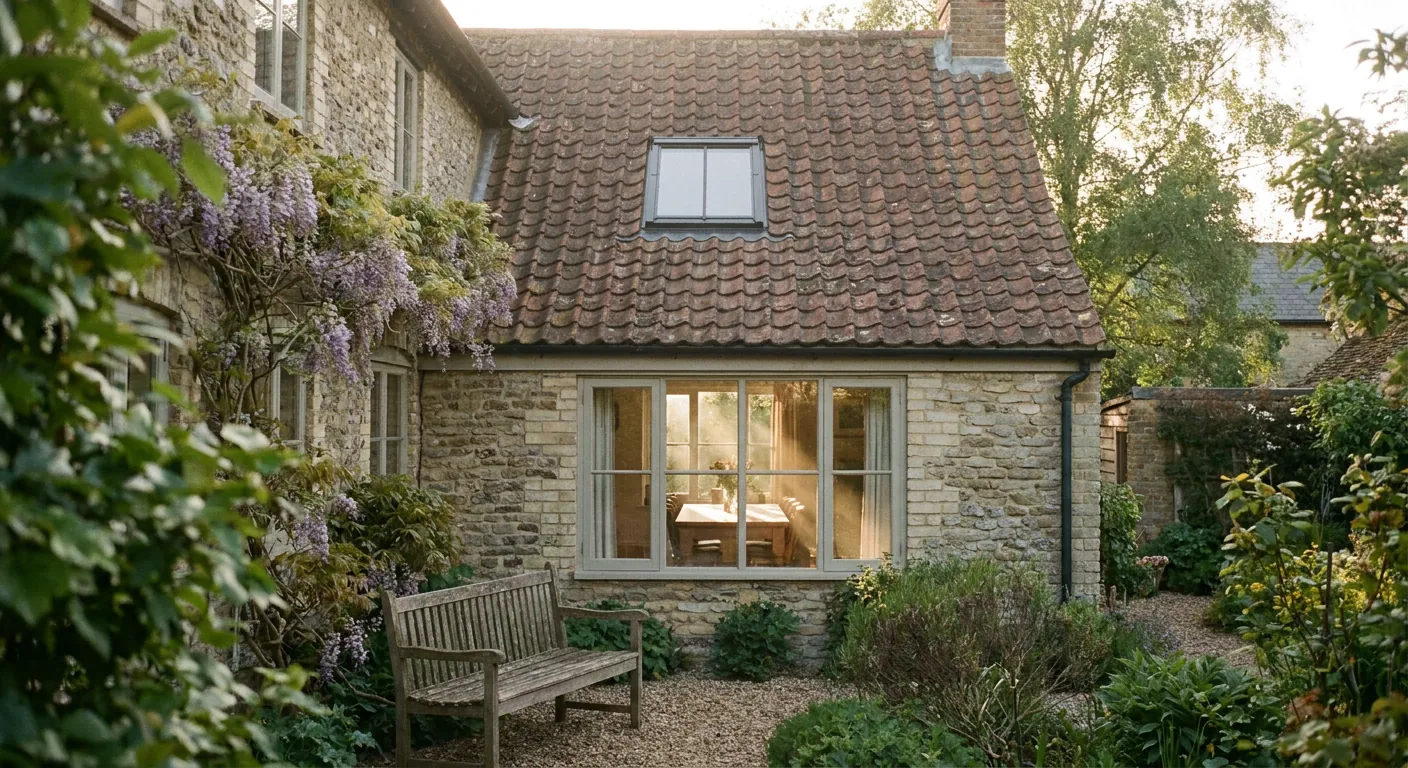
Why dark is the standard finish
A conservation rooflight is meant to look like the plain cast-iron rooflights fitted to nineteenth-century roofs, and those were painted dark. The modern version keeps the colour because it keeps the effect.
On a roof, a dark frame does two useful things. It sits close in tone to slate and to old, weathered clay tile, and it merges with the reflection in the glass, so from the street the whole unit reads as one small dark rectangle rather than a frame around a pane. A pale or bright frame outlines the opening instead, which draws the eye to it. That is the opposite of what a conservation rooflight is for.
The colour also suits the slim steel profile. The thinner the frame, the less colour there is to see, and a dark coat makes the remaining edge almost disappear. If you want the fuller picture of what separates these units from an ordinary roof window, our guide to what makes a conservation rooflight covers the flush fit, frame and glazing bars.
The shades you are likely to be offered
Expect a short list of dark options as standard, with anything else treated as a special order. Names and RAL references vary from one manufacturer to the next.
The table below describes the usual families of finish rather than a particular catalogue. Some ranges are built around a single standard colour; others list two or three dark shades; a few will powder coat to almost any RAL colour, usually at extra cost and with a longer lead time. We confirm what the chosen product actually offers before anything goes into a planning application or a quote.
| Finish | How it reads | Usually suits |
|---|---|---|
| Black | Crisp, traditional | Welsh slate, cast-iron look |
| Near-black or graphite | Softer than black | Slate and dark tile |
| Anthracite grey | Modern, muted | Grey slate, lead, zinc |
| Other RAL colour | Depends on shade | Special cases, if offered |
Treat any RAL number you see online as a guide to the family of colour, not a promise about a given unit. A sample chip or a colour card from the maker is the only reliable way to judge the real shade against your roof.
When a different colour can suit
A dark frame is the safe choice on most historic roofs, but there are roofs where another shade, or a different dark, sits better.
Red and orange clay roofs are the case that raises the question. It is tempting to match the frame to the tiles, yet a terracotta frame rarely matches weathered, lichen-marked tile for long, and it can look like an attempt to hide the rooflight that has not quite worked. A dark frame on clay tile still tends to read as a shadow, which is usually the more convincing result. On a pantile roof in a village like Burwell or Soham, a softer graphite can be kinder than hard black.
Metal roofs are different. Next to lead, zinc or standing seam, an anthracite grey often blends better than black. On converted barns with dark stained boarding or sheet roofs, a black or very dark grey frame usually follows the building's own palette. Our guide to conservation rooflights for barns and cottages looks at those buildings more widely.
- Match the roof, not the windows, when the two are different colours.
- Judge the colour in daylight, on the actual slope, from where people will see it.
- If a non-standard colour is needed, check the lead time before planning the install date.
What the colour does inside the room
From below, the frame colour changes how the edge of the opening looks against the sky, and that affects how bright the rooflight feels.
A dark internal frame sets up a sharp contrast between the frame and a bright sky. On a south or west slope in summer, that contrast can make the opening feel glary even when the glass is the right specification. A white or pale inside face softens the edge and bounces a little more light into the lining. For that reason, some products are offered with a dark finish outside and a white or light finish inside. Whether a given unit can be dual coloured varies by manufacturer, so it is a question for the specification stage rather than an assumption.
The lining matters as much as the frame. A splayed, pale plaster lining spreads the light further across a loft room than a straight dark reveal, whatever the frame colour. We cover how orientation, glass and lining work together in how we plan the light, and whether the frame costs you daylight in does a conservation rooflight let in less light?
Colour and planning around Cambridge
Where a rooflight needs planning permission or listed building consent, the colour is part of what is being approved, so name the finish in the application.
Greater Cambridge Shared Planning handles applications for Cambridge City and South Cambridgeshire, and the councils further out, such as East Cambridgeshire, Huntingdonshire and Uttlesford, run their own. In the terraces of Romsey, Petersfield and Mill Road, where rooflights on the front slope sit among grey slate, a dark finish is the expected choice. In historic centres such as Ely, St Ives or Saffron Walden, officers look at the rooflight as a whole: size, position, profile, flush fit and finish together. A dark conservation finish is what is generally expected, but each case is decided on its own merits, and a condition on colour can appear in the decision notice.
For a listed building, any change to the finish of an approved rooflight may itself need consent, so agree the colour before the order goes in. See listed building consent for rooflights and what conservation officers look for in a rooflight for the wider set of points. We install to current Building Regulations and handle the Building Control notification where the work is notifiable; planning and consent sit alongside that.
How the finish is applied, and how long it keeps its colour
The colour is a factory powder coat over galvanised steel, and the coating is what keeps both the look and the frame protected.
Powder coating is baked on, so it is harder and more even than a brushed paint finish. Dark coats can soften slightly in tone over many years of sun, and a matt finish tends to hide that better than gloss. Painting over a factory coat on site is not a good idea: it rarely bonds as well, and it may affect the manufacturer's product warranty. If an old unit's finish has failed, replacing it with a correctly coated new rooflight is usually the better answer. Our pages on whether conservation rooflights rust and replacing cast iron rooflights go further.
Questions people also ask
Is black or grey better for a conservation skylight on a slate roof?
Both work. Black gives the crisp cast-iron look; a dark anthracite grey is a little softer against weathered blue-grey slate. Seeing a sample against your own roof in daylight is the best way to decide, and the right answer can differ between a sunny front slope and a shaded rear one.
Should the rooflight match my windows or front door?
Usually no. The rooflight is seen against the roof, not beside the windows, so match it to the slate or tile. Windows and doors are often a different colour entirely without any clash.
Do conservation officers specify the colour?
They may. A decision notice can include a condition on finish, or the approved drawings may state it. Either way, the colour you install should be the colour that was approved. For a full view of the product and fitting, see our conservation rooflight installation page, then book a light survey through the quote form.
Can I choose any RAL colour?
Some manufacturers offer a wide RAL choice, others a small fixed range. Where it is available, a non-standard colour normally adds cost and lead time, so confirm it for the exact product before planning the job.
